Before coming to Colombia, I thought I knew coffee. I drank it every day, but I rarely stopped to think about where the beans came from or everything that had to happen before that cup of coffee reached me.
That changed after spending half a day at a coffee farm outside Medellín. Instead of simply walking around a plantation and looking at coffee plants, we got to experience nearly every step of the process ourselves.
We picked ripe coffee cherries, processed them by hand, learned why Colombia is known for washed coffee and roasted beans, and compared different brewing methods. We also tasted coffees side by side, which helped us understand just how much the way coffee is processed and prepared can affect the final cup.
By the end of the tour, I felt like I finally understood what goes into making coffee rather than simply drinking it every morning.
If you’re visiting Medellín and want to spend some time outside the city, this coffee farm tour is a great way to experience the Colombian countryside while learning about one of the country’s most famous crops. It ended up being one of my favorite experiences during our time in Medellín.
A Little About Coffee in Colombia
Before diving into our experience, it helps to understand why coffee is such an important part of Colombian culture.
Colombia is one of the world’s largest producers of Arabica coffee, a variety known for its smooth, balanced flavor and natural sweetness. Thanks to the country’s volcanic soil, mountain elevations, and year-round growing climate, coffee can be harvested almost continuously.
Unlike many large commercial operations around the world, much of Colombia’s coffee still comes from small family-owned farms that have been growing coffee for generations.
Our hosts explained that Laura’s family has been cultivating coffee for nearly 200 years, which made the experience feel much more personal than visiting a commercial plantation.
Booking the Coffee Tour
We booked through Airbnb Experiences, though you can also book directly with the farm via WhatsApp. The tour is offered in both English and Spanish, which made it incredibly easy for everyone in our group to follow along.
The farm is both kid-friendly and dog-friendly.
Meeting at La Central
The meeting point was incredibly easy to find. Everyone met at La Central Shopping Center (Calle 49 #20B-60), a busy and safe shopping center in Medellín. When we arrived, several other guests were already waiting outside.
Our guide, Tatiana, welcomed everyone, then walked our group to several waiting taxis.
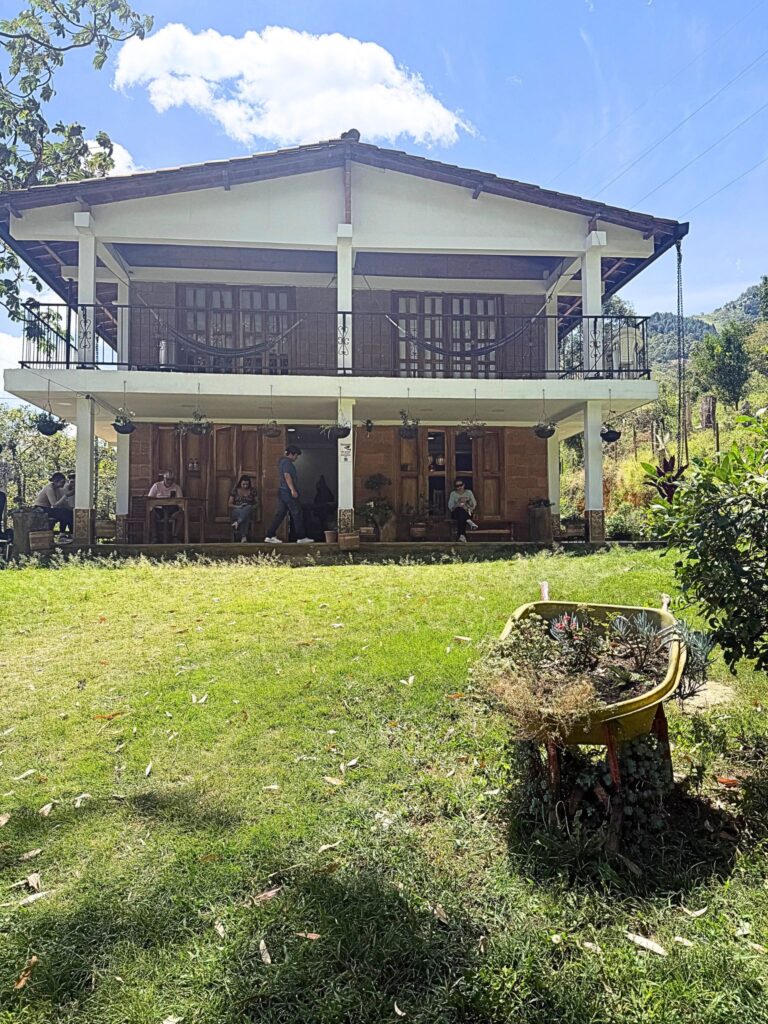
About five to eight minutes later, we arrived at the base of the mountain, where we enjoyed a short five-minute walk through beautiful countryside before reaching the finca.
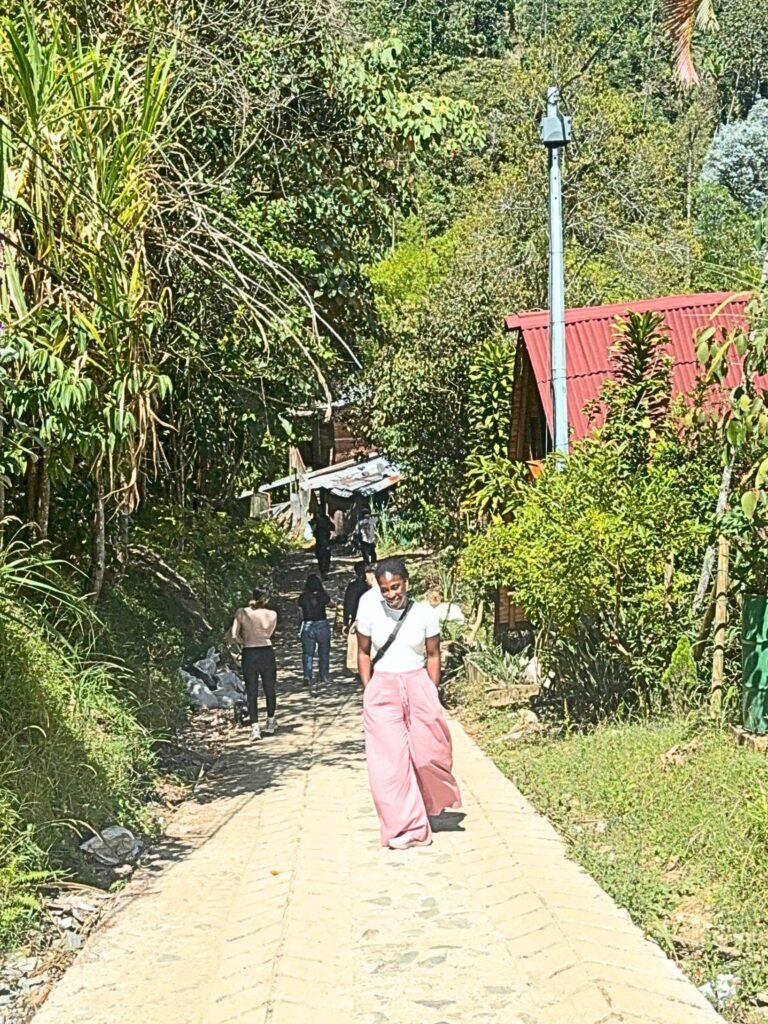
Waiting at the entrance were several friendly dogs eager to greet everyone—a wonderful first impression. Laura, our second host, welcomed us onto the property
What to Bring
The farm provides almost everything you’ll need, including traditional clothing and equipment for the coffee-picking experience, but a few things are still worth bringing.
I recommend packing:
- Comfortable clothes that you don’t mind getting a little dirty
- Closed-toe tennis shoes or hiking shoes (avoid sandals since you’ll be walking on uneven ground)
- A lightweight sweater or rain jacket since mountain temperatures can change quickly
- Bug spray, which I was glad I brought
- Sunscreen and a reusable water bottle
- A camera because the scenery is beautiful
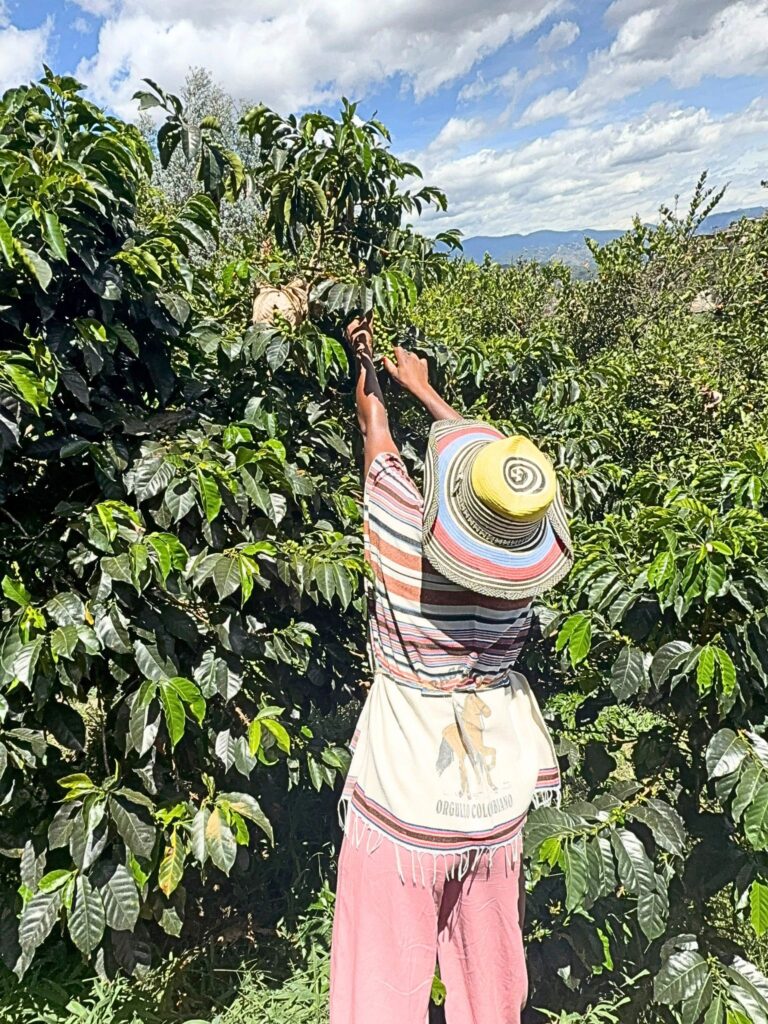
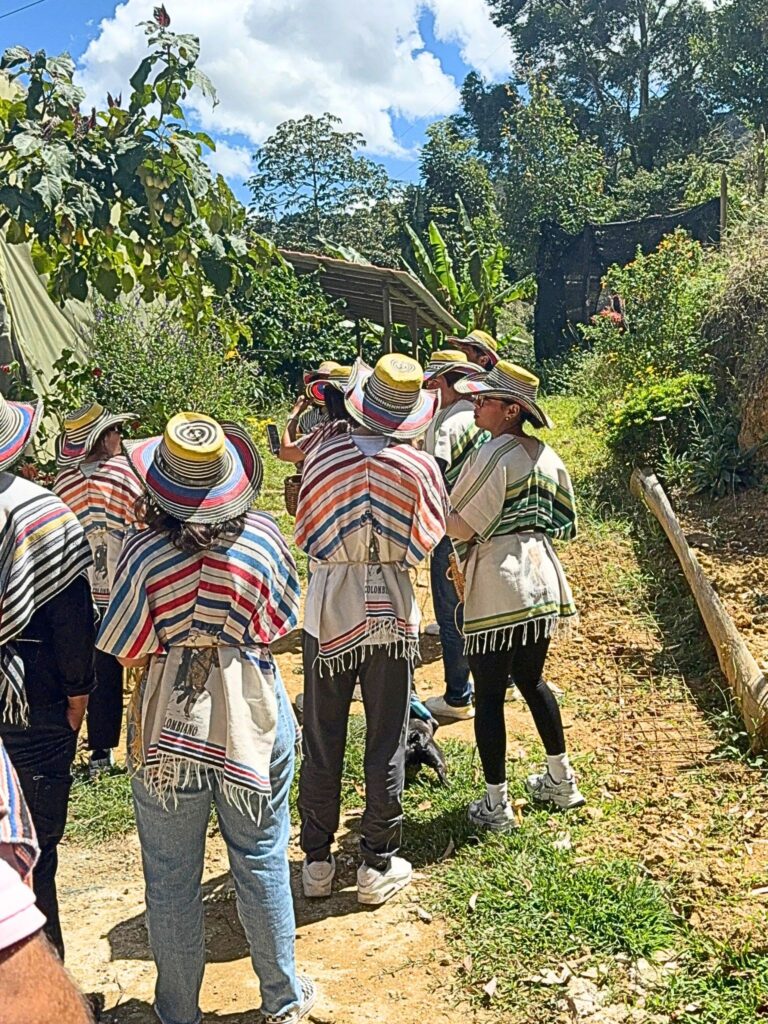
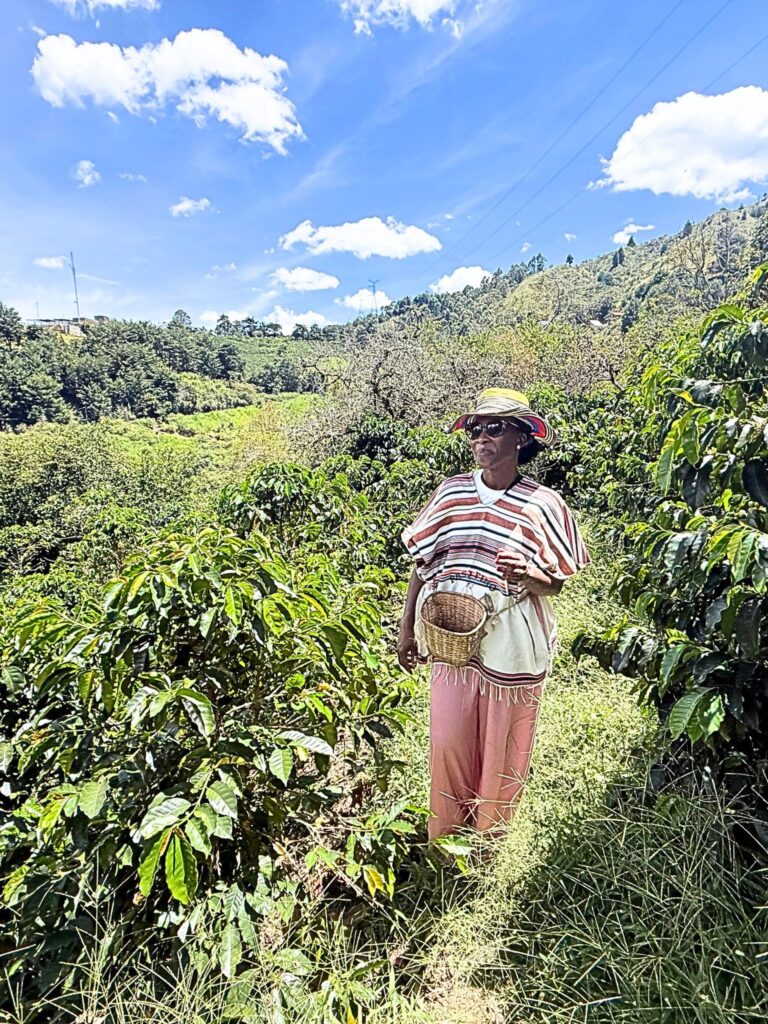
Once on the farm, you’ll change into traditional coffee-growing clothing, including a poncho, hat, and basket used during harvesting.
Starting the Morning
Before heading into the fields, we gathered in the courtyard where we were served fresh coffee, juice, and a small homemade sweet treat.
It was a relaxing way to start the morning while getting to know the rest of the group. Afterward, we changed into traditional coffee farmer clothing and officially began our journey into the world of Colombian coffee.
Learning Why Colombian Coffee Is Different
Tatiana led the first part of the tour and did an excellent job explaining the history of coffee cultivation in Colombia.
One of my biggest takeaways was learning about Colombia’s famous washed (lavado) processing method.
Instead of drying the coffee cherry with its outer fruit still attached, Colombian producers remove the red fruit shortly after harvesting. They then wash, ferment, and dry the beans, creating the clean, bright flavors Colombian coffee is known for.
We also learned something that completely changed the way I shop for coffee.
Tatiana explained that many inexpensive commercial coffees are blends that prioritize consistency over quality. She encouraged us to look for coffees that clearly identify where they’re grown and avoid heavily processed blends whenever possible.
Whether every coffee expert would agree with every opinion shared on the tour or not, it definitely made me think much more carefully about what I’m buying at the grocery store.
Picking Our Own Coffee
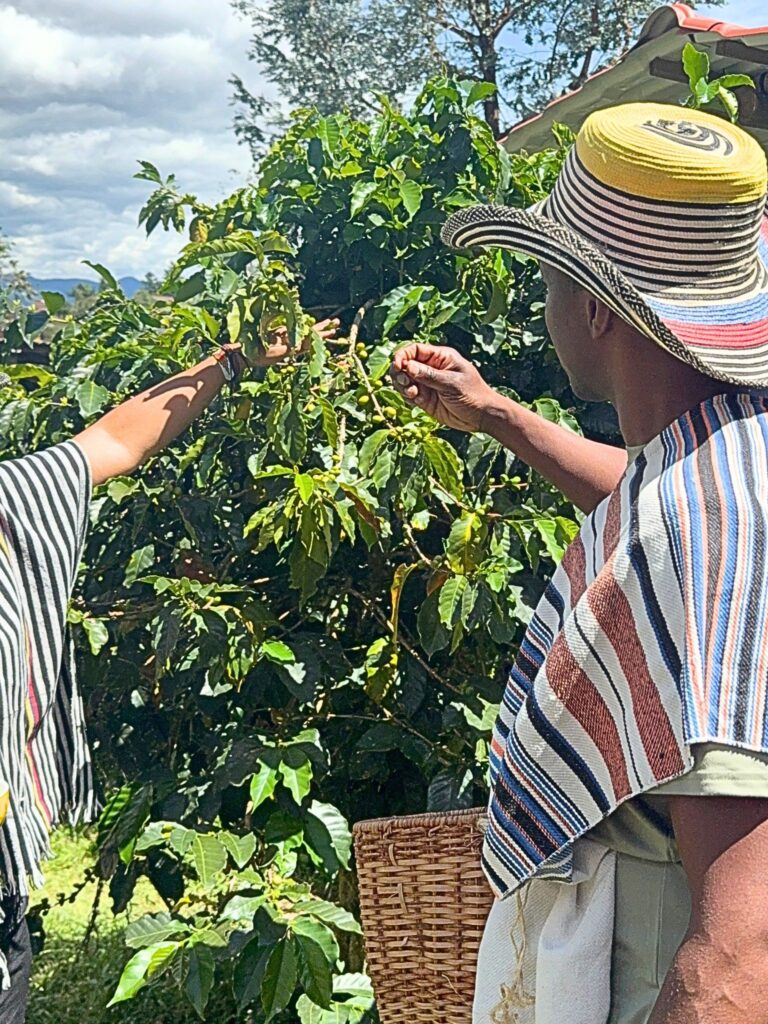
With our baskets in hand, we went out into the coffee fields. We were taught to pick only the bright red cherries, leaving the green ones behind so they could continue ripening.
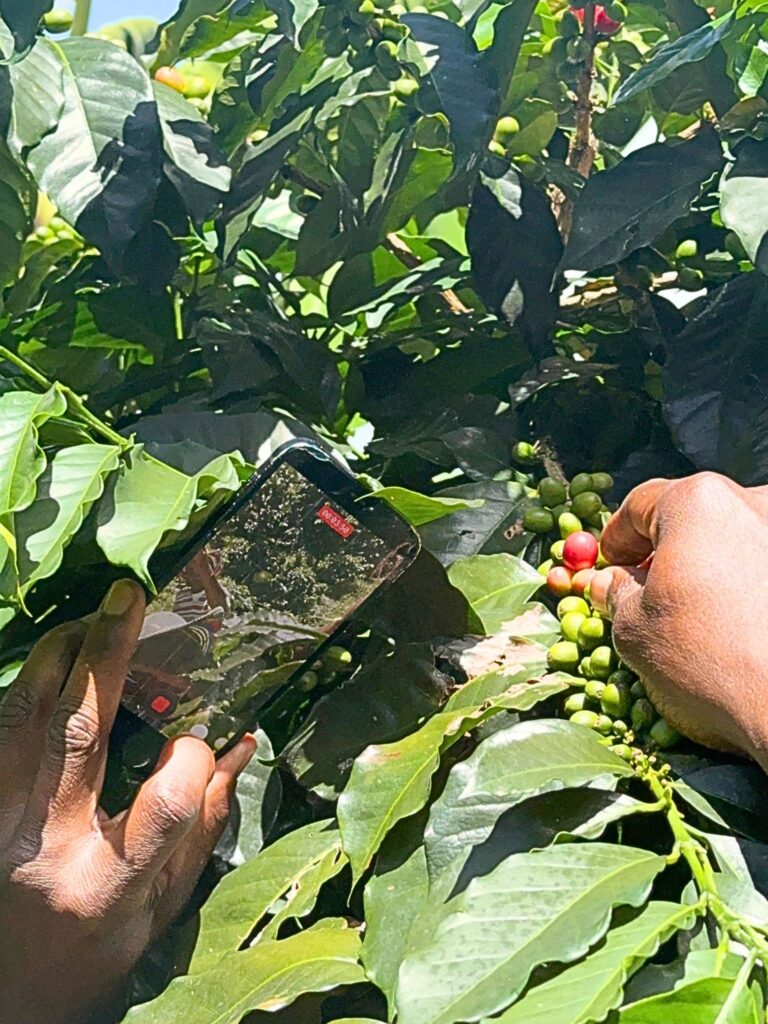
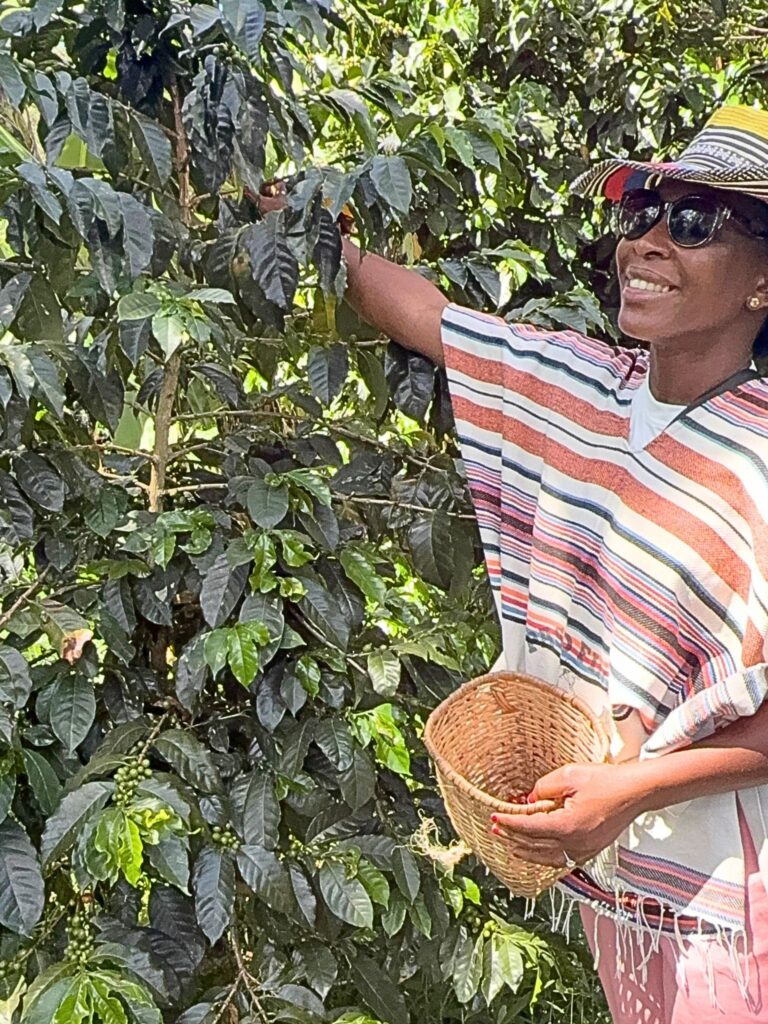
I was surprised to learn it takes roughly 70 ripe coffee cherries to produce a single cup of coffee.
From Cherry to Cup
This wasn’t a tour where we simply watched someone demonstrate how coffee is made. After picking the ripe coffee cherries ourselves, we followed the beans through the different stages of production, washing them, learning about fermentation and how the outer fruit is removed, seeing how the beans are dried, and eventually roasting and grinding the coffee.
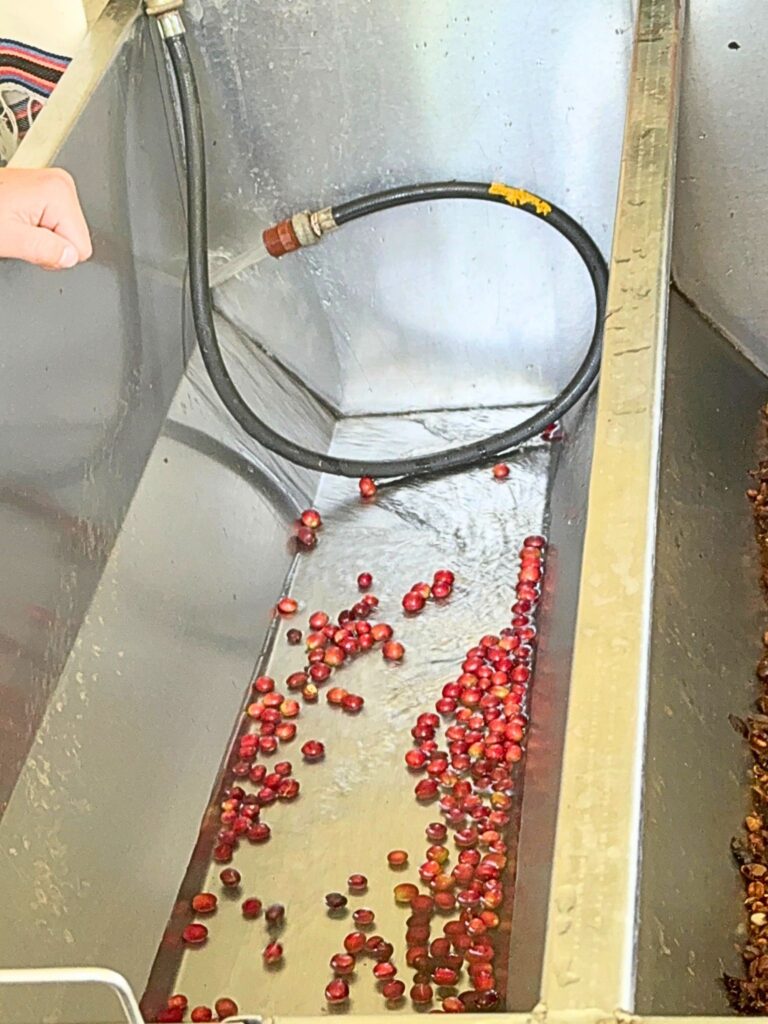
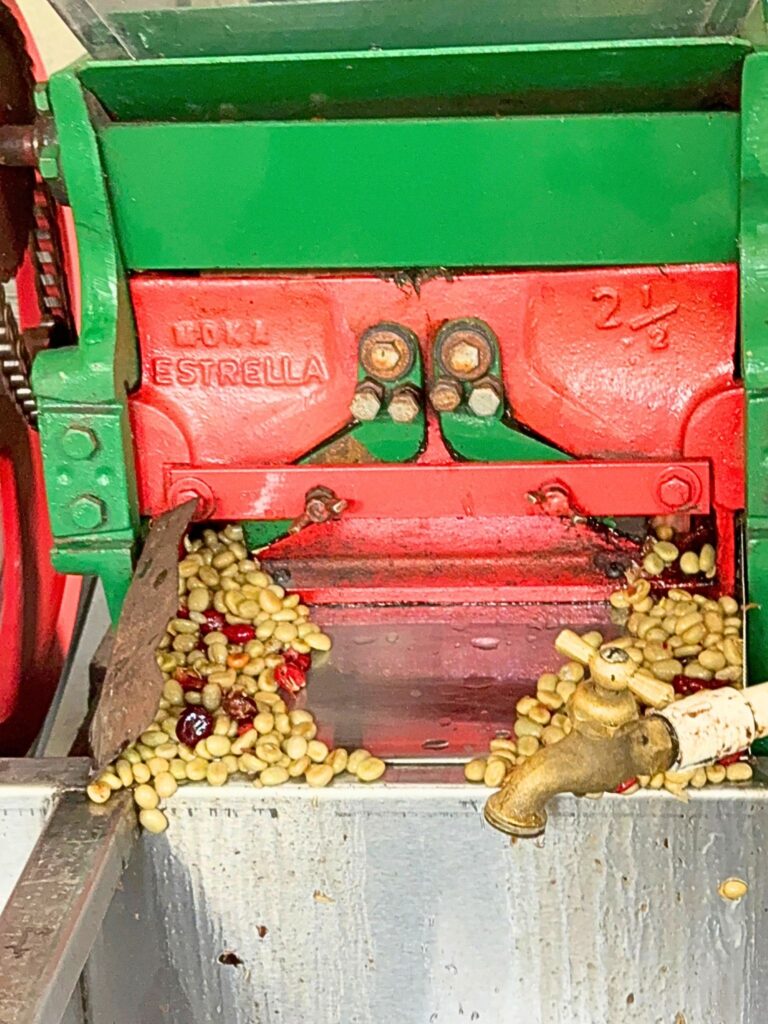
Going through the process ourselves gave me a completely different appreciation for how much time and work goes into a single bag of coffee.
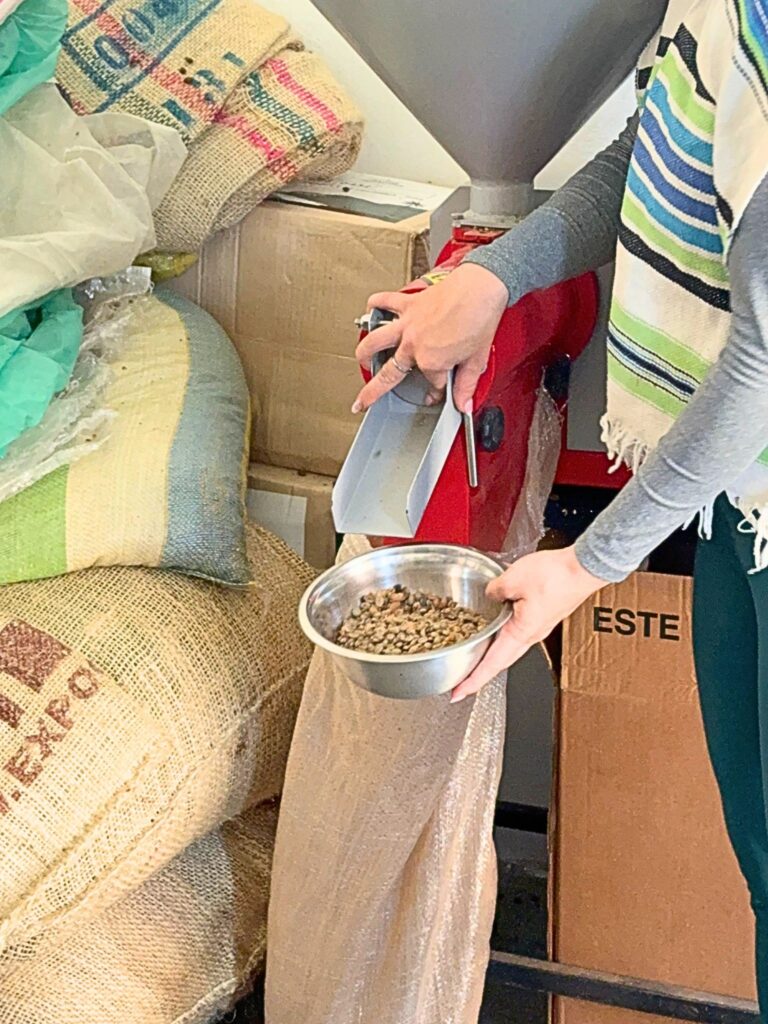
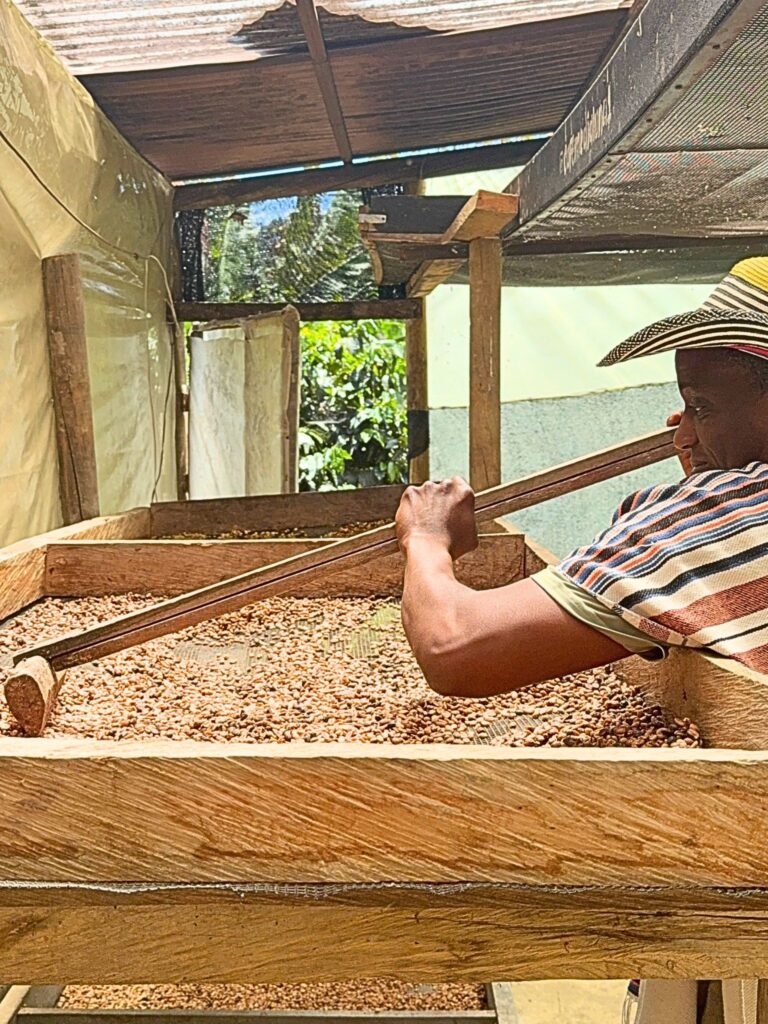
Along the way, our guides also challenged some of what I thought I knew about coffee. They explained how darker roasting can cover up some of the beans’ natural flavors, while lighter and medium roasts make it easier to notice characteristics influenced by where and how the coffee was grown and processed. We tasted coffee as we learned, which made it much easier to understand the differences they were describing.
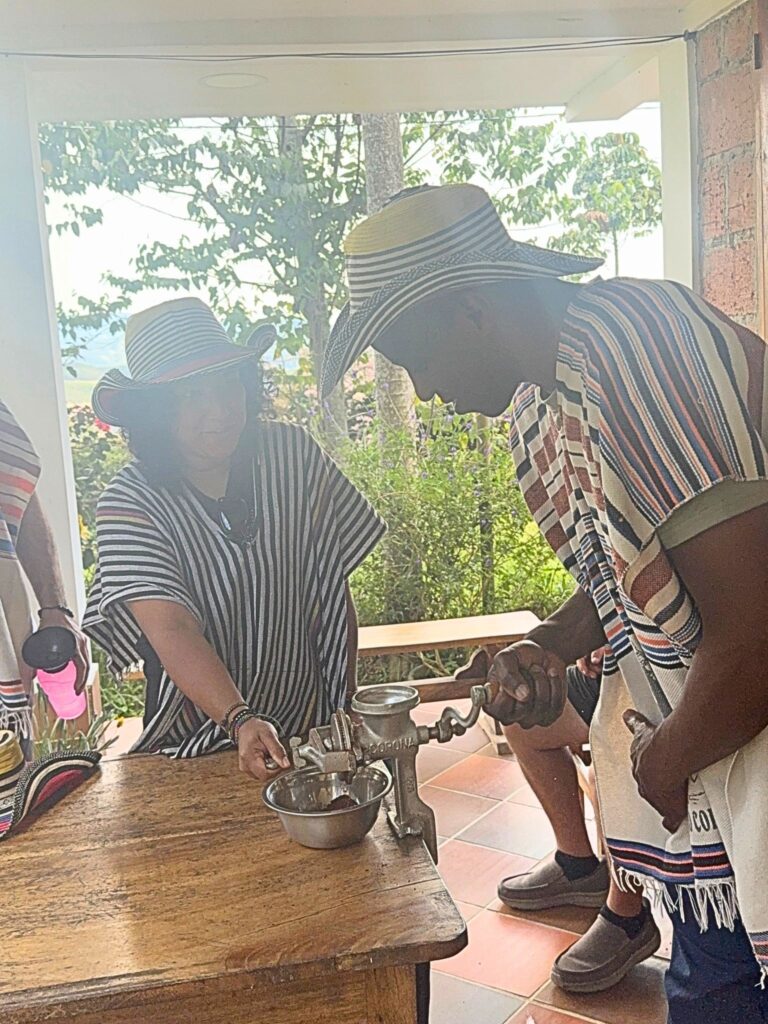
Even the brewing process had details I’d never paid much attention to before. When making drip coffee, for example, they showed us how they first rinse the paper filter with hot water so it doesn’t affect the taste of the finished coffee.
These were small things, but seeing the entire process from picking a cherry to brewing a cup made me realize just how much happens before coffee ever reaches my kitchen.
A Traditional Colombian Lunch
After a couple of hours outside, we headed into the family’s beautiful home for lunch. A traditional Colombian meal awaited us, complete with chicken, rice, avocado, fresh juice, and several homemade side dishes.
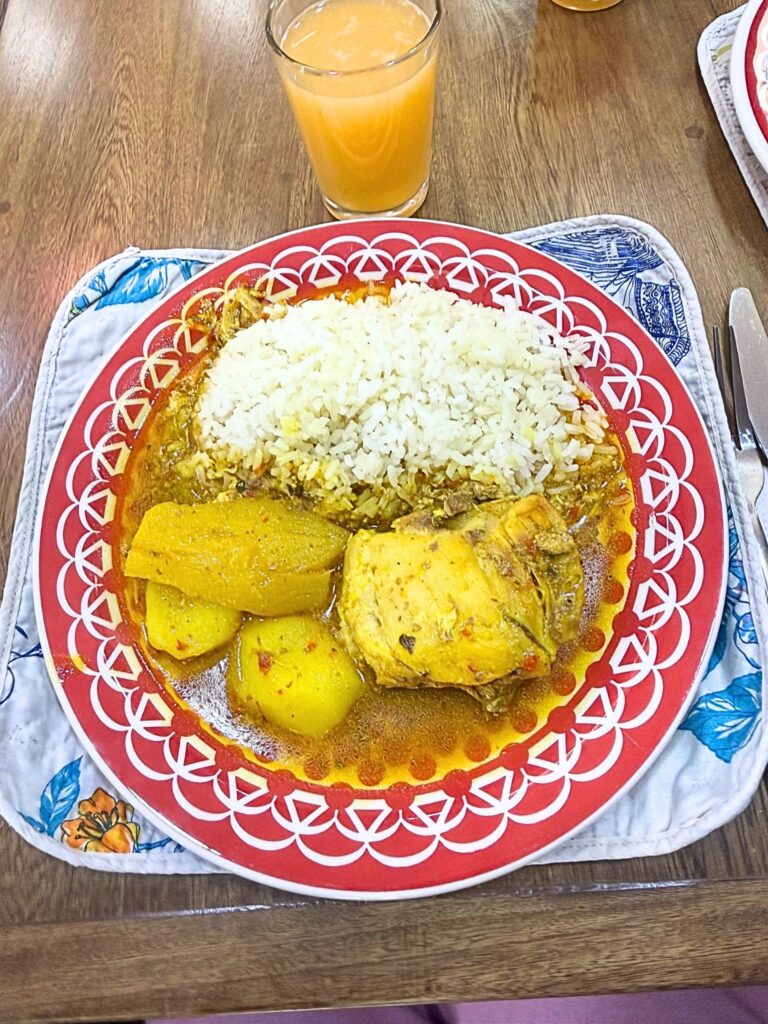
It felt less like eating at a restaurant and more like being invited into someone’s home. That personal touch really set this experience apart.
Coffee Tasting and Brewing Demonstration
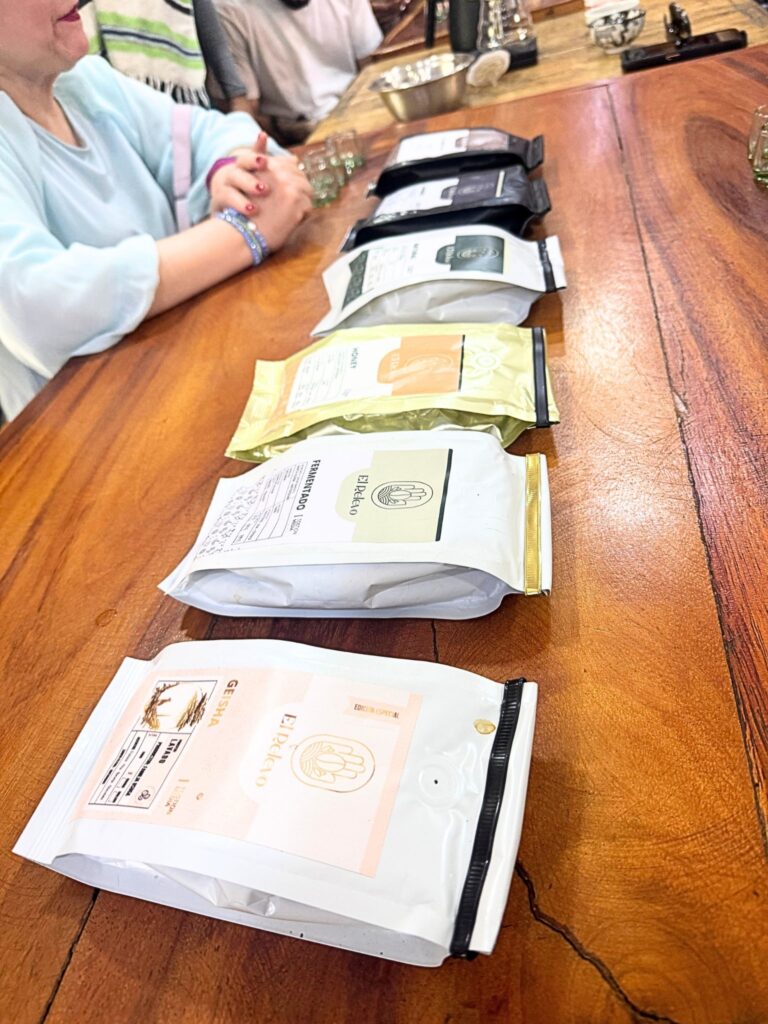
The afternoon ended with one of my favorite parts of the day. Laura introduced us to several different coffees produced on the farm, allowing us to compare their aromas, body, acidity, and flavor profiles side by side.
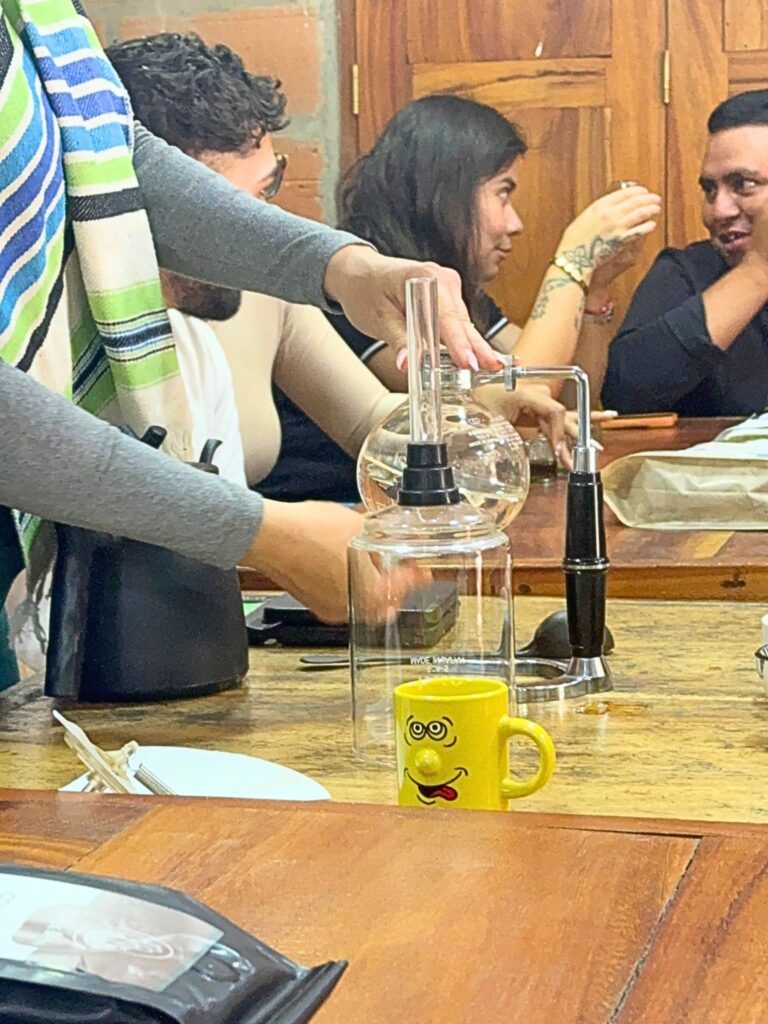
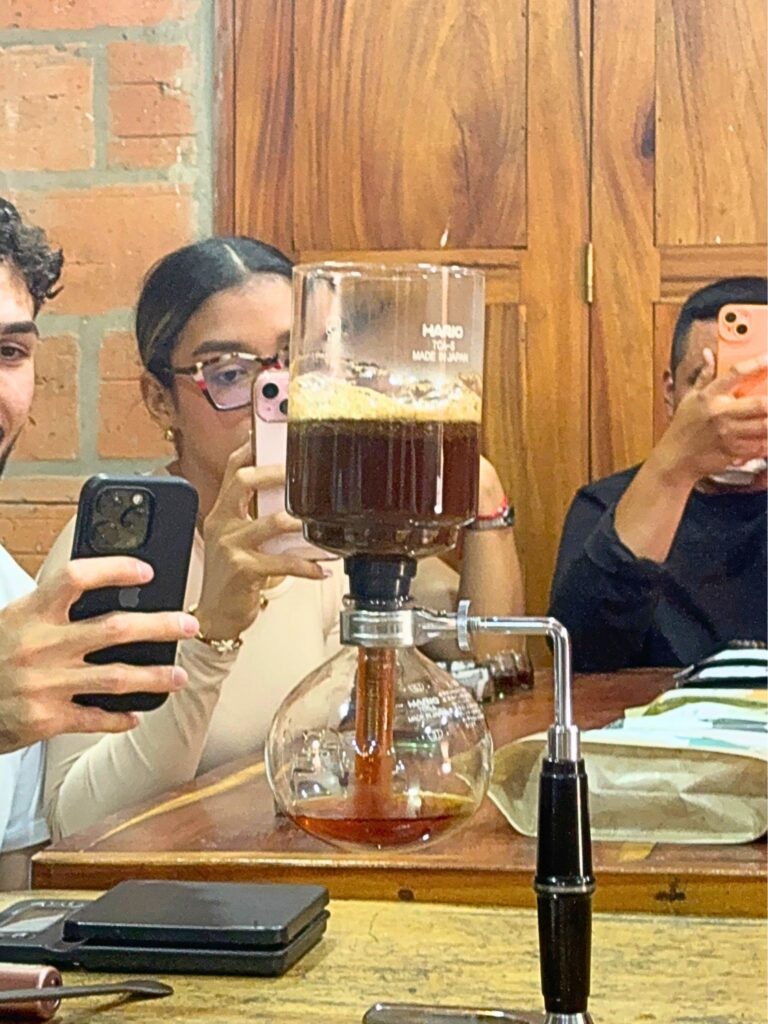
She also demonstrated several brewing methods, including:
- Moka pot
- Traditional drip brewing
- Pour-over methods
- French press
- Other manual brewing techniques used on the farm
Seeing how each brewing style highlighted different characteristics of the same coffee was fascinating. Of course, every coffee we tasted was available to purchase before leaving.
Is This Tour Worth It?
Absolutely. I’ve taken food tours, brewery tours, and farm tours all over the world, but this was one of the most educational experiences I’ve ever had.
What made it special wasn’t just the coffee; it was the people. Between Tatiana’s engaging storytelling, Laura sharing generations of family knowledge, the hands-on activities, incredible food, and beautiful mountain setting, it felt less like a tour and more like spending the day with a family passionate about what they do.
If you enjoy coffee, even casually, I think you’ll leave with a completely different appreciation for what’s in your morning cup. And after everything we learned, I don’t think I’ll ever look at grocery store coffee the same way again.