
Classic cars hold a special place in automotive history. Many of them are remembered for their design, performance, and the driving feel they once offered. Over time, though, market value doesn’t always match nostalgia. Some models that were once desirable have slipped far from their former standing.
Across different eras, from European luxury sedans to Japanese performance cars, certain classics have lost much of their appeal in the resale market. Parts shortages, high maintenance costs, and shifting buyer interest have pushed their values down. This ranked list looks at 18 classic cars that have dropped so much in value they’re now considered nearly worthless compared to their past reputation.
Chevrolet Caprice
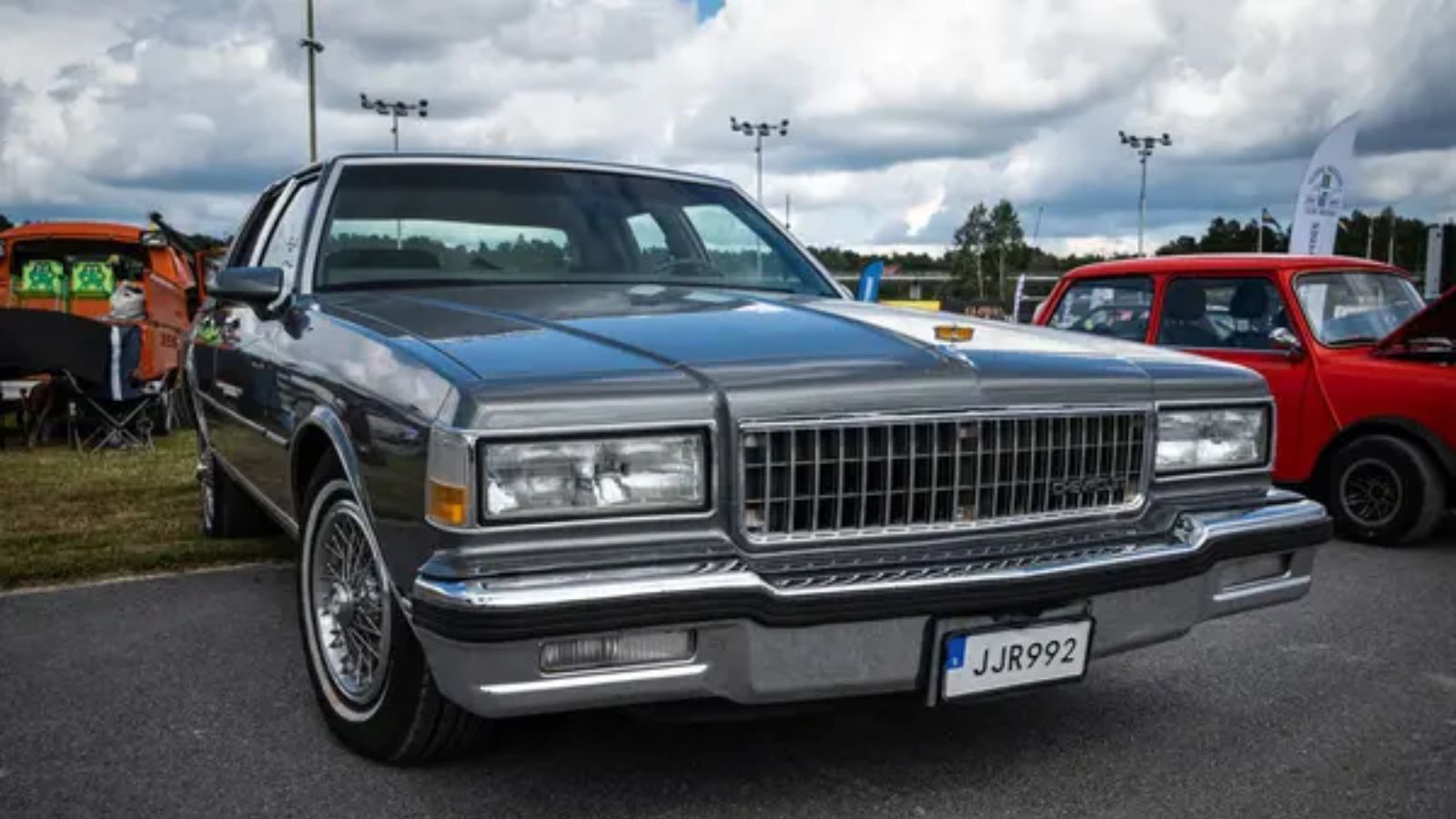
The Chevrolet Caprice is a full-size sedan that first hit the roads in the middle of the 1960s. The flagship model attracted potential buyers with generous space, luxurious comfort, and robust engine choices.
Not long after its 1965 debut, the demand for large gas-guzzling sedans vanished. The bulky Caprice became dated, with buyers flocking to more fuel-efficient alternatives. As a result, the Caprice’s value has dropped considerably and has never returned to its former glory.
Fiat X1/9

The Fiat X1/9 is a two-seater sports car that debuted in 1972. Designed by Bertone, it featured a mid-engine layout and a removable targa-style top, offering a thrilling driving experience combined with open-top fun. Unfortunately, the Fiat X1/9 has experienced significant depreciation over the years. Factors contributing to this include reliability issues, difficulty finding parts, and declining demand for older European sports cars.
The X1/9’s depreciation has made it affordable for enthusiasts seeking a unique and quirky classic car. Despite its lower resale value, the X1/9’s charming design and mid-engine layout still appeal to those looking for a distinctive and engaging driving experience.
1964 Mercury Marauder

The 1964 Mercury Marauder was a full-size, performance-oriented car introduced by Mercury, the luxury subdivision of Ford. The Marauder lineup aimed to provide a mix of style, comfort, and power.
Despite a low production run, Marauders quickly plummeted in value just years after the model’s initial release. A shift in buyer preferences towards smaller and more fuel-efficient vehicles played a major part, as did the increased availability of more powerful muscle cars from rival automakers. As a result, the 1960s Marauder can often be found at relatively affordable prices compared to its original value.
Dodge Charger

There is no denying that the original Dodge Charger is easily one of the most significant muscle cars in the world. Believe it or not, some variants of this automotive icon are nowhere near as valuable as the rarest trim levels.
Some later generations of the Charger, especially those with higher production numbers or those powered by weaker engines, have experienced rapid depreciation. Models from the early 1970s don’t hold their value anywhere near as well as their older counterparts.
Ford Torino

Success in NASCAR helped establish the Ford Torino’s reputation in the late 1960s. The iconic Torino Talladega was a race car based on Ford’s flagship midsize. However, Torino’s racing heritage was not enough to sustain its value.
A change in market preferences, rising fuel costs, and the introduction of newer vehicles that outperform the once-unbeatable Ford Torino are to blame. Today, the vehicle is a great entry-level classic car for petrol heads on a tighter budget.
Chevrolet Corvette C3 (1980s)

The third generation of America’s first sports car saw a long production run that started in the second half of the 1960s and continued into the early 1980s. Although the C3 was a modern car when it first launched, the model struggled to keep up with the changing market over a decade later.
By the early 1980s, the C3 was already somewhat dated. GM offered the car the L-48 V8 engine that made only 180 horsepower, a far cry from the big-block variants from a decade earlier. As a result, the late-production C3 Corvette is among the cheapest legendary classic cars money can buy.
Lincoln Continental

This luxury vehicle’s history dates back to the late 1930s. As one of Lincoln’s flagship models, it quickly gained a reputation for its elegant design, spacious interior, and refined driving experience. Production of the model was only discontinued in 2020.
The Lincoln Continental has experienced notable depreciation over time. While earlier generations, such as the iconic ’60s models, hold their worth well, later generations have seen a significant decline in value. This depreciation presents an opportunity for those seeking a luxurious and comfortable ride at a more affordable price point in the classic car market.
Cadillac Allante

Cadillac introduced the stylish Allante in the late 1980s. This drop-top was designed to compete with classy European sports cars while maintaining a domestic price tag. The body was even designed by Italian coachmaker Pininfarina!
Sadly, Allante suffered from serious quality control issues, high production costs, and strong competition from established luxury brands. Skyrocketing maintenance costs successfully scared buyers and owners away, resulting in the car plummeting in value.
Ferrari Mondial

The Mondial was unlike any other Ferrari. In 1980, the Italian automaker released this four-seater sports car as a more practical alternative to the other Prancing Horses. As expected, most die-hard Ferrari fans weren’t too fond of the Mondial. The departure from Ferrari’s traditional mid-engine, two-seater sports car philosophy made the Mondial less desirable than its alternatives.
As a result, the Mondial has become a more affordable entry point into the world of Ferrari ownership, making it an attractive option for enthusiasts seeking a distinctive and accessible classic Ferrari experience. It remains one of the most affordable classic Ferrari models money can buy.
Chevrolet Camaro Z28

The Camaro underwent a much-needed update in the early 1980s with the release of the third generation of the iconic muscle car. The new Camaro featured improvements in handling, a new aerodynamic design, and various V8 engine options.
Reliability concerns caused the third-gen to plummet in value shortly after its release. An underpowered variant equipped with GM’s 305-cubic-inch V8 motor rated at barely 190 horsepower certainly didn’t help, either. These bad boys could be picked up for just a few thousand dollars at one point.
DeLorean DMC-12
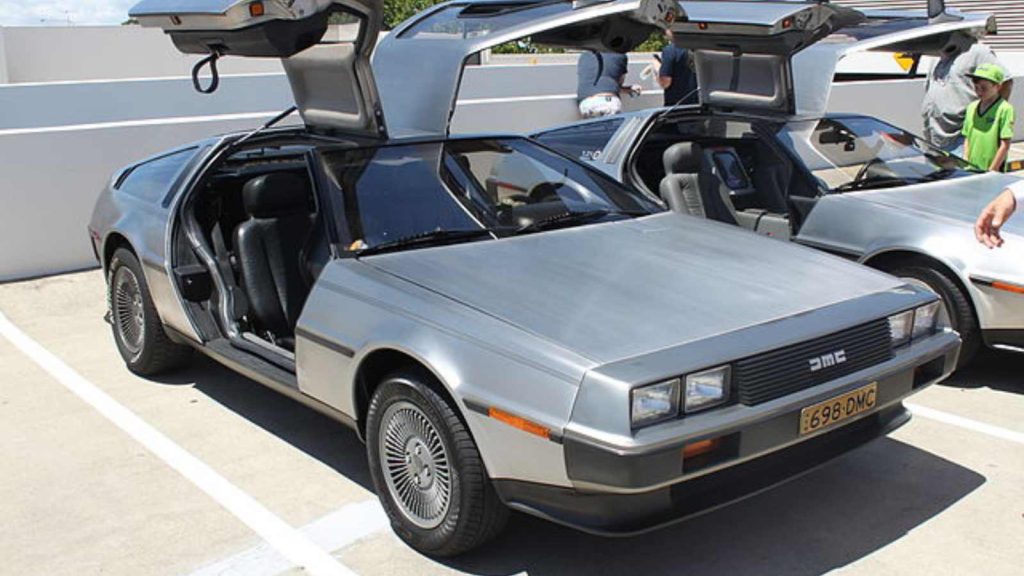
The DeLorean DMC-12 is an iconic sports car that gained worldwide fame after appearing in the “Back to the Future” movies. Introduced in 1981, the DeLorean was envisioned as a futuristic and innovative vehicle with its stainless steel body and gull-wing doors.
Sadly, the performance of the Delorean did not match its extravagant looks. The vehicle was severely underpowered and handled badly. Additionally, a high-profile legal case involving the company’s founder, John DeLorean, further impacted its reputation. As a result, the DeLorean DMC-12 became a symbol of failed automotive ventures and experienced a substantial decline in value.
Renault Le Car

The Renault Le Car, also known as the Renault 5 outside the US, debuted in 1972 as a compact hatchback. It quickly gained popularity for its efficient design, affordability, and practicality.
Owners quickly discovered that the Le Car suffered from serious reliability issues and a lack of parts and servicing within the US. As a result, this cute little hatchback quickly plummeted in value and hasn’t really recovered since.
Buick Riviera

The Buick Riviera is a luxury coupe that made its debut in 1963. It was introduced as Buick’s flagship model, embodying elegance, power, and cutting-edge design. The iconic Boat Tail designed and offered for the 1971-73 model years, remains among the most iconic variants of the car.
Despite its gorgeous looks, the Buick Riviera saw significant depreciation. The demand for powerful luxury coupes practically vanished following the oil crisis. There was no place on the market for vehicles such as the Riviera anymore.
Alfa Romeo GTV6

Alfa Romeos are among the best-looking automobiles in the world, and the gorgeous GTV6 is no exception. Initially released in 1980, this sports coupe features a rear-wheel drive layout and a great-sounding V6 engine.
Alfa Romeo cars are notorious for reliability issues and high maintenance costs. The GTV6 quickly declined in value shortly after its discontinuation in the late 1980s. Today, a well-preserved unit can be picked up for a fraction of its original MSRP.
Porsche 928

The Porsche 928 is a grand tourer that debuted in 1977. It is designed to provide a luxurious driving experience with powerful performance. It was Porsche’s first front-engined V8-powered sports car, designed to compete with high-end GT models. However, the Porsche 928 has experienced significant depreciation over time.
Factors contributing to this include the initial high cost of ownership, expensive maintenance and repairs, and a shift in market preferences towards more traditional rear-engined Porsche models. The 928 faced challenges in maintaining its value in the used car market. As a result, it has become a more accessible option for Porsche enthusiasts seeking a unique blend of luxury and performance at a more affordable price point.
Triumph TR7

The Triumph TR7 is a sports car that debuted in 1975. Designed to be modern and affordable, it featured a wedge-shaped design and a 2.0-liter engine, aiming to capture the spirit of the era. The Triumph TR7 has experienced notable depreciation over time. Factors contributing to this include quality control issues, reliability concerns, and changing market preferences for more classic and revered sports car models.
The TR7’s depreciation has made it an accessible choice for enthusiasts seeking a unique and budget-friendly classic car experience. Despite its reputation, the TR7 still holds a dedicated following and offers a distinctive driving experience for those who appreciate its unique design and British heritage.
Chrysler TC by Maserati

The Chrysler TC by Maserati was a luxury convertible introduced in 1989 as a collaboration between the two automakers. Similar to the Cadillac Allante mentioned, the aim was to combine American luxury with Italian performance.
Unsurprisingly, buyers didn’t want to pay a Maserati price for a Chrysler. The sales figures were low, and the model was quickly retired just a few years after its debut. The remaining units plummeted in value due to high maintenance costs. The now-forgotten TC can be a good deal for buyers on a budget looking for a quirky, unique ride.
BMW M3 E46

The BMW M3 E46 is a high-performance sports car based on the 3-Series that debuted in 2000. Impressive performance, precise handling, and a powerful inline-six engine under the hood ensured that the fourth-gen M3 stayed true to its roots.
The BMW M3 E46 experienced a significant depreciation shortly after its discontinuation in 2006. The introduction of newer M3 models, skyrocketing maintenance costs, and the availability of alternative sports cars from Audi and Mercedes have contributed to its declining value. Today, the depreciated prices have made the E46 M3 a more accessible option for enthusiasts seeking a thrilling driving experience without breaking the bank.