Items are valuable because they fulfill fundamental needs such as protection, nourishment, and utility. To be valuable, an item should be durable, versatile, and functional without requiring complex resources or advanced technology.
In their 2023 survey of Americans’ preparedness for disaster, FEMA’s Preparedness Community found that 51 percent of Americans say they are prepared for a disaster, and 57 percent have taken steps in the past year to prepare.
An item’s value drops significantly when the item is non-essential, perishable, or dependent on external infrastructure that might not exist during a crisis. When the world is reduced to its essentials, these 20 unexpected items will become useless.
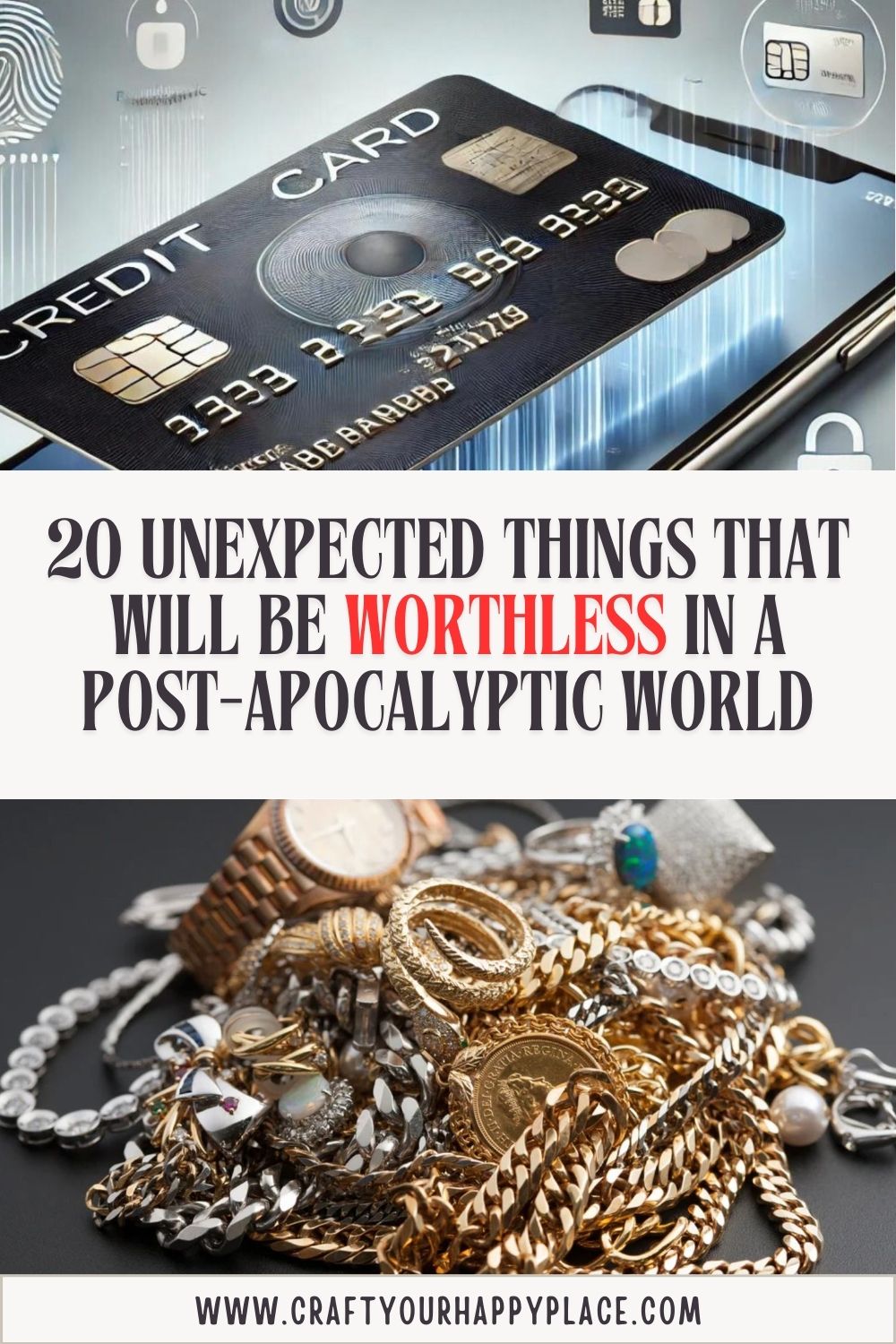
Jewelry and Precious Metals

Gold and silver have been precious for their beauty and cultural meaning, but there’s quite little practical use for them in a world where survival comes first. After the sky falls, glittering adornments are not the focus, and bartering (food, water, tools, etc.) will be necessary.
As the issues with precious metals as currency become apparent, their function will likely disappear. These metals are historically valuable, but more practical items will take center stage while they are ignored and untouched.
High-End Fashion and Designer Clothing

Designer clothing may be stylish, but it often lacks durability or practicality for survival. People will switch to functional and rugged clothing that can withstand any element and the challenge of a rough new environment.
Their preference will move from brand names to materials and craftsmanship that provide protection and longevity.
Paper Money and Financial Documents

Traditional currency, such as paper money, will mean nothing more than kindling in a non-functioning economy. These documents of finance and monetary assets no longer hold value because having direct access to the necessities is much more important for survival than having abstract wealth.
A world of people will quickly discover that paper fortunes will only buy you so much, and in a world where needs are always immediate, people will be desperate for it.
Credit Cards and Digital Payment Methods

Conveniences like swiping a card or tapping a phone disappear when digital networks collapse. Credit cards and digital payment options would not be useful without the infrastructure to enable electronic transactions.
Tangible things of immediate utility will replace them. This is a survival-focused world, where we have beneficial resources we can physically exchange and use instead of relying on intangible electronic balances.
Luxury Vehicles

Luxury vehicles deliver status and comfort, but their high maintenance and fuel requirements make them a luxury we can’t hide from in a post-apocalyptic reality. Because of fuel scarcity and the need for repair materials, these cars are more of a curse than a blessing.
It’ll incentivize people to move from automobiles that need more upkeep and provide less mobility to alternate modes of transport like bicycles or solar-powered vehicles. In this altered reality, practicality and efficiency lie over opulence.
Electronics Without Survival Use

Entertainment electronics—from gaming consoles to televisions—lose value quickly when power sources are scarce. Once devoid of electricity, these devices no longer sparkle; instead, they’re being replaced by energy-efficient, multi-functional tools that can exist beyond grid dependency.
Hand-crank radios and solar-powered gizmos would contain useful information and be useful. That reality was made clear last September when Hurricanes Irma and Maria wiped out 80 percent of Puerto Rico’s electric grid. ABC News reports that it took 11 months to restore electricity completely to all users.
Stock Certificates and Investment Portfolios

The worth of stock certificates and investment portfolios will also decrease with the collapse of financial markets. These abstract assets become irrelevant when life demands tangible resources, not theoretical wealth.
Once valuable financial documents have disappeared, practical items like tools, canned food, and the like replace them. If people discover fast enough, their once prized investments will soon find no currency when the facts of survival in everyday life take their due course.
Cosmetics and Beauty Products

Priorities will shift, and cosmetics and beauty products will fall to the bottom of the list. With limited resources, hygiene products will have priority before makeup does.
People will seek products that deliver clear benefits over superficial advantages.
Collectibles

Collectibles might be important, but when survival is everything, that doesn’t matter. Instead of being kept for sentimental use, they will be traded for basic supplies.
Alcohol (As a Luxury Item)

Some may try to buy alcohol, but the need for other necessary things will outshine the luxury feeling. On the other hand, the use of alcohol in medical sterilization may have some value because not all patients will be advocates of its consumption when survival is a priority.
This new reality centers on necessities that aren’t as important as water, food, and shelter; alcohol falls further down the list of things that need attention.
Fine Wines and Gourmet Foods

Fine wines and gourmet foods are perishable and devoid of nutritional value, making them impractical in a world of survival. Canned and non-perishable items that furnish sustenance and endure harsh conditions become preferred.
However, when folks are concerned primarily with meeting basic nutritional needs, gourmet dining’s indulgence pales.
Trendy Home Décor Items

In a survival scenario, decorative items become pointless. Functional, multipurpose furniture and storage solutions are the focus and aim of improving living conditions.
Instead, people will choose things of tangible benefit over and above things that look meaningless. Instead of showcasing personal style, it becomes about creating a space that supports you in living your life in that space.
High-Heeled Shoes and Formal Wear

In a post-apocalyptic world, comfort and durability take precedence over fashion. High-heeled shoes or formal wear provide little protection or practicality to meet the challenges.
Instead, they will shop for rugged outdoor gear and sturdy footwear to withstand rugged terrain and changing weather. As such, there is a shift from style to substance because clothing needs to help support survival.
Non-Essential Books and Magazines

Although literature holds its value, unnecessary books and magazines might become impractical. Next are the survival guides, medical handbooks, and other resources that provide you with real benefits.
The urgent need to adapt to new circumstances implies that people will put information that serves the purpose of survival first and last, and reading for leisure.
Portable Tech Without Energy Sources

Laptops, tablets, and portable techs lose their utility when they are short on power. Without dependable energy, these devices become useless.
If they have no choice, people will use solar-powered gadgets that only offer what they need and are not dependent on normal power grids.
Gym Equipment and Specialized Sports Gear

The need for manual labor and gathering of resources will replace traditional exercise routines that require special gear. We will change to practical tasks that make people fit instead of looking at fitness machines.
Wedding and Celebration Accessories

People will reallocate the use of wedding and celebration accessories and resources toward basic needs. Event planning items like shelves of decorations and piles of party favors lose value in favor of securing the essentials and maintaining safety.
Subscription-Based Services

Subscription-based services become unavailable without digital infrastructure. Connectivity, like streaming platforms, magazines, and other digital offerings, becomes a challenge.
People will look for hard-copy resources like survival guides and manuals, which provide information without Internet access or ongoing payments.
Plastic Toys and Non-Functional Children’s Items

Instead of plastic toys and non-practical items, we will opt for practical items that support learning and development. Finally, as with any lifestyle choice, parents will pick the items that will keep their kids entertained and can impart valuable skills that will contribute to surviving in the world.
Pet Supplies Beyond Food and Essential Care Items

Resources are stretched thin now, and pet owners are prioritizing essentials. Consequently, the best high-tech pet gadgets and fancy accessories get pathetically shoved aside and fall behind as people concentrate, yet again, on the basics: food and necessary healthcare products that keep their pets safe and healthy.
It seems that pet care is becoming more practical. The American Pet Products Association’s National Pet Owners Survey from 2023-2024 shows that 66% of U.S. households, or approximately 86.9 million families, now own a pet. This is a marked increase compared with 1988, when only 56% of households had pets.