
Every city has a story, and sometimes that story begins with a different name. Long before today’s skylines, highways, and neighborhoods existed, early settlers had to decide what to call the places they were building. Some names honored local leaders or explorers. Others came from Native American languages, nearby landmarks, or the hometowns settlers had left behind.
Those original names didn’t always last. Political disagreements, population growth, marketing efforts, and simple spelling changes all played a part in rewriting maps across the country.
According to historical records, only 36 states have cities that officially changed their names, and Illinois accounts for nearly half of all documented cases. Some changes were practical, while others came with unusual stories that are still talked about today.
Here are 16 American cities that once answered to another name, and why they changed.
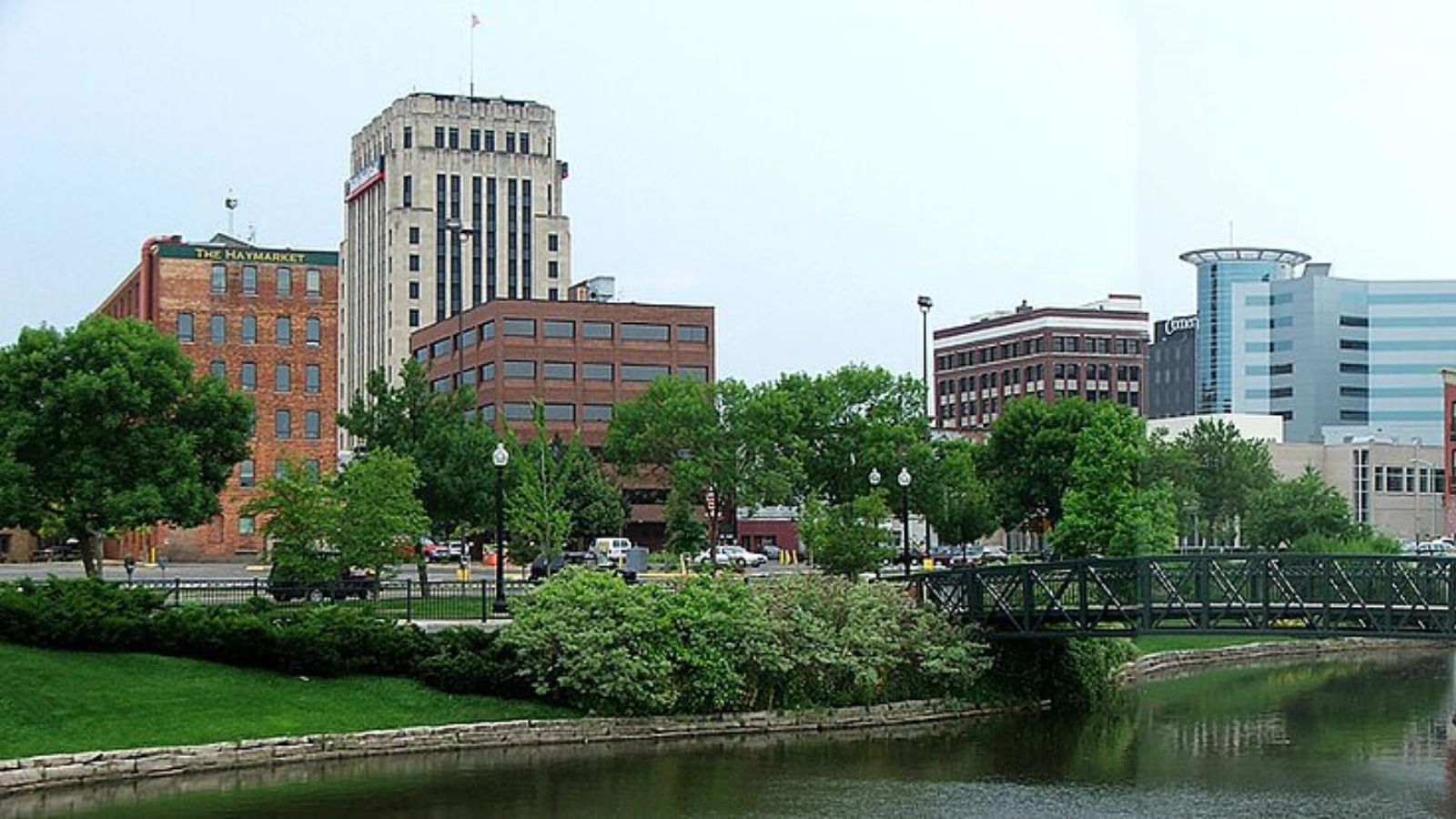
Bronson to Kalamazoo, Michigan
The city now known as Kalamazoo began as the village of Bronson in 1829, named after its founder, Titus Bronson. He hoped to build a community based on his strict personal values, which included strong opposition to drinking, gambling, tobacco, and dancing.
Those views created tension with many of the other settlers. By 1836, local leaders voted to rename the town Kalamazoo, and Bronson soon left the community.
No one agrees on the exact meaning of “Kalamazoo.” One well-known local legend tells of a Potawatomi man called Fleet Foot, who earned permission to marry by racing to a nearby river and back before a pot of water reached a boil.
Losantiville to Cincinnati, Ohio
Before it became Cincinnati, the settlement was known as Losantiville. The unusual name combined words from several languages to describe its location across from the mouth of the Licking River.
The name didn’t last long.
In 1790, Arthur St. Clair, the first governor of the Northwest Territory, replaced it with Cincinnati. The new name honored the Society of the Cincinnati, an organization made up of officers who had served during the American Revolution.
Today, the city is also known by nicknames such as “Queen City” and “Queen City of the West.”
Hot Springs to Truth or Consequences, New Mexico
Few cities have a name-change story quite like this one.
The town was originally called Hot Springs because of the mineral springs that attracted visitors for generations. During the late 1940s, the popular radio game show Truth or Consequences offered to broadcast its anniversary episode from any town willing to rename itself after the program.
Hot Springs accepted the challenge.
The broadcast brought nationwide attention to the small town, and the name Truth or Consequences has remained ever since.
Yerba Buena to San Francisco, California
Long before the Gold Rush, the settlement was known as Yerba Buena, a Spanish name referring to a fragrant herb that grew throughout the area.
English trader William Richardson established a trading post there in 1835 while the region was still under Mexican control.
Everything changed after the United States took control of California. In 1848, officials renamed the settlement San Francisco, just as thousands of fortune seekers poured into Northern California during the Gold Rush. The city grew almost overnight into one of the country’s busiest ports.
Jernigan to Orlando, Florida
The community that became Orlando started as a small settlement named after the Jernigan family, one of the area’s earliest pioneer families.
Fort Gatlin was built nearby during the Second Seminole War, and the settlement gradually expanded around it. As more people arrived, community leaders decided a new name better suited the growing town.
By 1856, the settlement had become Orlando.
When the city officially incorporated in 1875, only 85 people lived there. Today, it welcomes millions of visitors every year as one of the world’s best-known tourist destinations.
Shawmut to Boston, Massachusetts
Before English settlers arrived, Indigenous people knew the peninsula as Shawmut. Early colonists also referred to it as Trimountaine because three large hills stood nearby.
The area’s first European resident was William Blaxton, an Anglican minister who lived there by himself for several years. In 1630, he invited Puritan settlers from Charlestown to relocate after they struggled with their water supply.
The newcomers chose the name Boston after the town of Boston in Lincolnshire, England, where many of them had once lived. Isaac Johnson, one of the colony’s early leaders, is widely credited with suggesting the new name.
Rumford to Concord, New Hampshire
The settlement first became known as Rumford after it was incorporated in 1733.
Over time, disagreements arose between Massachusetts and New Hampshire over which colony controlled the area. After years of legal disputes, local leaders looked for a name that reflected the settlement’s new beginning.
They settled on Concord in 1765.
The word means harmony or agreement, making it a fitting choice after years of boundary conflicts. It has remained New Hampshire’s capital ever since.
Big Lick to Roanoke, Virginia
Before Roanoke became one of western Virginia’s largest cities, it was a small settlement known as Big Lick. The name came from nearby salt marshes where wildlife gathered to lick mineral-rich deposits.
The arrival of the railroad changed everything. Tracks reached the area in the 1850s, turning the community into an important transportation hub. As the town grew around the rail lines, local leaders decided the old name no longer fit its future.
In 1881, Big Lick officially became Roanoke. The name comes from “Rawrenock,” a Native American word associated with shell beads once used for trade and decoration. Three years later, Roanoke was officially chartered as a city.
Juliet to Joliet, Illinois
The city of Joliet traces its history to the 1600s, when French explorer Louis Jolliet and missionary Father Jacques Marquette traveled through the region.
When settlers established a town there in 1834, they called it Juliet. The spelling didn’t last long.
In 1845, residents voted to rename the town Joliet to honor Louis Jolliet, whose explorations helped introduce much of the upper Midwest to European maps. The city was reincorporated in 1852, and the revised spelling has remained ever since.
Boiling Springs Township to East Rutherford, New Jersey
When this community was incorporated in 1889, it was known as Boiling Springs Township.
Residents soon decided they wanted a name that better reflected the town’s location next to neighboring Rutherford. A public vote settled the issue, and in 1894 the community officially became East Rutherford.
Today, the borough is best known as the home of MetLife Stadium, where both the New York Giants and New York Jets play their home games.
Eugene City to Eugene, Oregon
Long before American settlers arrived, the area was home to the Chifin band of the Kalapuya people.
In 1846, pioneer Eugene Skinner built a cabin nearby after filing one of the first land claims in the region. The growing settlement became known as Eugene City in his honor.
Life wasn’t always easy. Seasonal flooding often turned streets into thick mud, earning the community the nickname “Skinner’s Mudhole.”
As the town continued to grow, officials shortened the name to Eugene in 1864. The simpler name stuck, and the city later became home to the University of Oregon.
Waterloo to Austin, Texas
Before it became the capital of Texas, the settlement was called Waterloo.
Jacob Harrell established one of the first permanent homes there in 1835 near the Colorado River. A few years later, leaders of the Republic of Texas began searching for a permanent capital.
Future president Mirabeau B. Lamar believed Waterloo was the right location and recommended it to the Texas Congress.
When lawmakers selected the site, they also chose a new name. The settlement became Austin in honor of Stephen F. Austin, whose work played a major part in the early settlement of Texas.
Manchester to Manchester-by-the-Sea, Massachusetts
The coastal town north of Boston spent most of its history with the simple name Manchester.
As time passed, residents found themselves regularly confused with other towns carrying the same name across New England. Mail, visitors, and business inquiries often ended up in the wrong place.
After years of discussion, voters approved a new name in 1989. The decision passed by only 33 votes.
Adding “by-the-Sea” made the town easier to identify while also highlighting its location along the Massachusetts coastline. It remains one of the few American towns whose official name clearly describes its setting.
Cleaveland to Cleveland, Ohio
Cleveland owes its name to General Moses Cleaveland, the surveyor who led an expedition into Connecticut’s Western Reserve in 1796. The settlement was originally spelled Cleaveland, matching his last name.
That extra letter didn’t survive for long.
A popular story says the editor of The Cleveland Advertiser dropped the “a” in 1831 because the original spelling took up too much space in the newspaper’s masthead. Whether that was the only reason or not, the shorter version caught on. Before long, maps, businesses, and government records all used the new spelling, and the city has been Cleveland ever since.
Denver, Colorado
Denver wasn’t renamed, but its story still comes with an interesting twist.
The city was named after James W. Denver, a politician, soldier, and former governor of the Kansas Territory. Early settlers hoped naming the town after him would improve their chances of becoming the region’s administrative center.
Ironically, James Denver had already stepped down as governor by the time the settlement received its name, so the gesture didn’t have the influence residents expected.
He visited Denver only twice, in 1875 and 1882. Reports from the time say he was disappointed by the modest welcome he received from the city that carried his name.
Phoenix, Arizona
When settlers established a community in central Arizona during the late 1860s, they debated what to call it.
One suggestion was “Stonewall,” after Confederate General Stonewall Jackson. Another idea came from Englishman Darrell Duppa, who noticed the remains of canals and settlements built centuries earlier by the Hohokam people.
Duppa believed the new community represented a fresh beginning built on the foundations of an older civilization. He proposed the name Phoenix, comparing the settlement to the mythical bird that rises from its own ashes.
The name captured that idea perfectly, and it has remained ever since.
Every Name Tells Part of the Story
A city’s name can reveal more than its location. It can reflect local history, honor an important figure, settle a political dispute, or mark the start of a new chapter.
Some places made only small spelling changes, while others adopted completely different names that reshaped how people thought about them. A few even made the switch because of a radio show or a close community vote.
These stories show that maps are never as permanent as they seem. Behind many familiar city names is a history full of unexpected decisions, colorful characters, and moments that still leave their mark centuries later.