Paris is home to roughly 160 churches and chapels, many of which have stood for centuries. They reflect the city’s rich history, changing architectural styles, and artistic heritage. Some are world-famous landmarks, while others are quieter places that reward anyone willing to step inside. Whether you’re interested in Gothic cathedrals, colorful stained glass, or peaceful interiors, these 12 churches and cathedrals deserve a place on your Paris itinerary.
Notre-Dame de Paris
Notre-Dame de Paris is one of the world’s best-known Gothic cathedrals and one of France’s greatest landmarks. Construction began in 1163 and continued for nearly two centuries before the cathedral was largely finished in 1345. Its soaring flying buttresses, towering façade, and three magnificent rose windows have inspired visitors for generations. Over the years, it has witnessed many historic moments, including Napoleon Bonaparte’s coronation in 1804 and the beatification of Joan of Arc in 1909.
Related: 17 Cheapest Places to Travel in 2026
Sainte-Chapelle
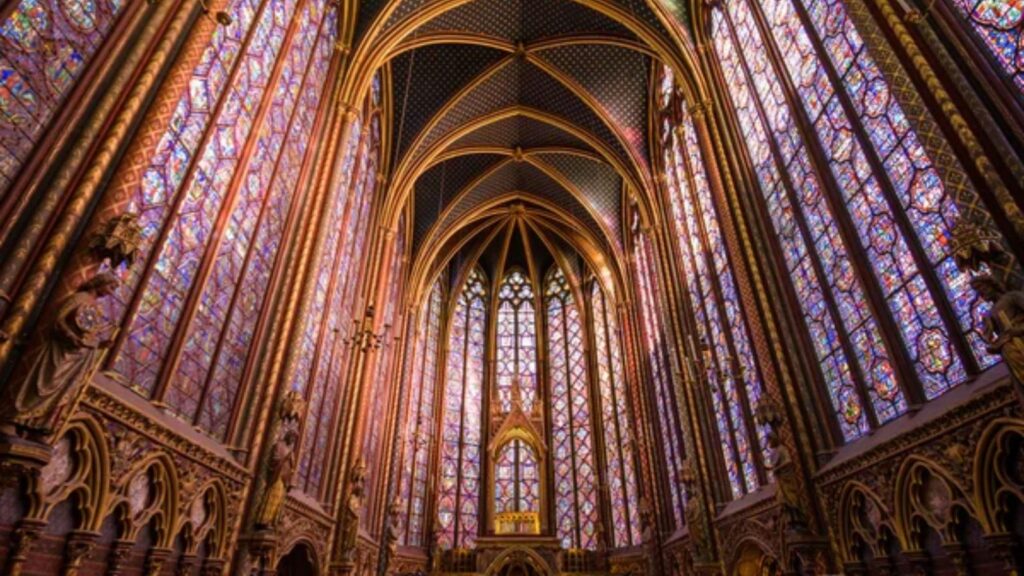
Sainte-Chapelle is famous for its breathtaking stained glass. Built between 1241 and 1248 for King Louis IX, the chapel was created to house sacred Christian relics, including the Crown of Thorns. Its 15 towering stained-glass windows stretch nearly 50 feet high and tell more than 1,100 biblical stories. When sunlight fills the chapel, the colorful glass creates one of the most unforgettable interiors in Paris.
Related: 16 Travel Mistakes That Will Ruin Your Vacation
Sacré-Cœur Basilica
Perched on the highest point of Montmartre, Sacré-Cœur Basilica offers sweeping views of Paris along with impressive architecture. Construction began in 1875, was completed in 1914, and the church was consecrated in 1919. Built in the Romanesque-Byzantine style, it stands apart from the city’s many Gothic churches. Its bright white exterior stays remarkably clean thanks to the travertine stone used in its construction, while its dome rises 83 meters above the surrounding neighborhood.
Saint-Sulpice
Saint-Sulpice is the second-largest church in Paris after Notre-Dame and is known for its grand scale. Construction started in 1646 and wasn’t completed until 1780, resulting in a mix of architectural styles. Its twin towers are instantly recognizable, with one tower remaining unfinished, giving the façade an unusual appearance. Inside, visitors can admire impressive murals painted by Eugène Delacroix, including the celebrated Jacob Wrestling with the Angel.
Église de la Madeleine
Église de la Madeleine looks more like an ancient Roman temple than a traditional church. Construction began in 1764 and continued until 1842 after several changes in plans and political events. Napoleon originally intended the building to honor his army before it eventually became a church. Its exterior is surrounded by 52 massive Corinthian columns, while the richly decorated interior features striking sculptures, mosaics, and an impressive domed ceiling.
Saint-Eustache Church
Saint-Eustache combines Gothic architecture with Renaissance influences, giving it a style unlike any other church in Paris. Construction lasted from 1532 to 1637 during the reign of King François I. The church rivals Notre-Dame in size, with a soaring interior and a nave stretching more than 100 meters. It also houses one of France’s largest pipe organs, containing around 8,000 pipes, and has welcomed many notable figures throughout French history.
Église Saint-Germain-des-Prés
Saint-Germain-des-Prés is the oldest church in Paris, with origins dating back to the 6th century. Originally part of a Benedictine abbey, it served as the burial place for Merovingian kings. While much of the building reflects Romanesque architecture, colorful 19th-century murals brighten the interior. The church has survived centuries of political change, including the French Revolution, making it one of Paris’s most historic religious sites.
Saint-Étienne-du-Mont
Construction of Saint-Étienne-du-Mont began in 1492 and continued until 1655, though the site’s religious history stretches back much farther. The church is best known for its beautifully carved rood screen, the last remaining example of its kind in Paris. It also houses the shrine of Saint Geneviève, the patron saint of the city. Visitors can also find the tombs of renowned French figures, including philosopher Blaise Pascal and playwright Jean Racine.
La Trinité Church
Built between 1861 and 1867, La Trinité Church is one of the standout churches from the Second French Empire. Designed by architect Théodore Ballu, the building features an elaborate façade filled with statues, decorative carvings, and a bell tower rising 65 meters above the surrounding streets. Inside, detailed stained glass and a magnificent organ create a beautiful setting. Composer Hector Berlioz, who lived nearby, had his funeral service here.
Église Saint-Augustin
Completed in 1871, Église Saint-Augustin was one of the first churches in Paris to use an iron structural framework. Designed by Victor Baltard, it blends Romanesque, Byzantine, and Gothic influences into one striking building. Its massive dome rises nearly 80 meters and dominates the surrounding neighborhood. The innovative engineering later inspired similar construction methods used in larger modern buildings.
Église Saint-Roch
Église Saint-Roch has long been connected with artists, writers, and important figures in French history. Construction began in the 17th century, and the church features numerous chapels filled with paintings and sculptures. Several well-known historical figures, including philosopher Denis Diderot, are associated with the church. Its richly decorated interior makes it one of the finest Baroque churches in Paris.
Saint-Vincent-de-Paul Church
Dedicated to Saint Vincent de Paul, the patron saint of charity, this impressive church was completed during the 19th century and remains a symbol of compassion and community service. The grand staircase leading to its entrance creates an impressive first impression, while the interior features beautiful frescoes, elegant columns, and peaceful spaces for reflection. It’s a quieter stop than many of Paris’s famous landmarks, making it well worth a visit for those looking to escape the crowds.