Root vegetables are some of the most rewarding crops you can grow in a backyard garden. Most are easy to care for, produce generous harvests, and store well after picking. They’re also packed with nutrients and work in everything from soups and salads to roasted side dishes and hearty dinners.
Whether you’re planting your first vegetable bed or adding new crops to an established garden, these 15 root vegetables are worth growing.

Potatoes
Potatoes are one of the most reliable crops for home gardeners. Varieties like Russet, Yukon Gold, and Red potatoes each have their own flavor and texture, giving you plenty of options in the kitchen. They’re rich in potassium and vitamin C and can be mashed, roasted, baked, or fried.
Potatoes need more space than many other root vegetables, but the large harvest usually makes the extra room worthwhile.
Related Article: 15 Vegetables That Attract Beneficial Pollinators
Radishes
Radishes are one of the quickest vegetables you can grow, with many varieties ready to harvest in just three to four weeks. That makes them perfect for gardeners who like seeing fast results.
Their crisp texture and peppery bite add freshness to salads, and they’re just as tasty roasted or pickled.
Beets
Beets are one of the most versatile vegetables in the garden. The sweet roots can be roasted, steamed, or pickled, while the leafy tops are great sautéed or added to salads.
They come in classic deep red, golden yellow, and striped varieties, and they’re full of vitamins, minerals, and antioxidants.
Related Article: 13 Surprising Vegetables That Thrive Without Soil
Turnips
Turnips don’t always get the attention they deserve, but they’re an excellent cool-season crop. The roots become mild and slightly sweet after cooking, making them a great addition to soups, stews, and roasted vegetable dishes.
The leafy greens are edible, too, and many gardeners grow turnips just to harvest the nutritious tops.
Sweet Potatoes
Sweet potatoes thrive in warm weather and reward gardeners with a generous harvest in late summer or fall. Their naturally sweet flavor works well in both savory meals and desserts.
They’re packed with vitamins A and C, along with fiber and other nutrients that make them a healthy addition to your garden.
Related Article: 11 Low-Maintenance Vegetables for Beginner Gardeners
Parsnips
Parsnips develop a rich, slightly sweet flavor after they’re cooked, especially after they’ve been exposed to cool temperatures. They roast beautifully and pair well with other fall vegetables.
These long roots grow best in loose, deep soil where they have plenty of room to develop.
Carrots
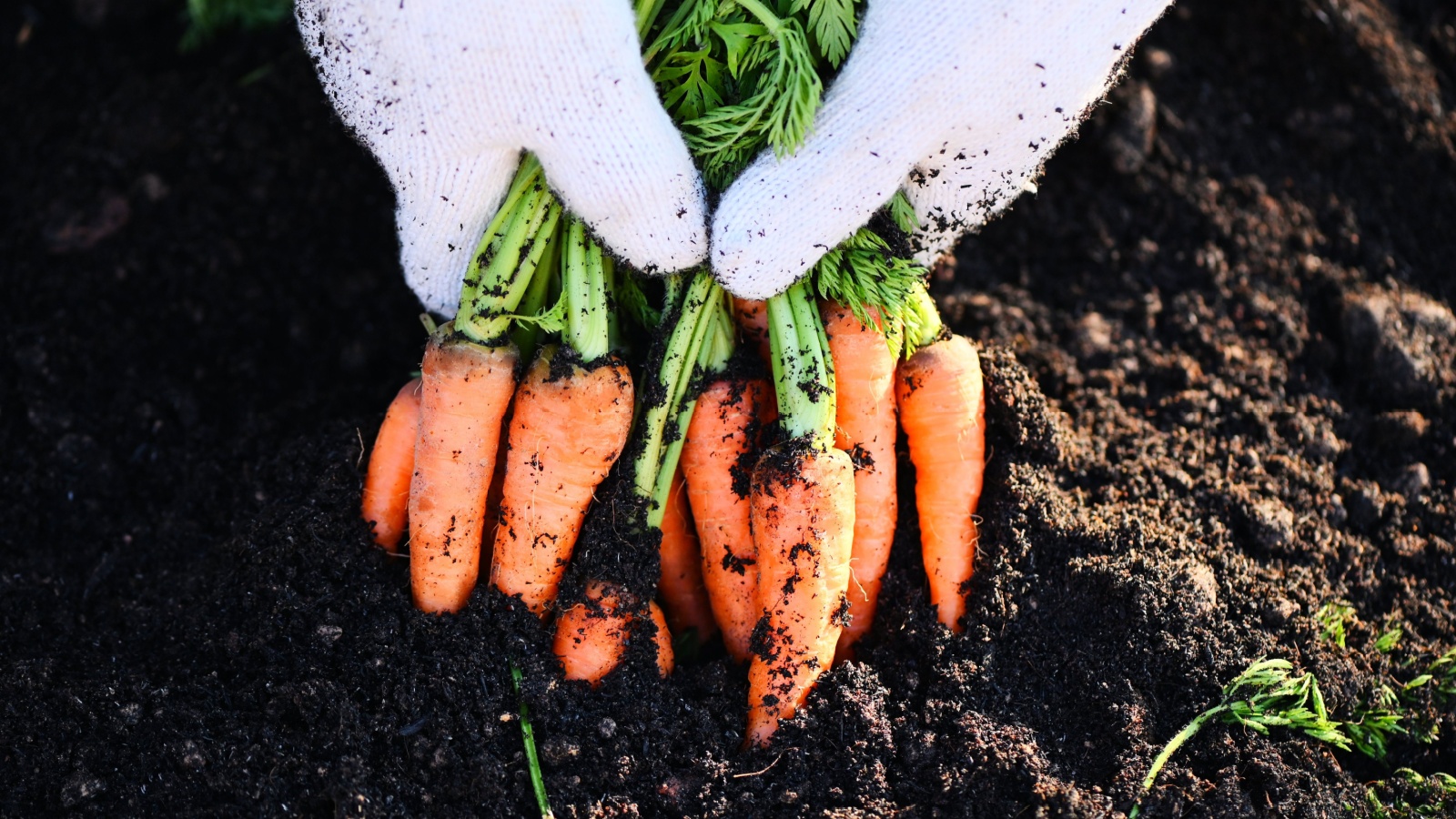
Carrots are one of the easiest vegetables for beginners to grow. They’re available in orange, purple, yellow, white, and even red varieties, adding plenty of color to the garden.
Rich in vitamin A, carrots are a kitchen favorite for salads, soups, snacks, and roasting. They also grow well in raised beds and containers.
Onions
Onions are a must-have in almost every vegetable garden. They come in yellow, white, and red varieties, each bringing a slightly different flavor to your cooking.
They’re known for compounds that support overall health and are one of the most widely used vegetables in home kitchens.
Related Article: 12 Vegetables That Are Great for Vertical Gardening
Garlic
Garlic takes very little effort once planted, making it a favorite for gardeners of all experience levels. Plant the cloves in well-drained soil with plenty of sunlight, and they’ll develop into full bulbs over the growing season.
Fresh homegrown garlic has a richer flavor than many store-bought bulbs and has long been valued for its health benefits.
Ginger
Ginger can be grown at home if you have warm, humid conditions or a sunny indoor space. The knobby rhizomes add bold flavor to stir-fries, soups, baked goods, and tea.
Many people also grow ginger for its natural anti-inflammatory properties and digestive benefits.
Rutabaga
Rutabagas produce large roots with a mild, slightly sweet flavor that’s perfect for roasting, mashing, or adding to soups.
They grow best in cool weather and are a good source of vitamin C, potassium, and fiber, making them an excellent crop for fall gardens.
Kohlrabi
Kohlrabi may look unusual, but it’s surprisingly easy to grow. The round stem has a crisp texture and a mild flavor similar to broccoli stems or cabbage.
It can be eaten raw, roasted, or stir-fried, while the leaves are also edible and work well in salads or cooked dishes.
Jerusalem Artichokes
Also called sunchokes, Jerusalem artichokes produce knobby underground tubers with a slightly sweet, nutty flavor. They’re rich in fiber and can be roasted, mashed, or added to soups.
These plants grow vigorously in sunny locations with well-drained soil and often return year after year.
Taro
Taro is widely used in many Asian, Pacific Island, and African cuisines. The starchy root becomes creamy once cooked, making it a popular ingredient in soups, stews, and desserts.
Its large leaves are also edible after proper cooking, giving gardeners two useful harvests from one plant.
Cassava
Cassava, also known as yuca, is an important food crop in many parts of the world. The large roots are rich in carbohydrates and serve as a filling source of energy.
It grows best in warm climates with well-drained soil. Before eating cassava, it must be prepared properly to remove naturally occurring compounds found in the raw root.