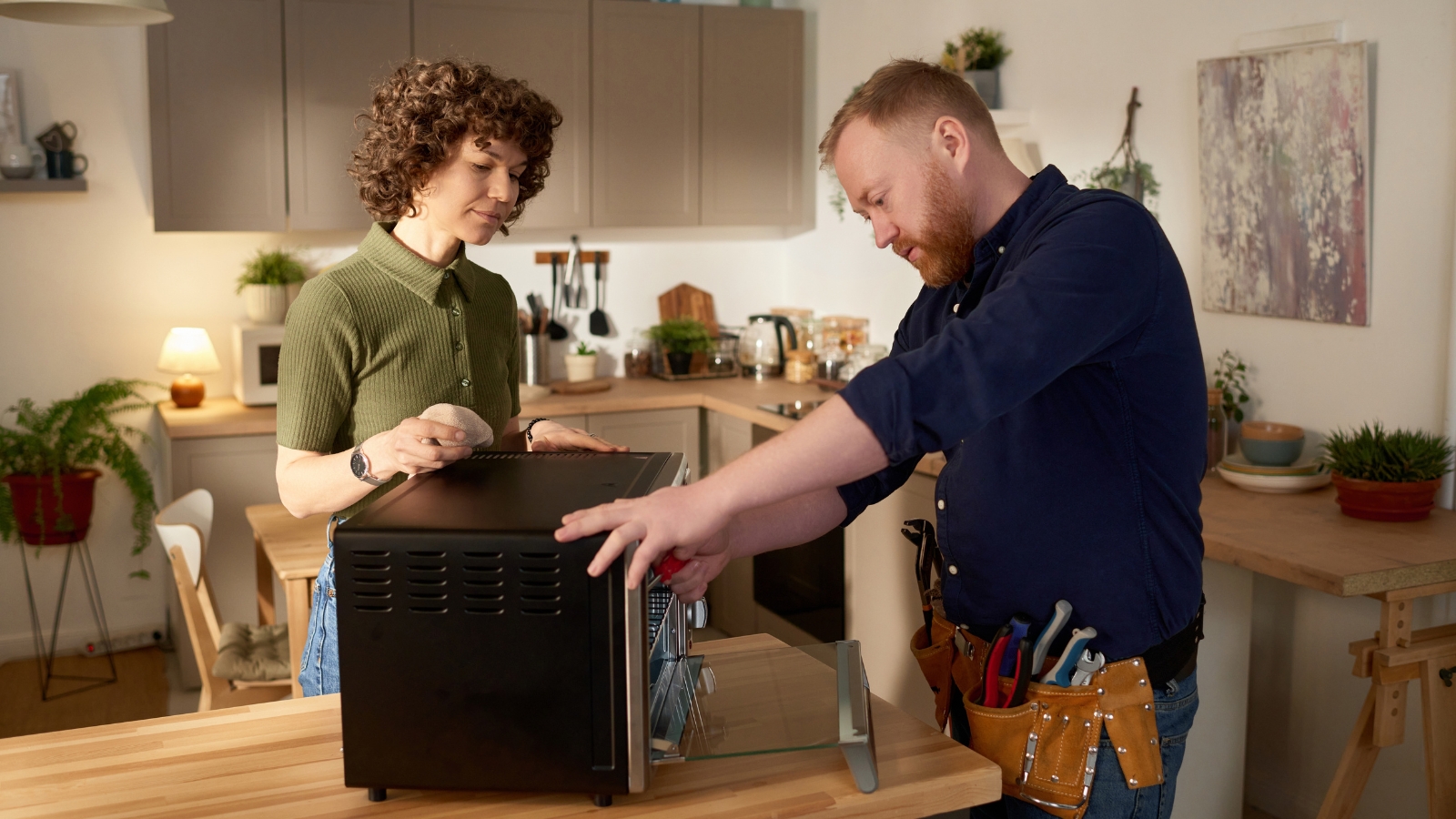
Appliances and gadgets nowadays seem to have shorter lifespans than ever before, and planned obsolescence could be to blame. In the 1980s, the average lifespan of major household items like washing machines was 15-20 years. Today, that average lifespan is reduced to 7-10 years, and 40 percent of users say issues begin to develop within the first 5 years of ownership. This decline is attributable to factors like increased usage, modern technology, and the move towards more affordable but less durable models.
Modern appliances are so unreliable that repair costs can often be as high as buying a brand-new model. E-waste continues to pile up at an alarming rate. According to a 2022 report from the International Telecommunication Union (ITU), the world produced 62 million tonnes of e-waste in 2022, with much of that coming from discarded appliances. Read on to find out 25 everyday items that appear to wear out faster than ever.
Washing Machines

Washing machines from years before were previously built on durable mechanicals that could last a lifetime. However, more energy-efficient and feature-rich, modern machines tend to be made from a stronger digital basis that is more prone to failure.
Common problems include circuit board failures and cheaply manufactured drum bearings that wear out.
Refrigerators

Refrigerators of the mid-20th century were very robust and lasted 20 to 30 years. Modern models, including those with ice dispensers and keyboards, usually last five to ten years.
Lower-cost compressors and electronic sensors are used, and they tend to have higher repair costs or a shorter life.
Microwaves

Old microwaves used to be really simple, had very few moving parts, and, as a result, were long-lasting. Modern models have sensor cooking, which is more complex and prone to more failures.
The core component, the magnetron, often fails, making repair costs more than buying a new unit.
Dishwashers

Classic dishwashers employed potent motors and were much simpler, lasting for decades. Although quieter and more efficient, modern dishwashers can last only as long as their drain pumps and spray arms, typically failing within a few years.
Also, electronic control boards are particularly vulnerable to water damage, one of the major failure points.
Coffee Makers

Coffee makers of the years before were built to last, with very few parts that could fail. However, modern ones, especially pod-based systems, are prone to pump and sensor clogging and malfunction.
Hard water or low-quality pods frequently wear and tear at an increased rate, decreasing their lifespan.
Blenders

Old blenders had solid metal gears and motors that would last their entire heavy-duty blending lifetime. More recently, lower and less expensive geared models have plastic gears and cheaper materials that cause faster wear.
Digital controls and multiple settings also increase the chances of component failure.
Toasters

Simple vintage toasters were made with sturdy, high-quality heating elements that lasted decades.
Today’s toasters are made of thinner materials and have a bad circuit design, which causes them to burn out much faster. Bagel settings and timers add more failure points.
Vacuum Cleaners

Vacuum cleaners had strong motors and fewer plastic parts, which meant they were durable. There are cordless models today, but they suffer from short battery lifespans and motor issues.
Batteries are expensive, and some brands even purposefully make them difficult to replace.
Electric Kettles

Electric kettles were solid beasts with basic heating elements to keep them sturdy. Today’s kettles fall apart because of corrosion of the elements, bad design, or poor electrical connections.
Likewise, auto shut-off and LED lights add complexity and shorten their life span.
Smart TVs

Older TVs were more straightforward and only failed after a long time of use or an accident. Integrated Software Smart TVs become obsolete within a few years since updates stop or the apps stop working.
Hardware issues like screen burn-in or power supply failures are also common.
Laptops

Laptops from the early 2000s had replaceable parts that prolonged their usage. Today’s ultrathin, ultralight models lack one vital feature: durability.
Most have screen hinge failures and soldered components that can be harder to repair afterward. Batteries degrade in 2–4 years, and replacements are often proprietary.
Printers

Printers from earlier decades tended to have fewer electronic parts and thus were easier to maintain. Inkjet printers of the modern age are notorious for clogged nozzles, software malfunctions, and pricey ink replacements.
In addition, many manufacturers install chips to make refilling or using third-party ink impossible, increasing operating costs.
Smartphones

Early mobile phones were well known for their durability and long battery life. Today’s smartphones contain a non-replaceable battery that ages away in about 1 to 3 years.
Older devices eventually slow down with every software update, sending consumers back to the store.
Tablets

Tablets are sleek, convenient, but have shorter life cycles because of their integrated batteries and hardware. After a while, they are no longer compatible with the latest software, so functionality is reduced.
You also need to replace screens frequently because they’re fragile, which is expensive.
Light Bulbs

Light bulbs were simple and reliable, even if not energy efficient. Modern compact fluorescents and LEDs promise a lifespan that eclipses that of their incandescent predecessors, but they often fail due to cheap components.
Inconsistent quality control also means premature burnout, which is not what marketing claims.
Electric Razors

The electric razors from about 20 years ago were made to last with replaceable blades and simple mechanisms. Many modern ones use rechargeable batteries that degrade quickly and are hard to replace.
Maintenance and repair are also discouraged by the costly replacement of blades and parts.
Ceiling Fans

Their sturdy motors and blades were great, and they lasted decades. Newer models are more aesthetic and lightweight, which causes the motors to fail and wobble.
Additional electronic features on such a fan break often render the fan useless.
Space Heaters

Space heaters used to have robust heating elements and rigid switches that lasted for years. Today’s models are made of plastic parts and cheaper wiring, which all degrade really quickly.
They are also difficult to use, with safety features such as auto shut-off that can fail, making them unreliable and short-lived.
Hair Dryers

The motors and switches used to build hair dryers before were durable. However, today’s models often incorporate advanced settings, such as ionization and digital controls, that can fail.
Due to thinner wiring and cheaper components, motors tend to overheat and burn up.
Air Conditioners

AC units from a generation or two ago (window and portable units) were designed to last. Many newer units are designed with electronic sensors with a service life of only about 5 to 7 years and cheap compressors.
Smart features such as Wi-Fi connectivity add complexity and high repair costs.
Electric Toothbrushes

Electric toothbrushes suffer from short-lived batteries, while manual toothbrushes are the ultimate in longevity. Most electric toothbrushes do not allow you to replace the battery, so you will be forced to buy a new unit.
A new set can range anywhere from $15 to $250 per brush, depending on features, making it an expensive long–term investment.
Gaming Consoles

Back in the days, gaming consoles were designed to handle years of repeated use before seriously breaking down. Although currently more powerful, they overheat, and hard drives and fans fail too quickly.
Their longevity is further diminished by online updates and digital-only gaming as the servers go offline.
Cordless Power Tools

Cordless tools are very convenient, but they only last for a short time. The use of lithium-ion batteries degrades over time, and they become unusable within a few years.
Batteries from some brands are produced to be proprietary, so they are pricey and hard to find replacements for.
Fitness Trackers

The small size of rechargeable fitness trackers is limited, and batteries aren’t the most durable. Most fitness trackers last for about 2 to 3 years on average.
Often, even with functioning hardware, an older model becomes obsolete due to required software updates. They wear out quickly, and the straps and sensors need to be replaced fairly quickly.
Electric Ovens/Stoves

Old ovens and stoves were constructed with durable mechanical parts and basic designs. Modern models come with digital control boards, which are susceptible to power surges and moisture.
Being costly to repair, replacement is more often preferred when these components fail.