
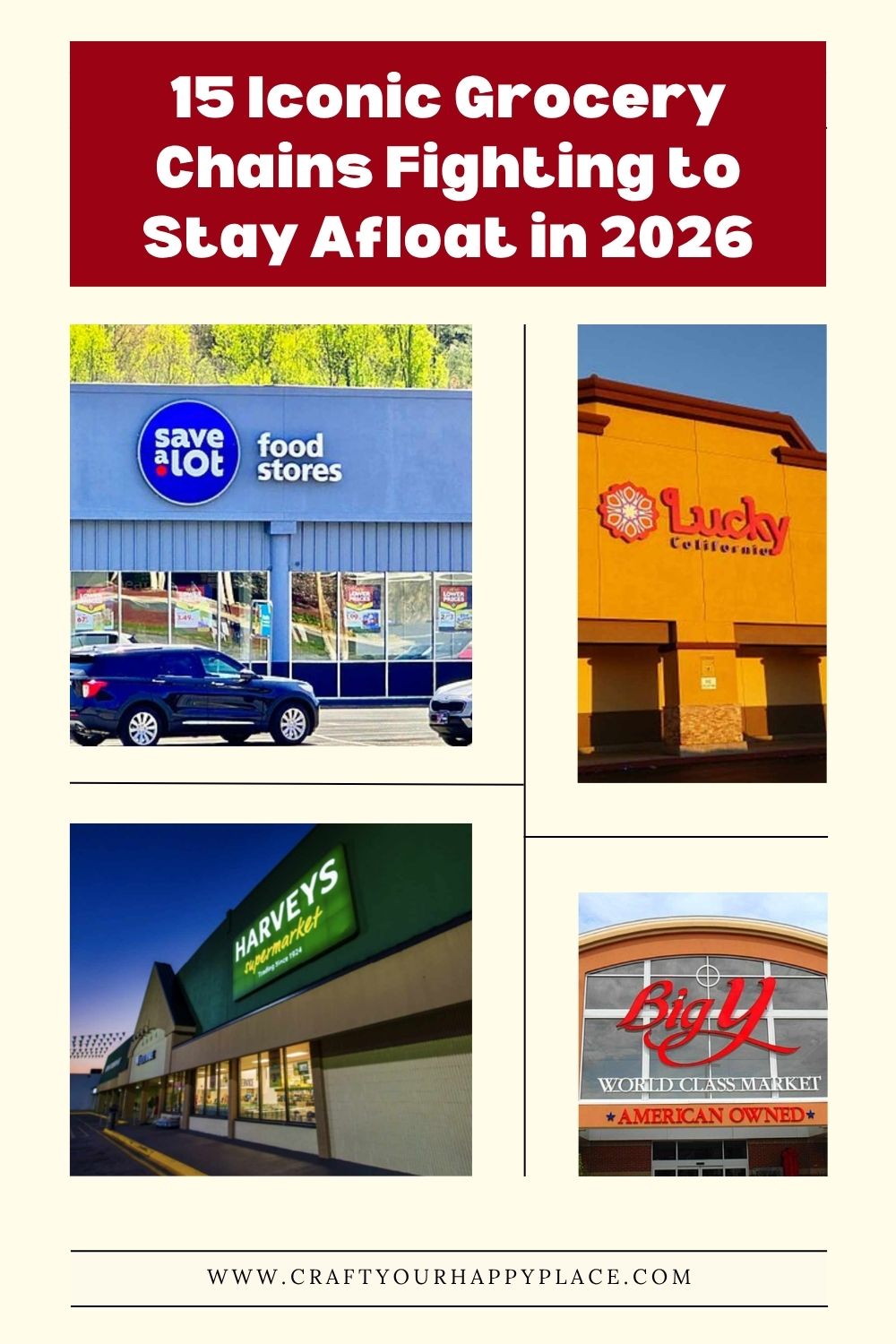
Chain supermarkets dominate the U.S. grocery retail market with about 31,669 locations compared to just 6,638 independent supermarkets. The grocery industry is grappling with many challenges, with iconic chains unable to cope with consumer habits and economic pressures, and adapting to changing times. Consumer spending, due to inflation, has gone way down, leading consumers to turn to online and discount retailers. At the same time, traditional grocery stores have lost foot traffic, as online grocery shopping skyrocketed by 56 percent in 2024, according to Drive Research statistics.
Mergers like the Kroger–Albertsons deal have accelerated pressures to close or shrink down across the U.S. Regional favorites like ShopRite and Big Y are losing ground to cost-efficient competitors like Walmart and Aldi, which together command more than half of the discount grocery market. Here are fifteen grocery chains that are fighting to stay relevant in 2026.
Safeway

Safeway, part of the Albertsons family, has lost its credibility with customers owing to accusations of raising prices. This pricing issue has alienated customers and led to legal battles, leading to the closure of stores after being acquired by Albertsons in 2015.
Moreover, competition from discount chains such as Aldi and Walmart has made it difficult for Safeway to be profitable.
Albertsons

Albertsons, one of the top U.S. grocery chains, has also had to downsize after merging with Kroger, and closures were reported in California and Washington. All of its stores have been unable to compete with their more cost-effective competitors to maintain their market share.
It has also been unable to adjust to shifting shopper preferences, such as online grocery shopping and curbside pickups.
Winn-Dixie

A Southern staple, Winn-Dixie was acquired by Aldi in March 2024. The chain plans to convert several of its stores into Aldi stores. It has had a tough time making a profit, partly because it has higher operating costs than discount chains like Walmart.
Furthermore, its customer base has also worsened as food prices keep rising, and it has shut down its pharmacy services, an important feature that made it so appealing.
Harveys Supermarket

Another chain in Aldi’s firing line is Harvey Supermarket, which it has already reduced to just 25 locations in 2024. The decline began in 2018 with the bankruptcy of Southeastern Grocers, which could no longer modernize and compete because of mounting financial instability.
Aldi’s approach to keeping only profitable locations has also accelerated its downsizing, leaving loyal customers with fewer choices.
ShopRite

Financial difficulties and a drop in customer loyalty are the major reasons why ShopRite is closing stores. Rising operational costs and a loss of consumer trust during the pandemic (due to perceived drops in quality and price increases) have eroded its customer base.
It has faced further threats because it cannot compete with the low prices set by chains like Walmart and Aldi.
Save A Lot

Although Save A Lot caters to budget shoppers, declining sales and stiff competition from Aldi and Dollar General have forced many chain stores to close. This decentralized franchise system has impeded consistent quality improvements, which would further weaken its brand.
Other chains offer better value and convenience, which has also scaled down customer loyalty.
Amazon Go

Amazon Go’s innovative cashier-free model hasn’t been enough; the company abruptly closed many urban locations. Some customers have said they are put off by a lack of human interaction and a sterile shopping environment.
Although Amazon is now pivoting to suburban areas, it’s unclear if this will turn things around for the e‐tailer.
Smart & Final

Big box stores like Walmart and Costco are putting pressure on Smart & Final over similar bulk purchasing deals at competitive prices. The chain has become less desirable to cost-conscious consumers with its less extensive product range and smaller footprint.
In addition, supply chain challenges and inflationary pressures have furthered this struggle.
Giant Eagle

Rising operational costs and shrinking profit margins have hit Giant Eagle hard, which operates mainly in the Midwest and Northeast. Unable to adjust quickly to the online shopping boom, it has fallen behind rivals like Kroger and Walmart.
It also faces economic pressures in the regions it serves, which have cut into consumer spending at its stores.
Stop & Shop

Stop & Shop has been closing many of its stores in New York and other regions to reduce its footprint. It’s been difficult to stay profitable due to high labor costs and increasing competition from discount grocers.
Moreover, its traditional business model struggles to compete with modern grocery formats, emphasizing value through efficiency.
Piggly Wiggly

Piggly Wiggly is a historical grocery chain about to lose relevance as it is unable to compete with larger, more innovative retailers. Its untraditional store formats and product offerings don’t attract today’s consumer, who is searching for convenience and the best prices.
Its market share has been further diminished by the rise of regional competitors and national chains.
Lucky Stores

Lucky Stores (which was once a leading grocer in California) is sinking in relevance and is overshadowed by Trader Joe’s.
Little investment has been made in in-store updates and digital transformation, leaving the company unable to keep up with changing customer expectations. Frequent store closures have also eroded its brand presence.
Big Y

Big Y, a regional chain in New England, is also facing rising costs and increasing competition from national players like Walmart. Due to high operating expenses and the inability to scale effectively, it has been fairly uncompetitive.
Big Y has also had to deal with setbacks, including closing off delis from a health standpoint (a listeria outbreak). During economic downturns, customers have also found more affordable options.
Food Lion

Food Lion has tried to modernize itself, but has failed to retain customers in the grocery industry. Older store formats and high operational costs have made it hard to attract and keep a loyal shopper base.
Food Lion has been at a disadvantage to its competitors, who have focused on offering innovative and value-added services. Meanwhile, it’s been trying hard to fix these problems by investing in store remodels.
Food Emporium

Food Emporium is a niche player in high-end groceries and can’t compete with the bigger chains with similar products at lower prices. Due to its limited reach and high operating costs, it’s become increasingly difficult to stay viable.
Nevertheless, the food emporium is attempting to find its own unique niche in the grocery market and to revive its brand.