Restaurant chains come and go, but only a handful manage to stay popular for decades. While giants like McDonald’s and Starbucks continue to thrive, plenty of once-famous names have disappeared from shopping malls, highways, and city streets.
Some expanded too quickly, others struggled to keep up with changing dining habits, and a few were hit by financial troubles or damaging publicity they never recovered from. Whatever the reason, these restaurants once attracted loyal crowds before fading into history.
Here are 12 restaurant chains that couldn’t stand the test of time.
Chi-Chi’s
Chi-Chi’s brought colorful décor, oversized margaritas, and American-style Mexican food to diners across the country. Founded in 1975, the chain grew quickly and eventually operated more than 200 restaurants.
Its fortunes changed dramatically in 2003 after a hepatitis A outbreak linked to contaminated green onions sickened hundreds of customers. The company filed for bankruptcy that same year, and although the brand survived overseas, every U.S. location eventually closed.
Related: 15 Beloved Restaurant Chains We Still Wish Were Around
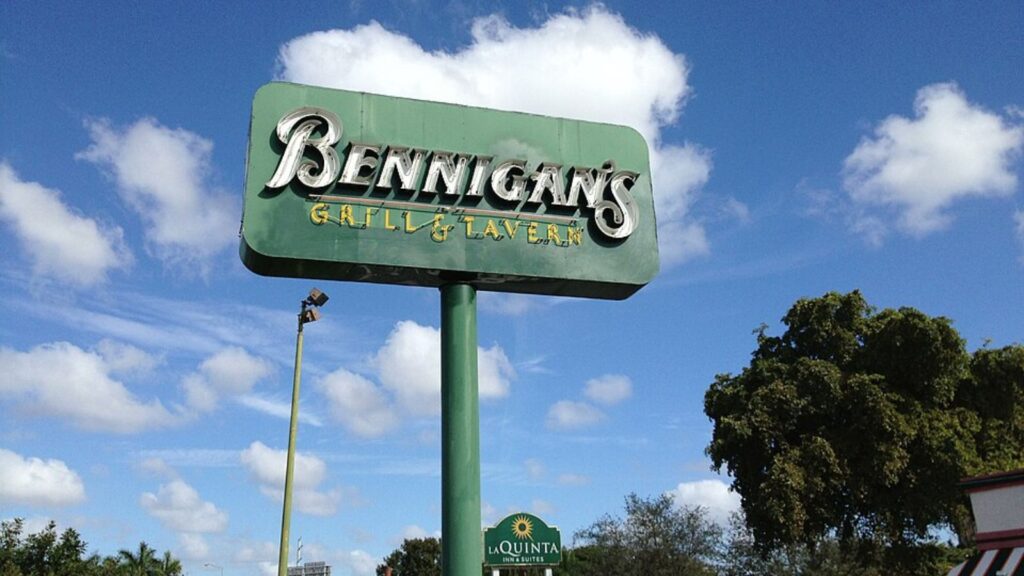
Bennigan’s
Bennigan’s became a favorite gathering place during the 1980s and 1990s with its Irish pub theme, generous portions, and popular menu items like the Monte Cristo sandwich and Death by Chocolate dessert.
At its peak, the chain operated more than 350 locations. As casual dining became more competitive, Bennigan’s struggled to keep customers coming back. In 2008, its parent company filed for bankruptcy, leading to the closure of more than 150 company-owned restaurants.
Related: 11 Closed Restaurant Chains We Miss and Wish Would Reopen
Steak and Ale
Steak and Ale opened in 1966 and helped introduce affordable steakhouse dining to American families. Its salad bar, cozy atmosphere, and reasonably priced meals made it a popular choice for years.
Over time, competitors refreshed their menus while Steak and Ale changed very little. Financial problems at parent company Metromedia eventually sealed its fate, and the chain disappeared after a long decline.
Related: 17 Restaurant Dishes Chefs Warn Aren’t Worth Your Money
Howard Johnson’s
For decades, Howard Johnson’s was one of the most recognizable restaurant chains in America. Its bright orange roofs and famous selection of 28 ice cream flavors made it a familiar stop for families traveling by car.
As fast-food chains and newer casual restaurants gained popularity, Howard Johnson’s struggled to keep pace. Locations steadily disappeared, and the last restaurant finally closed in 2022, ending an era that lasted more than 90 years.
Related: 15 Mistakes That Keep Your Pasta From Tasting Restaurant-Quality
Sambo’s
Founded in California in 1957, Sambo’s built its reputation on affordable breakfasts and family-friendly dining. At one point, the chain operated more than 1,000 locations.
The restaurant’s name and branding, based on The Story of Little Black Sambo, drew growing criticism because of its racial stereotypes. Rebranding efforts came too late, and declining sales eventually forced nearly every location to close.
Sbarro
Sbarro became a mall staple by serving oversized pizza slices, pasta, and Italian favorites to shoppers looking for a quick meal.
Its close connection to shopping malls became a problem as mall traffic declined across the country. After filing for bankruptcy twice, the company closed hundreds of restaurants. While a smaller number of locations still operate today, Sbarro is only a fraction of the chain it once was.
Planet Hollywood
Planet Hollywood opened in 1991 with backing from Hollywood stars and quickly became one of the hottest themed restaurants in the country. Movie props covered the walls, giving diners plenty to look at while they ate.
Once the novelty faded, many customers realized the food wasn’t memorable enough to justify the prices. Mounting debt and falling customer interest led to repeated closures, and many of its flagship restaurants eventually disappeared.
Damon’s Grill
Damon’s Grill mixed casual dining with a sports bar atmosphere, attracting families and sports fans throughout the 1990s. Its ribs and large portions helped build a loyal following.
The chain struggled to compete with rivals like Applebee’s and Chili’s, which updated their menus and marketing more aggressively. Financial problems continued to mount, and Damon’s gradually disappeared from most markets.
Fashion Café
Fashion Café attempted to copy the celebrity restaurant formula by replacing movie stars with famous supermodels. Naomi Campbell, Claudia Schiffer, and Elle Macpherson helped promote the brand when it launched in 1995.
The concept never connected with diners, who struggled to see the link between fashion and food. Legal troubles, unpaid bills, and disappointing sales forced the chain to close only a few years after opening.
Bob’s Big Boy
Bob’s Big Boy introduced one of America’s earliest double-decker hamburgers and became famous for its smiling mascot standing outside each restaurant. During the 1960s, the chain had more than 1,200 locations.
Changing tastes, stronger competition, and inconsistent ownership gradually reduced its footprint. While a handful of locations still operate today, the once-dominant chain has largely faded from the national spotlight.
Rainforest Cafe
Rainforest Cafe turned dinner into an attraction with animatronic animals, simulated thunderstorms, waterfalls, and jungle sounds. Families loved the experience, especially during vacations.
The elaborate décor came with high operating costs, and many guests treated the restaurant as a one-time visit rather than a regular dining destination. Numerous locations closed over the years, leaving only a small number still in business.
Kenny Rogers Roasters
Kenny Rogers Roasters opened in 1991 with a menu centered on wood-fired rotisserie chicken and comforting side dishes. The chain grew quickly, expanding to more than 350 restaurants.
Fast expansion made it difficult to maintain consistency, while competition from Boston Chicken, later renamed Boston Market, grew stronger. Financial troubles followed, and the company filed for bankruptcy in 1998 before being sold to Nathan’s Famous. Although the brand continues to operate in several Asian countries, its American restaurants are long gone.