The best movie villains are more than obstacles standing in the hero’s way. They have beliefs, goals, and motivations that force audiences to question where the line between right and wrong really belongs. While their actions often cross into cruelty or violence, the problems they point out can feel surprisingly real.
Some villains fight against injustice, others expose flaws in society, and a few ask difficult questions that don’t have easy answers. Their methods may be impossible to defend, but the ideas behind them continue to spark debate long after the credits roll.
Erik Killmonger (Black Panther, 2018)
Erik Killmonger wasn’t driven by a desire for wealth or personal glory. His anger came from generations of oppression and the belief that Wakanda had the resources to help Black communities around the world but chose to remain isolated.
Director Ryan Coogler created a character whose motives invited discussion rather than simple condemnation. Christopher Lebron, writing for the Boston Review, argued that the conflict between T’Challa and Killmonger reflects two very different responses to a world shaped by racism and inequality.
Killmonger’s campaign relied on violence, making his plan impossible to support. Still, his frustration over injustice and his call for global solidarity remain some of the film’s strongest themes.
Related Article: 12 Movie Relationship Fights That Left Us Torn
Thanos (Avengers: Infinity War, 2018)
Thanos believed the universe was headed toward collapse because its population had outgrown its resources. His answer was to erase half of all living beings, convinced that those left behind would have a better future.
His solution was horrifying, yet the issue he raised wasn’t entirely fictional. Questions about resource shortages, environmental strain, and population growth continue to be debated around the world. The film asks viewers to separate a real concern from an unforgivable response.
Magneto (X-Men Series)
Magneto’s worldview was shaped by surviving the Holocaust, leaving him convinced that history would repeat itself if mutants failed to defend themselves. Every act of discrimination reinforced his belief that peaceful coexistence would never last.
His willingness to use violence often placed him opposite Professor X, whose faith in cooperation rarely matched Magneto’s lived experience. While Magneto frequently crossed moral lines, his fear of persecution came from painful personal history rather than blind hatred.
That emotional foundation has made him one of the most sympathetic villains in superhero films.
Related Article: 12 Deeply Unlikable Movie Characters Of All Time
Ozymandias (Watchmen, 2009)
Adrian Veidt, better known as Ozymandias, believed humanity stood on the edge of nuclear destruction. To stop global war, he created a disaster so devastating that the world’s nations would unite against a common threat instead of fighting one another.
His plan claimed millions of innocent lives, raising one of the story’s biggest moral questions: can sacrificing a smaller number of people ever be justified if it prevents an even greater catastrophe?
The answer remains deeply divisive, which is exactly why Ozymandias continues to stand out as one of cinema’s most thought-provoking antagonists.
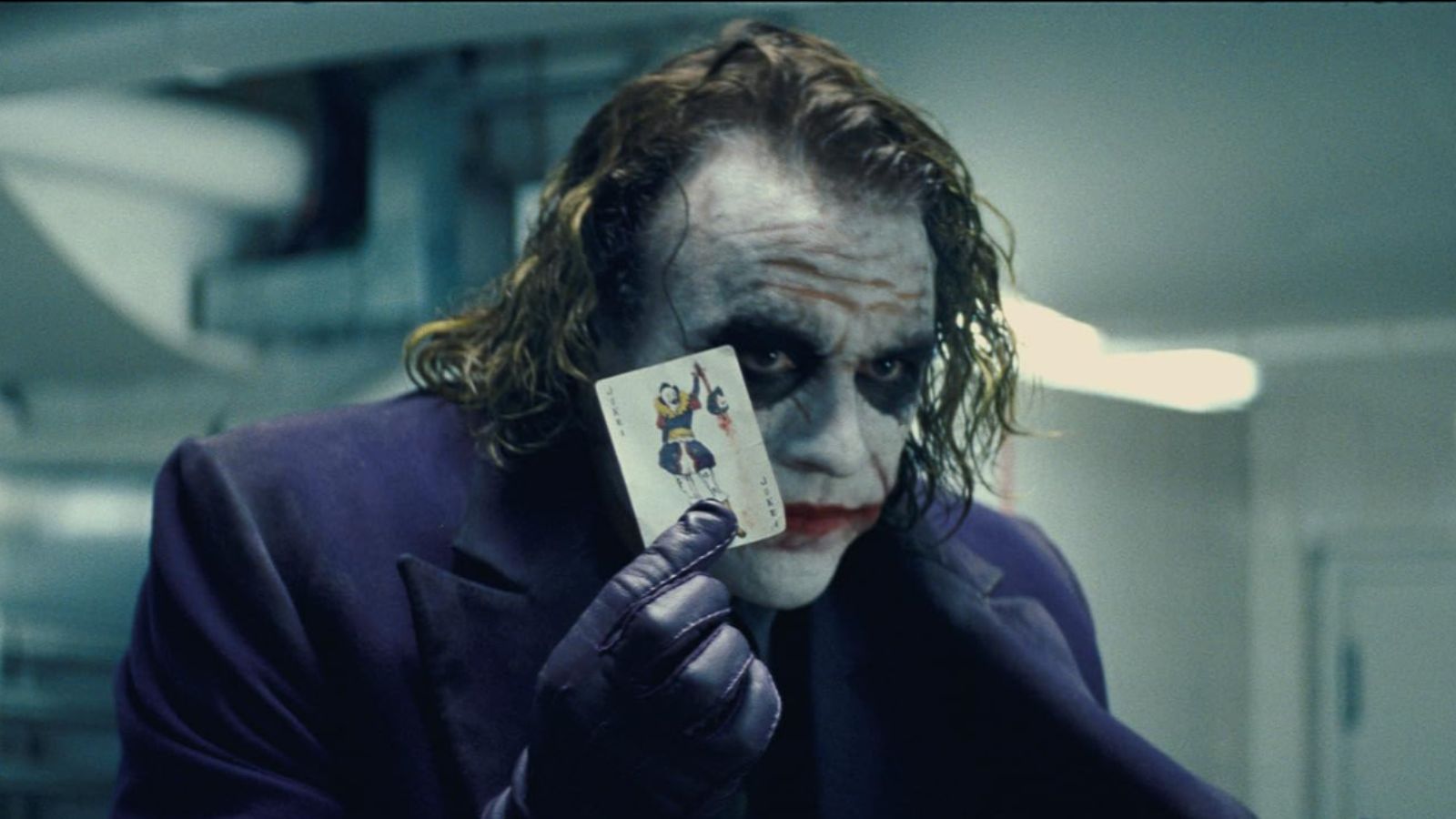
The Joker (The Dark Knight, 2008)
Heath Ledger’s Joker wasn’t interested in money or political control. His goal was to expose how fragile society becomes when its rules disappear. Throughout the film, he repeatedly places ordinary people in impossible situations, convinced that fear would strip away their morals.
Director Christopher Nolan described the character as a psychologically believable anarchist. Rather than seeking personal gain, the Joker wanted to prove that civilization rests on a thin layer of order that could collapse under enough pressure.
His actions were unquestionably destructive, but the questions he raised about fear, morality, and human behavior continue to fuel conversations years after the film’s release.
Roy Batty (Blade Runner, 1982)
Roy Batty is introduced as a dangerous fugitive, but his story quickly becomes far more tragic. Created as a replicant to perform difficult labor in distant space colonies, he is given a lifespan of only four years before facing certain death.
His search for a longer life raises uncomfortable questions about the ethics of creating intelligent beings simply to serve others. If replicants can think, feel, and fear death, should they have the same rights as humans?
Batty’s final moments reveal compassion instead of vengeance, leaving many viewers wondering who the real villain was all along.
Related Article: 12 Rules of Movie Theater Etiquette That Everyone Should Follow
The Operative (Serenity, 2005)
The Operative serves the Alliance with absolute conviction, believing that peace sometimes demands terrible sacrifices. He knows he’ll never enjoy the perfect society he hopes to create, yet he continues carrying out its orders without hesitation.
His conversations with Captain Malcolm Reynolds highlight two opposing beliefs. One values freedom above everything else, while the other believes security and order justify almost any cost.
His choices are often ruthless, but his dedication to building a peaceful future makes him more complicated than a typical movie villain.
Ra’s al Ghul (Batman Begins, 2005)
Ra’s al Ghul sees Gotham as a city consumed by corruption, greed, and crime. From his perspective, it has reached a point where rebuilding is impossible without first destroying what already exists.
His philosophy centers on restoring balance, even if it requires devastating consequences. While Batman believes people deserve the chance to change, Ra’s believes some societies become too broken to save.
His willingness to destroy an entire city makes him a clear antagonist, yet his criticism of corruption and moral decay isn’t entirely without merit.
Commodus (Gladiator, 2000)
Commodus is remembered for his cruelty, jealousy, and hunger for absolute power. Beneath that lies a man desperate for his father’s approval, something he never truly receives.
His insecurity fuels many of his worst decisions, turning his desire for acceptance into obsession. While none of this excuses his actions, it helps explain why he became such a deeply flawed ruler.
Rather than portraying evil for its own sake, Gladiator presents a character whose personal failures gradually consume him.
Syndrome (The Incredibles, 2004)
Buddy Pine began as an enthusiastic admirer of Mr. Incredible before rejection turned admiration into bitterness. Reinventing himself as Syndrome, he built extraordinary technology to compete with naturally gifted superheroes.
His plan eventually became about more than revenge. He believed special abilities shouldn’t belong to a select few and wanted advanced technology to place ordinary people on equal footing.
His methods were selfish and dangerous, but his criticism of hero worship and inherited advantages gives audiences something to think about long after the movie ends.
Final Thoughts
The most memorable villains aren’t frightening because they’re completely evil. They’re memorable because they force audiences to wrestle with difficult questions. Many point to genuine social problems, personal struggles, or ethical dilemmas that deserve discussion.
What separates these characters from true heroes is how they choose to pursue their goals. Their motivations may contain a grain of truth, but the violence, manipulation, and destruction they embrace ultimately turn them into the very threats they claim to oppose.
That’s what makes these characters so unforgettable. They remind us that the strongest stories aren’t always about good versus evil, they’re often about people who started with understandable ideas before taking them far beyond any moral limit.