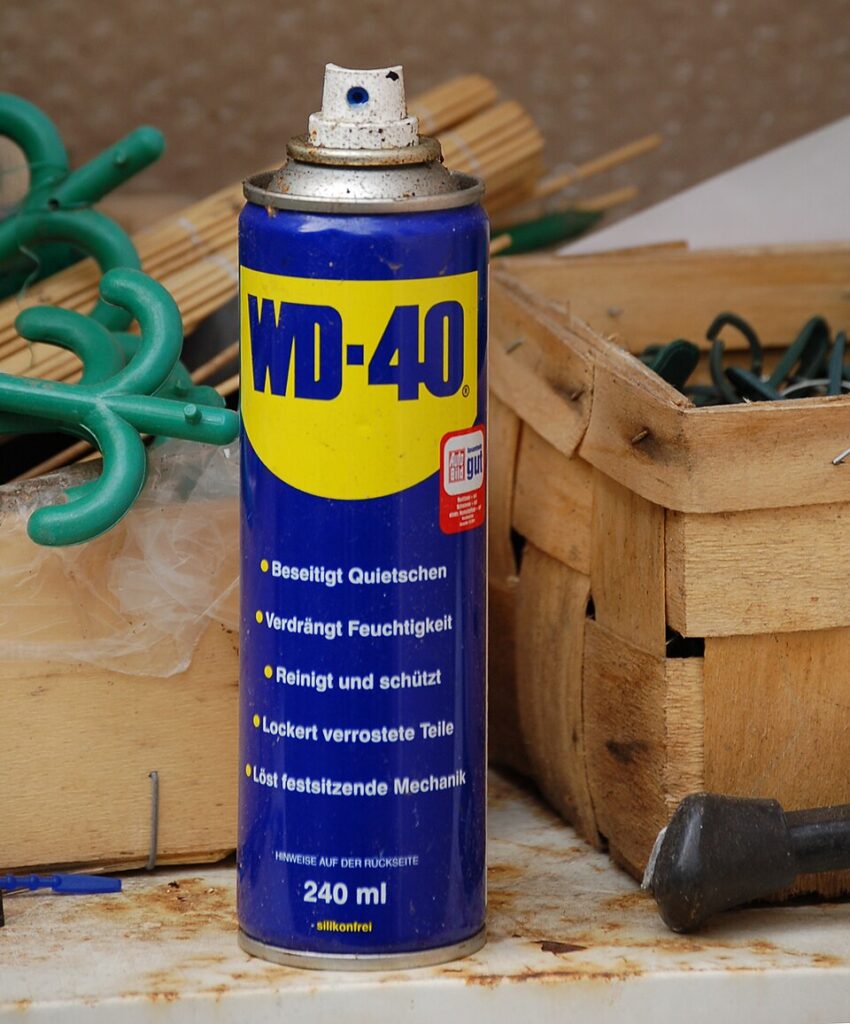
WD-40, a staple in many households, was first invented in 1953 by a small team led by chemist Norm Larsen. The name “WD-40” stands for “Water Displacement, 40th Formula,” signifying the successful attempt to create a formula to prevent rust and corrosion by displacing water. It’s composed of a unique combination of lubricants and anti-corrosion agents, making it ideal for displacing moisture, loosening stuck parts, and preventing rust on metal surfaces.
Over the years, its uses have expanded, with consumers finding creative applications in home maintenance, automotive care, and even creative DIY projects. There are over 2,000 official uses for WD-40, making it a staple in households and workshops worldwide. Read on to unlock the full potential of this household staple.
Remove Stubborn Stickers and Labels
When sprayed onto a sticky surface, the lubricating agents in WD-40 work their magic by breaking down the adhesive. This process reduces stickiness and allows for clean removal without damaging the underlying surface, whether it’s glass, plastic, or metal.
Spray a small amount of WD-40 directly onto the sticker or label. Allow it to sit for a minute to penetrate and loosen the adhesive. Gently peel off the sticker using a flat-edged tool or your fingers. A quick wipe with a cloth can achieve that pristine look for any residue left behind. No fuss, no muss, and no sticky mess.
Silence Squeaky Door Hinges

There’s nothing more annoying than the excruciating symphony of a squeaky door hinge (except maybe mosquitoes). WD-40 seeps into the hinge when applied, reducing friction by lubricating the moving parts. As the friction decreases, so does the noise, giving you that sweet silence.
This is due to its unique blend of lubricants that creates a protective film, minimizing metal-to-metal contact and thus reducing pesky squeaks. Give your WD-40 can a good shake to ensure an even consistency. With the straw applicator attached, spray a small amount directly onto the hinge. Open and close the door several times to work the lubricant into the joints. Use a soft cloth to wipe away any drips or excess product.
Protect Wooden Furniture from Moisture

Say goodbye to dull, lifeless wooden furniture! WD-40 forms a protective barrier that prevents water from seeping into the wood’s surface, effectively reducing the risk of warping, cracking, and discoloration. It also repels water and prevents mold growth.
This protective barrier enhances the wood’s natural shine, keeping your furniture radiant for longer. Just spray a light coat on a clean, dry cloth and gently wipe it over the wooden surface. There is no need for elbow grease. Remember to reapply every few months for continuous protection.
Condition Leather Furniture

Leather is a durable and stylish material that can become dry and cracked over time. First, ensure the leather surface is clean and free from dirt or debris. Spray a small amount of WD-40 onto a soft cloth and gently rub it into the leather using circular motions.
Let it sit for a few minutes, and then buff it with a dry cloth to remove any excess. You’ll notice the leather feels softer, and its natural luster is restored. WD-40’s water-repellent properties help keep leather surfaces hydrated and protected from future wear.
Remove Crayon Marks from Walls

There’s no stopping your kids from going Picasso on your walls at home. It’s a blank canvas, after all. There’s no need to adopt out the kids; use WD-40. Its solvent properties infiltrate the wax-based pigment of the crayon, dissolving it and enabling easy removal without damaging paint or wallpaper.
Spray a small amount onto the affected area, let it sit for a few seconds, then wipe it away with a damp cloth in a circular motion. The formula lifts the wax without damaging paint (especially oil-based paints), leaving your walls spotless.
Remove Barnacles on Boats

The U.S. Navy warns that heavy barnacle growth on ships increases weight and drag on a boat by as much as 60%, leading to a nearly 40% increase in fuel consumption. When applied, WD-40 seeps into tiny spaces between the barnacle and the boat hull, weakening the cement-like hold.
Plus, WD-40 leaves a thin protective layer that helps prevent further barnacle buildup. Spray WD-40 generously on the barnacles and let it sit for about 5-10 minutes. Use a plastic scraper or a brush to gently remove the barnacles. Repeat the process if necessary. Clean the surface with fresh water to remove any residues.
Remove a Stuck Ring

Nothing can dampen your day like a stubborn ring that refuses to budge (especially if you tried it on at the mall). The lubricants in WD-40 reduce the friction between the ring and your skin, allowing it to slide off easily.
Spray a small amount onto your finger, ensuring enough coverage around the base of the ring. Gently twist the ring back and forth, and voilà, it comes off. Ensure you wash your hands thoroughly afterward with soap and water to remove any excess product.
Keep Squirrels Off Your Bird Feeder

Squirrels are nimble climbers and expert acrobats, often outwitting conventional solutions like baffles. WD-40 creates a slippery surface that squirrels find hard to grip. Spray a small amount on the pole or hanger of your bird feeder, and watch as those agile invaders and their gravity-defying plans are thwarted!
The lightweight, non-toxic coating ensures squirrels slide right off without harm while keeping your birds happy and healthy. Avoid direct contact with the seeds or the feeding tray. Remember to reapply the product periodically, especially after heavy rainfall, to maintain effectiveness.
Remove “Paint Rub” From Another Car

One of the most satisfying WD-40 tricks is its ability to remove those unsightly “paint rub” marks exchanged during accidental car bumps. According to WD-40 Company’s official website, the product’s formulation penetrates and dissolves paint transfers, restoring your car’s surface to its original glory.
Start by spraying a generous amount of WD-40 onto the affected area. Ensure the surface is dry and free of dirt to optimize the product’s effectiveness. Let it sit for about 5-10 minutes. Using a clean cloth, gently rub the area in circular motions. Once the paint rub is removed, wash the area with soap and water to remove any leftover WD-40 residue.
Loosen Stuck Spark Plugs
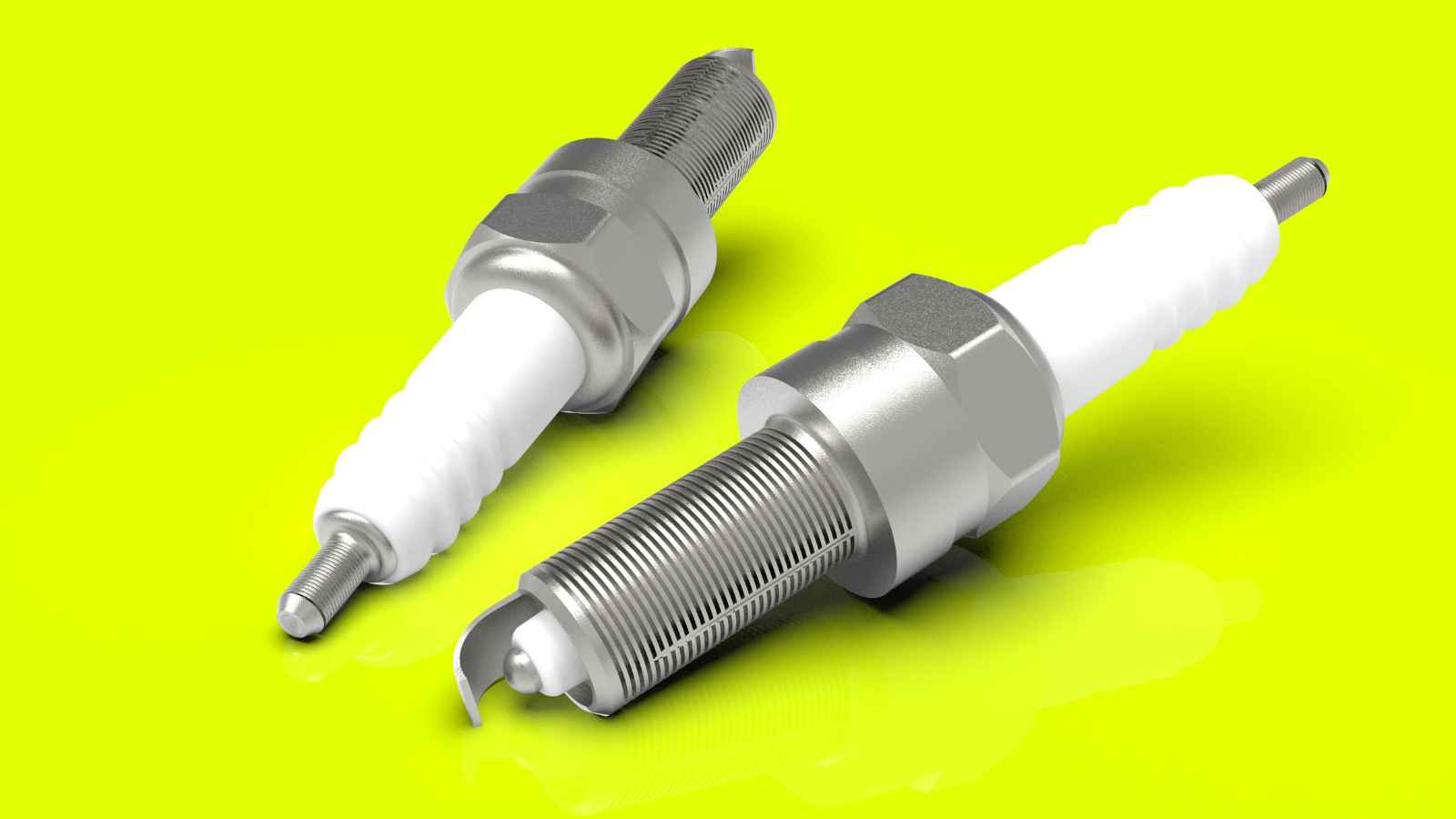
Stuck spark plugs can be a mechanic’s nightmare. When a spark plug gets stuck, it can be due to corrosion caused by exposure to moisture and engine heat over time. This is where WD-40 shines with its water displacement properties and decisive penetrative action.
Spray the product generously around the base of the spark plug and allow it to sit for a few minutes (about 10-15 minutes) to penetrate and dissolve the rust. Afterward, gently twist and loosen the plug with a spark plug socket wrench. In most cases, users report a noticeable ease in removal, saving both time and frustration.
Remove Bugs from a Car Grille

After a long road trip, you find a stubborn bug graveyard stuck to the front of your car. WD-40 loosens all that gunk with minimal elbow grease required. Essentially, WD-40’s formula breaks down dried bug residue, softening it enough that you can wipe it away effortlessly with a cloth.
WD-40 is safe to use on your car’s paint, too. Just spray it on the affected area, let it sit for a minute or two, and then wipe it away. Easy peasy! Some folks even argue it’s more effective than traditional bug-removal products, which can range from $10 to $20 per bottle.
Winterproof Your Boots and Shoes

Snow, slush, and salt can wreak havoc on your favorite footwear during the colder months. WD-40 ensures your beloved boots and shoes can easily brave snow, sleet, and slush. When sprayed onto leather or fabric, it displaces water and creates an invisible barrier, keeping moisture and stains at bay.
Spray a light coat of WD-40 onto your dry shoes or boots, ensuring even coverage—especially on seams and stitching—and allow it to dry for a few minutes.
Clean Carpet Stains

WD-40 is not just for squeaky hinges. It works by loosening the stain particles from the carpet fibers, making them easier to lift away. Spray a bit of WD-40 directly on the stain. Let it sit for about five to ten minutes to work its magic, then dab it up with a clean cloth.
It would be best to repeat this several times for tough stains. When used as a pre-treatment, WD-40 successfully removes common stains like coffee, ink, and even crayon marks.
Open Rusty Padlocks

Padlocks, especially those exposed to outdoor elements, develop rust issues. And they always know to jam when you are late for work. WD-40 acts by displacing moisture and breaking through the rust. It’s all about getting into those tiny crevices and giving the padlock the push to swing open smoothly.
Just spray a generous amount directly onto the rusty area. Let it sit for 10-15 minutes to allow it time to penetrate and loosen the rust. For extra-tough cases, gently tap the padlock (please don’t unleash your frustration on it) with a small hammer to help the process along.
Unstick Gum

The worst thing is accidentally sitting on chewed gum or having it stuck to the bottom of your shoe. WD-40 can unstick gum from various surfaces (even your hair) without a sweat. Its formula dissolves the sticky gum polymers, making it easy to scrape off without damaging the surface beneath.
The folks at WD-40 Company recommend spraying the affected area with WD-40 and gently scraping the gum away with a blunt tool, such as a spoon or a butter knife. Just a little spray, let it sit for a minute, and voila—gum is gone! Clean the area afterward to remove any residue, especially fabric.
Clean Stainless Steel Appliances

The oil-based formula dissolves grime and repels water, leaving an invisible film that wards off streaks and fingerprints. Give the can a good shake and spray a small amount onto a clean microfiber cloth (not directly onto the appliance).
Gently wipe the surface, moving with the steel’s grain—this helps avoid any unsightly scratches. Finish up using another clean, dry cloth to buff the surface, enhancing that all-important shine. Some people even swear by its ability to deter future markings—one less chore for the weekend.
Kill Thistle Plants

When you spray WD-40 on thistle plants, it coats the leaves and stems, effectively suffocating them and preventing them from growing. A little spritz on the leaves when the weather is dry, and you’re good to go!
Aim the nozzle at the base of the thistle, ensuring you’ve covered as much of the plant as possible. It may not boast a 100% eradication rate like chemical herbicides, but it’s a handy way to thin out unwanted plants without harsh chemicals.
Remove Grease from Hands

WD-40 is also a fantastic way to remove stubborn grease from your hands after a day of tinkering in the garage or fixing your bike. It penetrates the grease, breaking it down without harming your skin.
All you need to do is spray a bit onto your hands, rub it in as if washing with soap, and then rinse off with water. WD-40 is safe for use on the skin. However, prolonged contact can cause dermatitis or mild irritation, so wash your hands afterward to remove any residue.
Unjam Zippers

Thanks to its lubricating properties, WD-40’s signature formula is perfect for loosening stiff or jammed zippers. It reduces friction between the zipper teeth, effectively loosening the stuck metallic pieces.
With the precision straw applicator, spray a tiny amount of WD-40 directly onto the jammed section of the zipper. Then, after giving it a few seconds to penetrate, try gently moving the zipper back and forth. Just be cautious not to overspray; you don’t want excess lubricant on fabrics.
Deter Wasps from Building Nests

Wasps are notorious for building nests in sheltered spots like eaves, gutters, and even inside the grill – places that aren’t exactly convenient when you want to enjoy your outdoor spaces. Wasps hate the texture left behind by WD-40.
The slick surface makes it difficult for them to attach and build their nests—Spray WD-40 in areas where you’ve noticed their pesky attempts to settle in. Make sure to do this early in the season when they’re just scouting out locations. Reapply periodically for continued protection.