Plastic wrap is one of those things most people keep in the kitchen and reach for without much thought. It’s handy for covering leftovers, wrapping sandwiches, and keeping food from drying out, but a few common habits can make it less useful or even create problems.
Using plastic wrap the wrong way can leave food poorly protected, make a mess in the kitchen, or cause safety concerns when heating food. Here are 12 mistakes worth avoiding the next time you use a roll.
Wrap Freezer Foods With Plastic Wrap Alone
Plastic wrap can help keep air away from food, but it doesn’t offer enough protection for long-term freezer storage on its own. Wrap the food tightly, then add aluminum foil or place it in a freezer-safe bag to help prevent freezer burn.
Throw It in the Recycling Bin Without Checking
Most curbside recycling programs don’t accept plastic wrap because it can get tangled in sorting machinery. Check your local recycling guidelines or look for grocery stores that collect plastic film for recycling.
Store It Somewhere Warm
Plastic wrap can become harder to handle when it’s stored in a warm spot, making it more likely to stick to itself. Keep the roll in a cool kitchen cabinet or try chilling it briefly before use if you’re having trouble pulling off a sheet.
Pull Too Little Wrap Over the Container
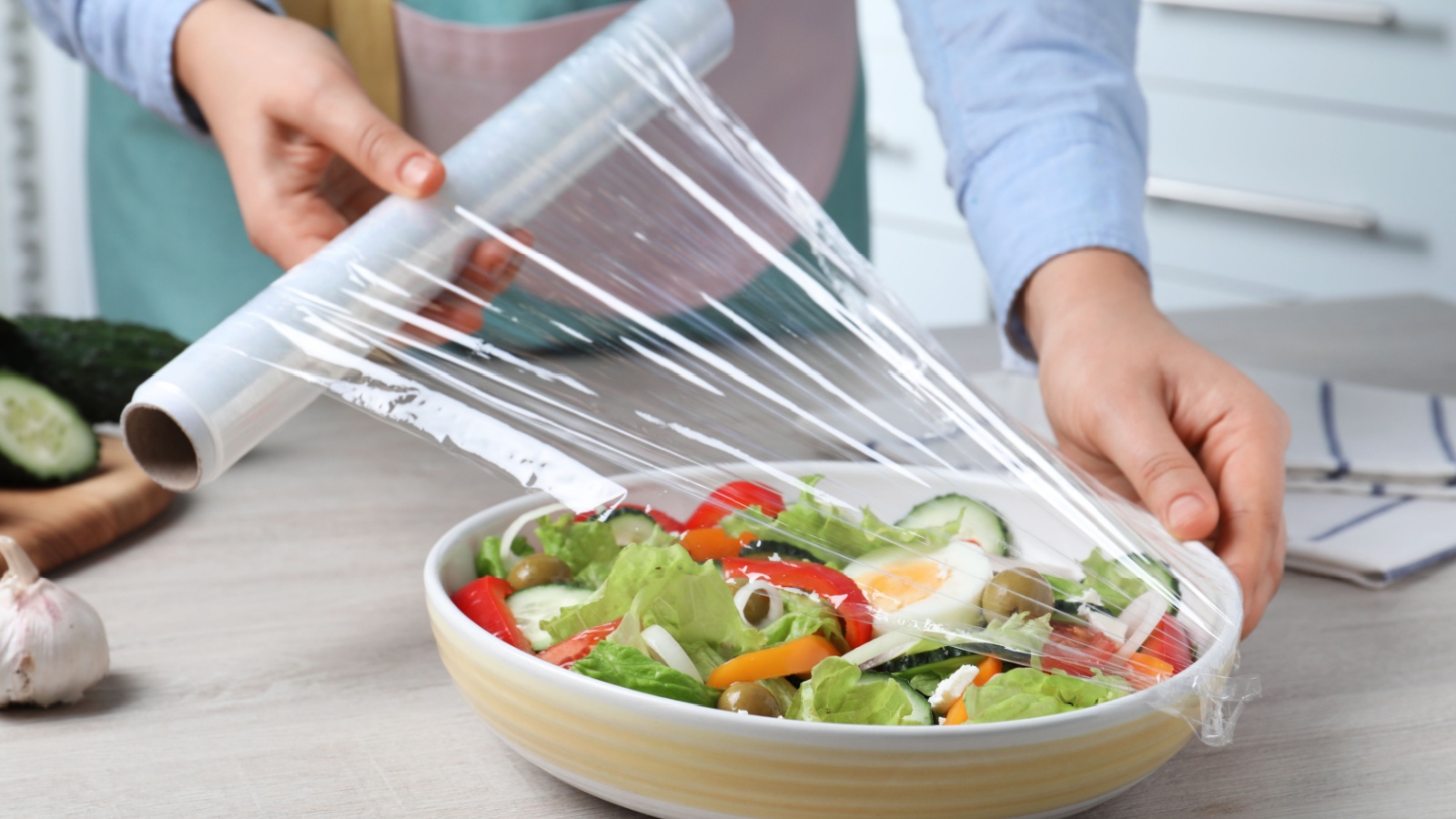
Using a small piece of plastic wrap that barely covers a bowl can leave gaps around the edges. Pull out enough to cover the entire opening and fold the excess around the sides for a better seal.
Put It in a Hot Oven
Plastic wrap isn’t made for the high temperatures inside a regular oven. It can melt onto food, cookware, or oven surfaces, leaving a mess and creating a potential food safety concern.
Use It in the Microwave Without Venting
Some plastic wraps are labeled as microwave-safe, but they still need room for steam to escape. Leave a corner open or follow the package directions so pressure doesn’t build up under the wrap.
Let It Touch Hot Food
Plastic wrap can soften or melt if it comes into direct contact with very hot food. This is a bigger concern with oily or greasy dishes, so leave a little space between the food and the wrap when covering a container.
Related: Banana Peels Might Be the Most Underrated Natural Boost for Your Garden
Ignore the Box Tabs
Those small cardboard tabs on the sides of a plastic wrap box are there for a reason. Push them in to hold the roll in place, so it doesn’t slide out every time you pull on the wrap.
Use a Damaged Serrated Cutter
A bent or worn cutting edge can leave you with jagged pieces of plastic wrap instead of a clean sheet. If the cutter keeps tearing the wrap, try a slide-cutter box or replace the roll with one that’s easier to use.
Forget to Secure the End After Using It
The loose end of plastic wrap can stick to the roll and become surprisingly difficult to find the next time you need it. Fold the edge over slightly or use the box’s built-in tab to keep the end easy to reach.
Assume Every Brand Performs the Same
Some plastic wraps cling tightly to bowls, while others are better for wrapping sandwiches or covering larger dishes. Try a couple of types to find one that works well for the way you store food.