Your basement is usually the part of the house where everything gets stored: old boxes, holiday decorations, laundry supplies, and whatever else doesn’t have a place upstairs. It can also be quiet, dark, and relatively undisturbed, which makes it appealing to wildlife looking for shelter.
Bats are useful animals that help control insect populations, but having them inside your home is a different story. A bat colony can leave droppings, create unpleasant odors, damage insulation, and raise health concerns. The sooner you spot signs of bats, the easier it is to deal with the problem.
Here are some clues that bats may have found their way into your basement.
Scratching or Flapping Sounds
Bats are most active after dark, so nighttime is when you’re most likely to hear them. Listen for faint scratching, rustling, squeaking, or the sound of wings moving through the air.
Pay attention to where the noise seems to come from. Sounds coming from high corners, ceiling spaces, vents, or areas around pipes could be worth investigating. A single noise doesn’t necessarily mean you have bats, but repeated activity at night is a reason to look for other signs.
An Odd, Musky Odor
A bat roost can develop a strong, unpleasant smell over time. Guano, urine, and the natural oils from bats can create a musty odor that lingers in enclosed spaces.
If your basement suddenly has a smell that doesn’t seem connected to dampness, mold, or a plumbing problem, check the less accessible areas. A persistent odor near the ceiling, walls, or vents may point to an animal getting into the space.
Related: 20 Surprising Animal Facts Most People Have Never Heard
Droppings That Don’t Look Like Mouse Droppings
Bat droppings, or guano, are usually small, dark, and somewhat crumbly. You may find them beneath places where bats roost, such as ledges, beams, rafters, or other elevated areas.
One difference between bat and mouse droppings is their texture. Bat guano often breaks apart more easily because it contains insect remains. Mouse droppings tend to be firmer.
Don’t sweep or disturb a large amount of suspected guano yourself. Dried droppings can become airborne, and inhaling contaminated dust can create health risks.
Seeing a Bat Inside
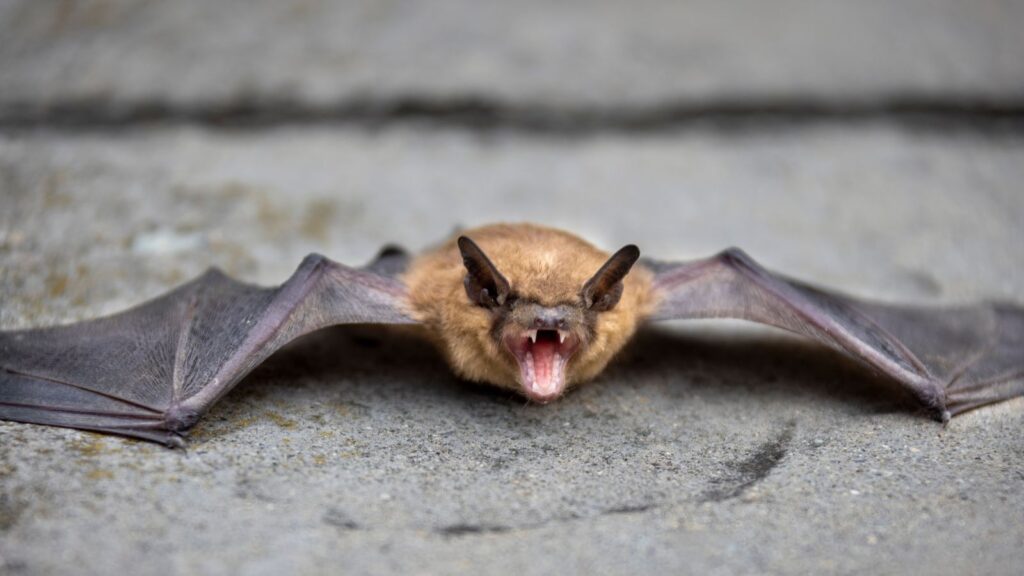
Finding a bat flying around your basement is one of the clearest clues that something is getting inside.
A single bat doesn’t automatically mean there’s a colony in your house. It could have entered through an open door, window, or small gap. Still, if you see bats more than once, or find one repeatedly in the same area, look for an entry point and other signs of activity.
Never try to grab a bat with your bare hands.
Related: 15 Incredible Animals You Won’t Believe Actually Exist
Dark Streaks Around Entry Points
Check around basement windows, vents, cracks, and other possible entry points for dark smudges or streaks. Repeated contact with a bat’s body can leave marks around openings it uses regularly.
These marks may be easy to overlook, especially around older windows or dirty foundation walls. A greasy-looking streak combined with droppings or nighttime activity is more suspicious than a stain by itself.
Small Openings in Walls or Ceilings
Bats can fit through surprisingly small gaps. An opening around a vent, roofline, chimney, window, pipe, or other part of the house can give them access to an interior space.
Inspect areas where different building materials meet. Pay close attention to damaged screens, loose vent covers, cracks, and gaps around pipes.
Don’t seal an opening while bats may still be inside. Blocking their exit can leave them trapped indoors.
Related: 11 Winter Wildlife Animals That Help Your Yard Thrive
Bats Flying Around the Property at Night
Seeing bats outside your home in the evening is usually a good thing. They eat large numbers of insects and are a natural part of many ecosystems.
Still, repeated activity around your house can be a clue that there is a nearby roost. Watch where the bats seem to disappear after feeding. If they repeatedly head toward the same section of your house, attic, shed, or another structure, that area may be worth checking.
Outdoor bats alone don’t mean they’re living in your basement, so look for additional evidence before assuming you have an indoor problem.
Debris Near Possible Roosting Areas
Bats don’t build nests the way birds do, so you won’t necessarily find a traditional nest. You may still find debris around an area where bats have been spending time.
Damaged insulation, droppings, urine stains, or other material collecting beneath a high, sheltered spot can indicate repeated animal activity. Check behind stored items and around beams, vents, and ceiling openings.
Damaged or Loose Vents
Basement vents can provide an easy way for bats and other wildlife to get indoors. Look for torn screens, bent covers, loose edges, or gaps around the frame.
Droppings or stains near a damaged vent make the opening more suspicious. A vent that appears intact may still have a small gap around its edges, so check the entire area rather than just the screen itself.
Related: Rare Animals That Look Fake but Are Very Real
Stains on Walls or Ceilings
A bat roost can leave stains on nearby surfaces. Urine and droppings may create brownish or dark streaks beneath areas where bats regularly rest.
Check ceilings, walls, beams, and other elevated surfaces for marks that seem to have appeared without an obvious cause. If the stains are accompanied by an odor or droppings, there may be an animal-related problem.
Keep in mind that water leaks, mold, and other moisture problems can create similar marks, so look for several signs before deciding bats are responsible.
Health Concerns in Areas With Guano
Bats can carry rabies, although most bats do not have the disease. The CDC recommends avoiding direct contact with bats and taking possible exposures seriously.
Bat droppings can also create concerns if large amounts accumulate. Histoplasma, a fungus associated with soil and bird or bat droppings, can grow in environments contaminated with guano. Disturbing dried droppings can release spores into the air.
If you find a large accumulation of guano, avoid sweeping or vacuuming it yourself. A wildlife or remediation professional can advise you on safe removal.
An Expert Confirms It
Sometimes the signs point toward bats, but they can also look similar to evidence left by mice, rats, birds, or other wildlife.
A wildlife professional can inspect the basement and exterior of the house, identify possible entry points, and determine whether bats are actually using the space. This is especially helpful if you’ve heard repeated nighttime activity but haven’t seen the animals themselves.
Bats have an important place in the ecosystem, so the goal isn’t to harm them. The better solution is to figure out how they’re getting inside and have the problem handled safely. If bats are currently roosting in the house, timing also matters because sealing an occupied entry point can trap them inside.