
Bare soil is vulnerable to rain, wind, and runoff, especially on slopes and around garden beds. Over time, erosion can wash away valuable topsoil, expose plant roots, and create uneven patches in the landscape. One of the easiest ways to protect the soil is by planting ground covers that spread across the surface and hold it in place.
Many ground covers do more than control erosion. They also fill empty spaces with colorful foliage, seasonal flowers, and year-round texture, making them both practical and attractive additions to the garden.
Creeping Juniper
Creeping juniper (Juniperus horizontalis) is a tough evergreen that spreads across the ground to form a thick carpet of needle-like foliage. Its dense growth helps keep soil from washing away, making it a good choice for hillsides, banks, and dry areas. Depending on the variety, the foliage ranges from blue-green to silvery tones, and some plants produce small blue berries in fall.
Related: 12 Common Garden Plants That Are Surprisingly Poisonous
Ajuga
Ajuga (Ajuga reptans), also called bugleweed, spreads quickly to cover bare soil in shaded or partly shaded areas. Its glossy leaves come in green, burgundy, bronze, and deep purple, bringing color even when it’s not flowering. In spring, spikes of blue-purple blooms attract bees and other pollinators.
Related: 12 Deer-Resistant Plants That Help Protect Your Garden
Blue Star Creeper
Blue star creeper (Isotoma fluviatilis) forms a soft mat of tiny green leaves covered with delicate blue flowers from spring into summer. It works well between stepping stones, along pathways, and in garden borders. Once established, it tolerates light foot traffic and helps stabilize loose soil.
Related: 15 Creative Upcycled Planters That Will Transform Your Garden
Moss
Moss is a natural choice for damp, shady areas where grass struggles to grow. It spreads slowly over the soil, helping reduce runoff while creating a rich green carpet. Moss also absorbs moisture, making it especially useful in areas that receive frequent rainfall.
Related: 10 Everyday Items That Actually Kill Your Garden Soil
Creeping Thyme
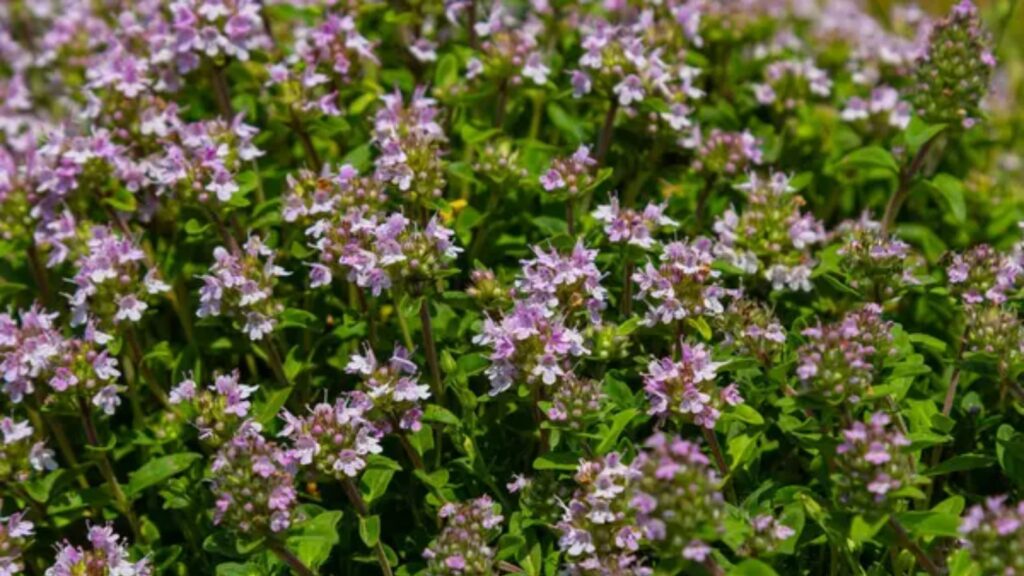
Creeping thyme (Thymus species) is valued for both its fragrance and its ability to spread over the ground. Its tiny leaves release a pleasant scent when stepped on, while clusters of pink or purple flowers bloom during summer and attract bees. This drought-tolerant herb grows well in sunny locations with well-drained soil.
Sedum
Low-growing sedums, such as Sedum spurium, are reliable ground covers for dry, rocky areas where other plants may struggle. Their fleshy leaves store water, making them highly drought tolerant. During the growing season, they produce clusters of pink, red, or white flowers that brighten the landscape while protecting the soil beneath.
Creeping Phlox
Creeping phlox (Phlox subulata) creates a colorful blanket of flowers every spring. Pink, lavender, blue, purple, and white blooms almost completely cover the evergreen foliage for several weeks. Its spreading habit makes it a favorite for slopes, retaining walls, and garden borders where erosion can become a problem.
Hostas
Hostas are best known for their large, attractive leaves, but they also work well as ground covers in shady locations. Their broad foliage helps shield the soil from heavy rain while reducing weed growth. During summer, tall stems of white or lavender flowers rise above the leaves, adding another layer of interest.
Vinca Minor
Vinca minor, often called periwinkle, spreads quickly to form a dense evergreen mat that helps hold soil in place. Its glossy leaves stay attractive through much of the year, while blue, purple, or white flowers appear in spring and often continue off and on through the growing season. It performs well in partial shade and adapts to many soil types.
Clover
Clover is an excellent choice for areas that receive regular foot traffic. Its low-growing foliage creates a living carpet that protects the soil while standing up well to everyday use. As an added benefit, clover naturally adds nitrogen to the soil, helping improve growing conditions for nearby plants and reducing the need for fertilizer.