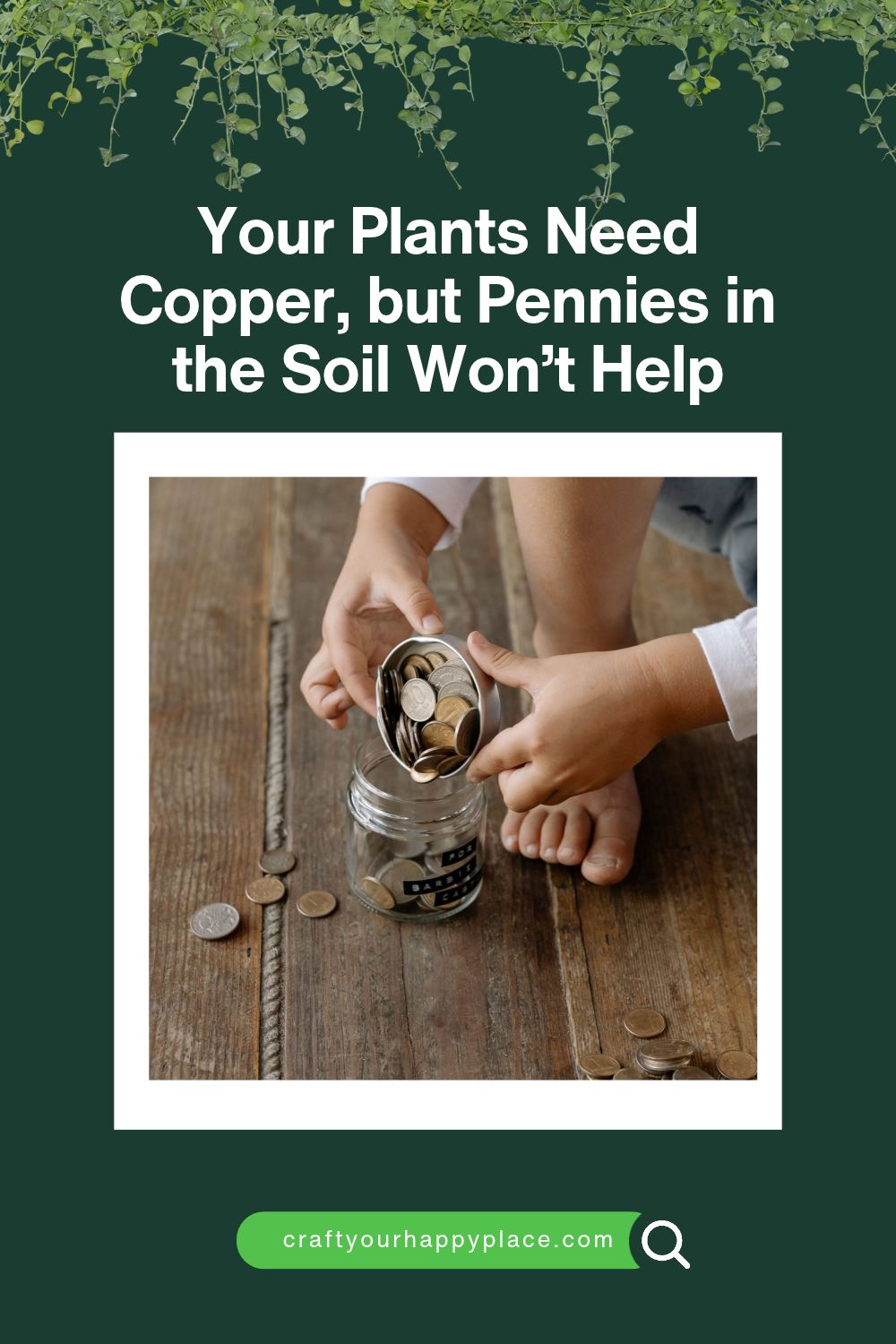
If you’ve seen someone dropping pennies into a houseplant pot, you might have wondered whether there’s something to the trick. Plants do need copper, and since pennies contain copper, putting a few in the soil may seem like a cheap way to give your plants an extra dose of a nutrient they need.
The problem is that a penny doesn’t work like plant fertilizer. Leaving coins in a flowerpot won’t reliably supply copper, prevent fungal problems, keep pests away, or bring an unhealthy plant back to life.

Plants Really Do Need Copper
Copper is a micronutrient that plants need in small amounts to grow and function properly. It supports processes such as photosynthesis and enzyme activity, although plants need far less of it than nitrogen, phosphorus, and potassium.
Related: The U.S. Has Stopped Making Pennies—Now Congress Wants to Make It Official
But a Penny Isn’t Plant Food
Plants can only take up nutrients through their roots when those nutrients are available in a form they can absorb. A copper-containing coin sitting in the soil doesn’t provide a measured or dependable supply, and soil conditions such as pH can affect how much copper a plant can use.
Related: One Lincoln Penny Is Worth $195,200—Here’s What Makes It So Rare
Today’s Pennies Aren’t Mostly Copper Anyway
Modern U.S. pennies have another drawback: they’re made mostly of zinc with a thin copper coating. Pennies produced since 1982 aren’t solid copper, so dropping a few into a pot won’t give the soil a reliable supply of that metal.
Related: Trump Dollar Coins Are Here—But You’ll Pay More Than Face Value
Pennies Aren’t a Reliable Fungus Treatment
Copper is used in some fungicides, which may explain why people connect pennies with plant disease prevention. Those products contain copper in specific formulations and concentrations, while a coin buried in potting mix doesn’t deliver the same treatment.
Related: 15 Items That Take Up Too Much Space and Save Too Little at Costco
They Aren’t a Dependable Pest Treatment Either
Pennies won’t reliably get rid of common houseplant pests such as fungus gnats, spider mites, mealybugs, or scale. Each pest can require a different treatment, so identifying what’s causing the problem is a much better place to start than adding coins to the pot.
More Copper Isn’t Necessarily Better
Plants need only tiny amounts of copper, and too much can be harmful. Adding it without knowing whether the plant has a deficiency could cause further problems instead of helping.
A Struggling Plant May Have an Entirely Different Problem
Yellow leaves, slow growth, and other signs of stress don’t automatically point to a copper deficiency. Poor watering habits, inadequate drainage, low light, pests, damaged roots, incorrect soil pH, and other nutrient shortages can cause similar symptoms.
Use a Balanced Fertilizer Instead
For most indoor plants, a fertilizer made for houseplants is a more dependable way to supply the nutrients they need. Follow the package directions, and avoid adding individual micronutrients unless there’s a good reason to suspect a deficiency.