Many homeowners take pride in having a thick, healthy lawn. In fact, around 81% of Americans live in a home with a lawn. But while your grass may look healthy from above, there could be unwanted visitors working quietly below the surface.
Some pests chew through roots, others feed on grass blades, and a few tear up the yard while searching for food. The longer they go unnoticed, the more damage they can cause. If your lawn has mysterious brown patches, raised tunnels, or torn-up sod, one of these hidden troublemakers could be responsible.
Sod Webworms
Sod webworms are the caterpillar stage of small lawn moths. During the day, they stay hidden in silk-lined tunnels within the thatch layer, coming out after dark to feed on grass blades.
One of the earliest signs of an infestation is small brown patches scattered across the lawn. As the caterpillars continue feeding, those patches grow larger and often merge together, especially in sunny areas.
A sudden increase in birds pecking at your lawn can also be a clue. Birds love feeding on sod webworms, so unusual bird activity often points to these hidden pests. Left alone, sod webworms can thin healthy turf until large sections of the lawn look worn and patchy.
Raccoons
Raccoons may look harmless, but they can leave a lawn looking like it has been plowed overnight. They’re usually searching for grubs hiding beneath the soil, and they’ll happily peel back pieces of sod to get to them.
Sprinklers, repellents, and netting may scare raccoons away for a short time, but they rarely solve the problem for long. If grubs remain in the soil, raccoons will often return for another meal.
The best way to stop repeated visits is to deal with the grub population, especially during late spring or early summer before the larvae become established. While you’re working on the root cause, repairing damaged areas each day can help your lawn recover more quickly.
Grubs
Grubs are the larvae of beetles such as Japanese beetles, June bugs, and chafer beetles. These white, C-shaped insects spend most of their lives just below the soil, feeding on grass roots.
As roots disappear, the grass struggles to get water and nutrients. Before long, sections of the lawn begin turning brown and dying. Infested areas often feel soft underfoot, and you may be able to lift the grass like a loose piece of carpet because the roots are no longer holding it in place.
Grubs create another problem, too. Animals like raccoons, skunks, and even moles are attracted to lawns full of grubs, leading to even more digging and damage.
Moles
Moles spend nearly all their time underground, creating long tunnels beneath the lawn as they search for earthworms and insects.
While they aren’t interested in eating grass, their digging causes plenty of damage. Their tunnels push up the soil, creating raised ridges and uneven ground. As the soil shifts, grass roots can dry out or become separated from the soil, leaving patches of weakened turf.
Moles can help reduce certain insect populations, but many homeowners find that the damage from their tunnels outweighs any benefit.
Voles
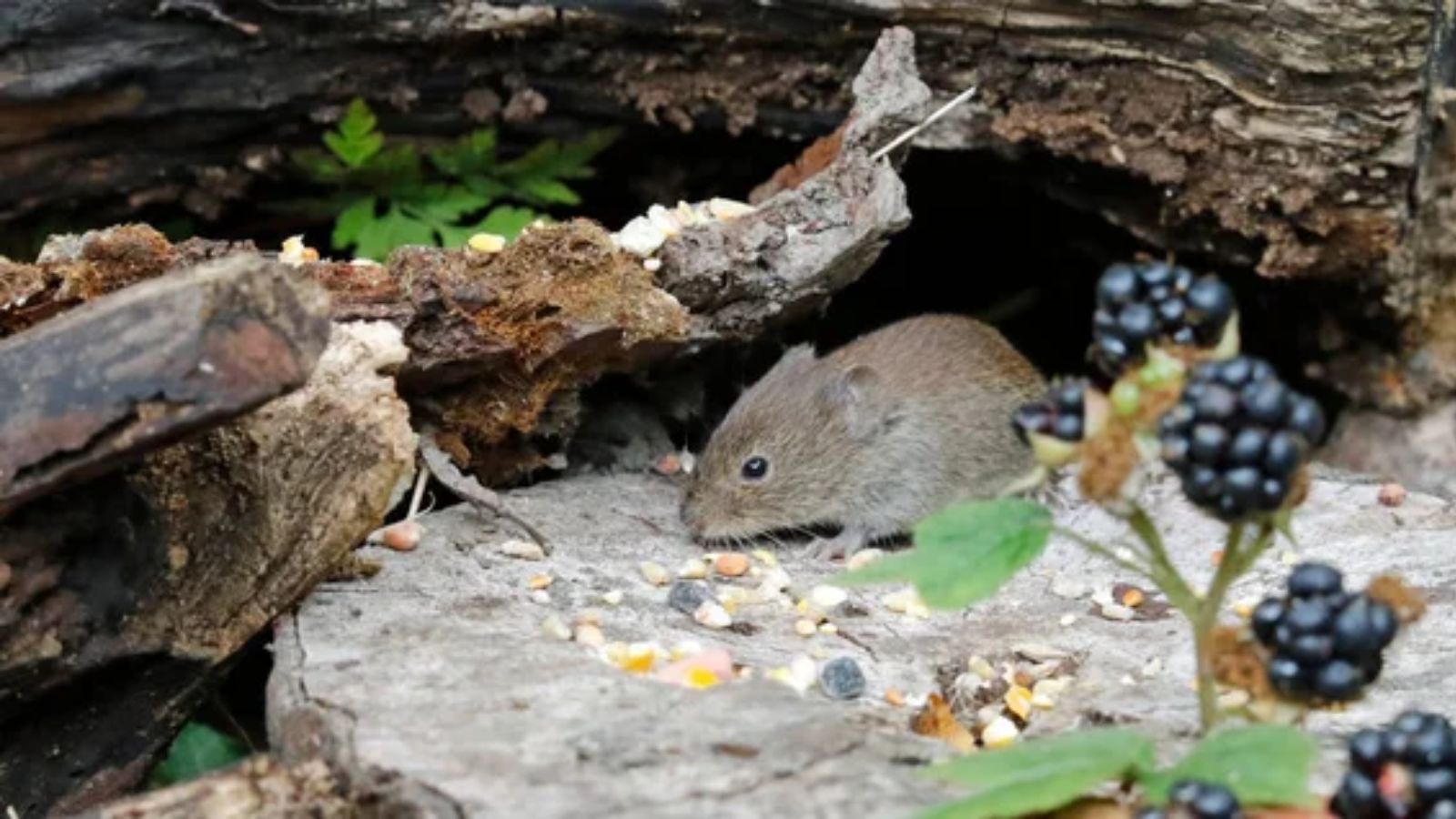
Voles are small rodents that are often mistaken for mice. Unlike moles, they feed directly on plants, including grass stems, roots, and young shoots.
These animals create shallow runways just beneath the grass, which become especially noticeable after snow melts in late winter. The winding trails of dead grass are one of the easiest ways to spot a vole problem.
Their appetite doesn’t stop with lawns. Voles also chew on the bark and roots of young trees and shrubs, which can weaken or even kill valuable landscape plants. Since they reproduce quickly, a small vole problem can become much larger in a short period.
Chinch Bugs
Chinch bugs are tiny insects that feed by piercing grass blades and sucking out the plant’s juices. While feeding, they also leave behind toxins that cause the grass to yellow, dry out, and eventually die.
The damage often looks similar to drought stress, with irregular patches of brown grass that refuse to recover after watering. This makes chinch bug infestations easy to mistake for a lack of moisture.
They thrive during hot, dry weather and are especially common in lawns with thick layers of thatch, where they can hide and multiply. If left untreated, they can destroy large sections of turf before homeowners realize what’s happening.
Armyworms
Armyworms are hungry caterpillars that feed on grass blades in large numbers. Their name comes from the way they move across a lawn together, stripping away vegetation as they go.
These pests are most active in late summer and early fall. A healthy lawn can suffer heavy damage within just a few days if an infestation goes unnoticed.
The first signs are small patches of chewed grass, but those areas spread quickly as the caterpillars continue feeding. Before long, the lawn may look scorched, with large bare spots that resemble damage caused by extreme heat or drought.