
A kitchen has a funny way of collecting things. A gadget seems like a great idea, a new set of containers replaces the old ones, and a few extra pans somehow make their way into the cabinets. Before long, drawers are difficult to open and shelves are packed with things you barely use.
Getting older often changes what you actually need from your kitchen. The novelty of a single-use gadget may wear off, while a dependable skillet or a good chef’s knife gets used almost every day.
That makes a kitchen clear-out a good chance to look at what earns its space and what has simply been sitting there for years. Here are 15 kitchen items that may be worth letting go.
Outdated Nonstick Cookware
Nonstick cookware can be wonderfully convenient, but older pans deserve a close inspection. Some older nonstick products were made using PFOA, a chemical that has been phased out of production in the United States because of health and environmental concerns.
The coating on any nonstick pan can also wear down with age. Once a pan is badly scratched, peeling, or no longer performing well, replacing it makes sense.
If you’re ready for new cookware, stainless steel, cast iron, or newer nonstick options can all have a place in the kitchen. Pick the material that fits the way you actually cook rather than keeping an old pan simply because you’ve had it forever.
Related: 12 Items That Can Explode in Your Kitchen
Unused Kitchen Gadgets
That avocado slicer seemed like a clever purchase. So did the egg separator, strawberry huller, quesadilla maker, and dozens of other gadgets that promised to make cooking easier.
The problem is that many of these tools end up buried in drawers after the novelty wears off. If you can’t remember the last time you used something, ask yourself whether you’d buy it again today.
A few versatile tools can cover a surprising number of kitchen jobs. A chef’s knife, cutting board, measuring cups, and sturdy spatula will probably get far more use than a drawer full of specialty gadgets.
Plastic Food Storage Containers
Plastic containers don’t last forever. They can become warped, scratched, stained, or brittle after years of use.
Old containers also have a habit of accumulating without their matching lids. If you’re constantly searching through a cabinet for the right top, it’s probably time to thin the collection.
Glass containers are a useful option for many households, especially for storing and reheating food. If you prefer plastic, check the manufacturer’s instructions for microwave and dishwasher use, and replace containers that are badly damaged.
Related: 12 Kitchen Gadgets That Are Hard to Replace
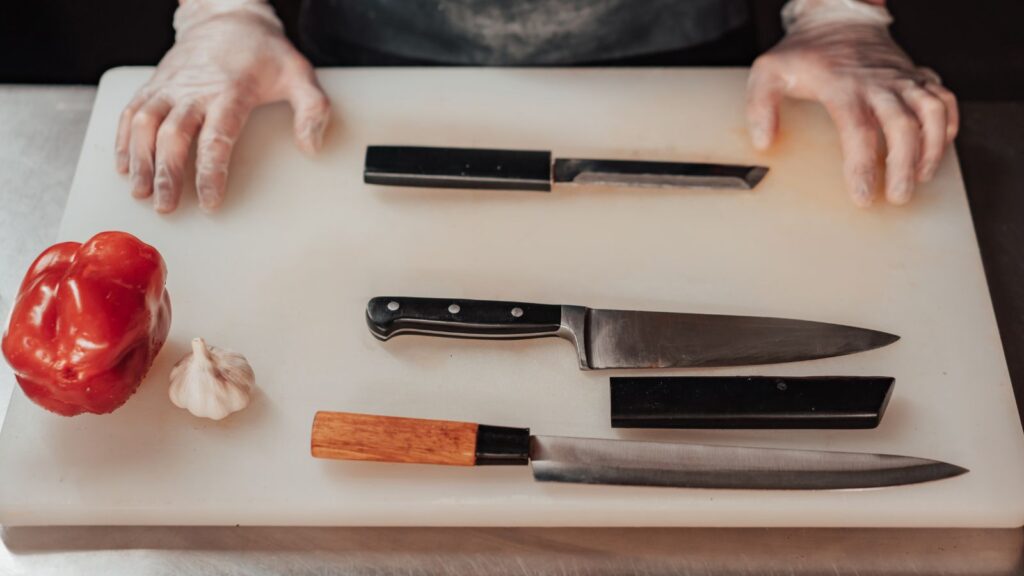
Dull Knives
A knife that barely cuts through a tomato isn’t doing you any favors. Dull blades require more force, which can make cutting less controlled and increase the chance of a slip.
Before throwing out a good knife, see if it can be sharpened. Regular honing and occasional sharpening can keep quality knives working for years.
If a blade is badly damaged, bent, chipped, or impossible to sharpen properly, replacing it is a better choice than struggling with it every day.
Expired Spice Collection
Open a spice cabinet and you’ll probably find at least one container that has been sitting there since you can’t remember when.
Old spices don’t necessarily become dangerous just because they’ve passed their best-by date, but their flavor and aroma fade over time. That means you may end up adding more and more just to get the same taste.
Check your spices every year and toss anything that has lost its aroma, changed appearance, or simply isn’t something you use anymore. Buying smaller containers can also help prevent waste.
Single-Purpose Appliances
Some kitchen appliances sound like a great idea until you realize how much cabinet or counter space they occupy.
Bread makers, ice cream machines, quesadilla makers, popcorn machines, and specialty coffee equipment can all be worthwhile if you use them regularly. If they’re sitting untouched for years, they’re taking up room that could be used for something else.
Before keeping a bulky appliance, ask how often you actually use it. If the answer is once every few years, selling or donating it could free up a surprising amount of space.
Related: 15 Common Kitchen Habits You Should Stop Right Away
Excessive Water Bottles
A household doesn’t need 20 water bottles just because everyone has received one at some point.
Some bottles may be leaking, missing their lids, stained, or sitting untouched in the back of a cabinet. Keep the ones you actually reach for and let the rest go.
A smaller collection of sturdy bottles is easier to wash, store, and keep track of.
Worn Cutting Boards
Cutting boards take plenty of abuse. Deep knife grooves, cracks, warping, and stains can eventually make a board difficult to clean properly.
Plastic boards can develop deep cuts where food particles may become trapped. Wooden boards can also wear out and need replacing once they develop deep cracks or other damage.
Don’t feel obligated to keep a cutting board forever. If the surface has become heavily damaged, replace it. Keeping separate boards for raw meat and ready-to-eat foods can also help reduce cross-contamination.
Related: 10 Common Foods That Are Making Your Kitchen Stink
Decorative Dishware
Maybe you inherited a set of dishes from a relative or bought a beautiful collection years ago. There’s nothing wrong with keeping sentimental pieces, but decorative dishware can quickly consume an entire cabinet.
If you have boxes of plates, serving pieces, and glasses that haven’t been touched in years, ask whether they deserve the storage space.
Keep the pieces you genuinely love or use. Family heirlooms can also be passed along to someone who will appreciate having them rather than leaving them packed away indefinitely.
Unmatched Storage Lids
Few things are more frustrating than opening a container cabinet and finding 15 lids with no matching containers.
There isn’t much reason to keep a lone lid unless you know its container is still somewhere in the house. The same goes for containers without lids.
Sort everything together and pair up what you can. Recycle or discard damaged pieces according to your local rules, then stick with a few stackable sets that fit neatly together.
Old Coffee Makers
Coffee makers can last for years, but that doesn’t mean every old machine deserves a permanent spot on your counter.
If your coffee maker leaks, struggles to heat water, has damaged parts, or has become difficult to clean, replacing it may be worthwhile. Some newer machines also offer programmable settings and reusable filters that may fit your routine better.
If your old machine still works perfectly and you use it every day, there may be no reason to replace it. Age alone isn’t a good reason to get rid of a useful appliance.
According to the Micet Group, sustainable brewing practices are becoming more important as the industry looks for ways to reduce its environmental impact.
Too Large Cookware Sets
Buying a complete cookware set can seem like a bargain until you realize half of the pieces never leave the cabinet.
Most home cooks have a handful of pots and pans they reach for repeatedly. A skillet, saucepan, stockpot, and a few useful baking dishes may cover most everyday meals.
If you have several nearly identical frying pans or saucepans, keep the ones in the best condition and let the extras go. You’ll gain cabinet space without losing much cooking ability.
Tarnished Silverware
Silverware doesn’t need to be replaced just because it has lost its shine. Tarnished silver pieces can often be cleaned, and older flatware may have plenty of life left.
Bent forks, loose handles, badly scratched finishes, and pieces that are uncomfortable to use are a different story. Those items may be worth replacing.
If you’re buying a new set, choose something sturdy enough for daily use rather than picking based only on appearance. Future Market Insights reports that the global flatware market is expected to reach $16.4 billion, with a projected CAGR of 4.5% from 2023 to 2033.
Pantry Staples That Have Expired
Pantry shelves are another place where old food can quietly pile up. Flour, rice, pasta, canned goods, sauces, baking ingredients, and other staples can sit untouched until they’re well past their best quality.
Some foods may still be safe after their best-by dates, while others can spoil or develop pests. Check packages for signs of mold, insects, damaged seals, strange odors, or other problems before deciding whether to keep them.
According to the USDA, American households lose a considerable amount of food each year, much of it because food isn’t eaten before it goes to waste.
Try keeping newer purchases toward the back and older items toward the front. That makes it easier to use what you already have before buying more.
Low-Quality Bakeware
Cheap bakeware can be tempting, especially when you’re setting up a kitchen on a budget. But some inexpensive pieces warp, scratch, rust, or lose their finish after repeated use.
You don’t need to replace every baking pan in your kitchen. Start with the pieces that are warped, badly scratched, rusted, or producing uneven results.
Carbon steel, stainless steel, glass, and quality silicone can all be useful choices depending on what you’re baking. Fortune Business Insights reports continued growth in the bakeware market as consumers spend more on kitchen products.
A kitchen doesn’t need to contain every tool, appliance, or dish you’ve ever bought. The items that earn their place are usually the ones you reach for without thinking.
If something has been sitting untouched for years, takes up a lot of room, or makes an already-crowded cabinet harder to use, it’s worth asking whether you still need it. Clearing out even a few of these items can make everyday cooking feel much easier.