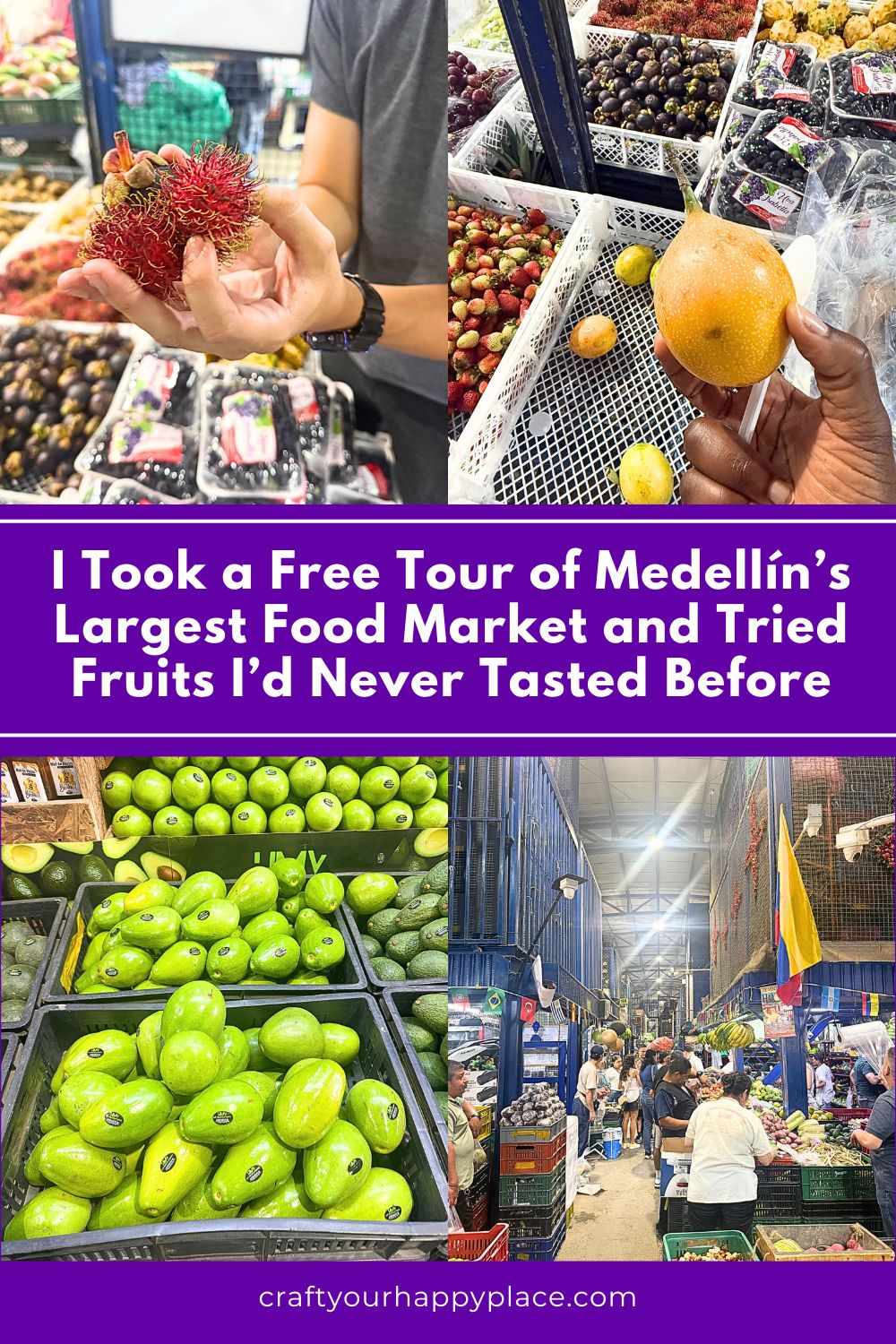
One of my favorite things to do whenever I travel is visit a local market. Sure, the museums and landmarks are wonderful, but if you really want to understand a place, head to where locals shop. Markets tell you what people eat, what’s in season, what grows nearby, and even a little about a country’s history.
While spending the summer in Medellín, I signed up for a free fruit market tour booked via Guru Walk with a local guide named Julian. I expected to spend a couple of hours sampling tropical fruit. Instead, I left with a full stomach, a much deeper understanding of Colombia’s history, and an appreciation for why this country is considered one of the most biodiverse places on Earth.
If you’re looking for an experience that feels authentic and takes you beyond the typical tourist attractions, I can’t recommend this tour enough.
Exploring Central Mayorista, Medellín’s Largest Food Market
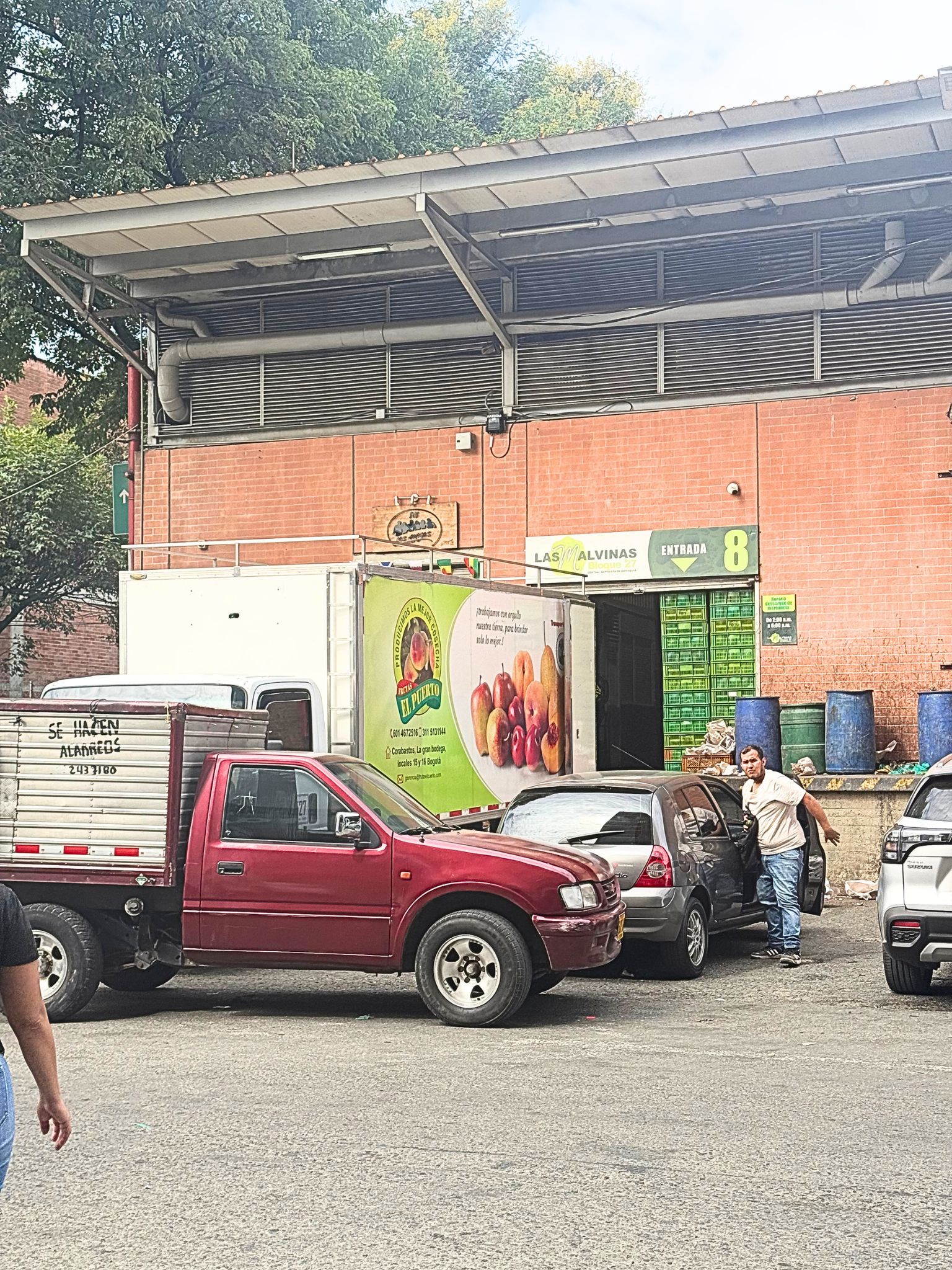
Our morning began at Ayurá Metro Station, where we met Julian before taking a short walk—about ten minutes—to Central Mayorista de Antioquia, Medellín’s largest wholesale food market and one of the largest produce markets in Colombia.
At first glance, it feels like organized chaos. Vendors stack colorful fruit into towering displays, workers weave carts through narrow aisles, and shoppers negotiate prices while filling bags with everything from herbs and vegetables to fresh seafood and flowers.
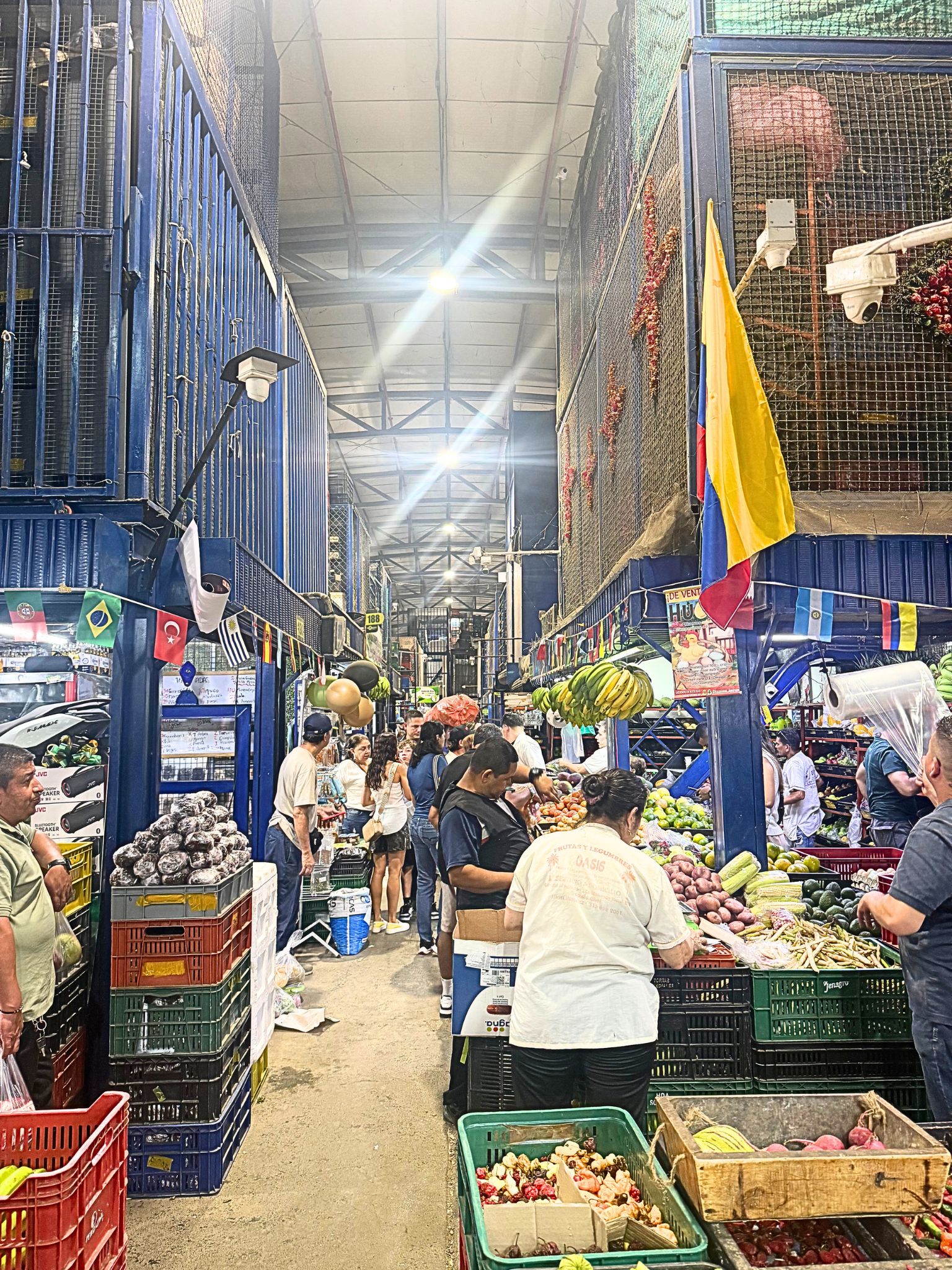
Despite its size, I was surprised by how clean and well-organized the market felt. Each section had its own specialty, and with a local guide, navigating the maze was effortless.
Why Colombia Has So Many Incredible Fruits
One of the first things Julian explained was that many visitors assume all of these fruits originate in Colombia but that’s not actually the case.
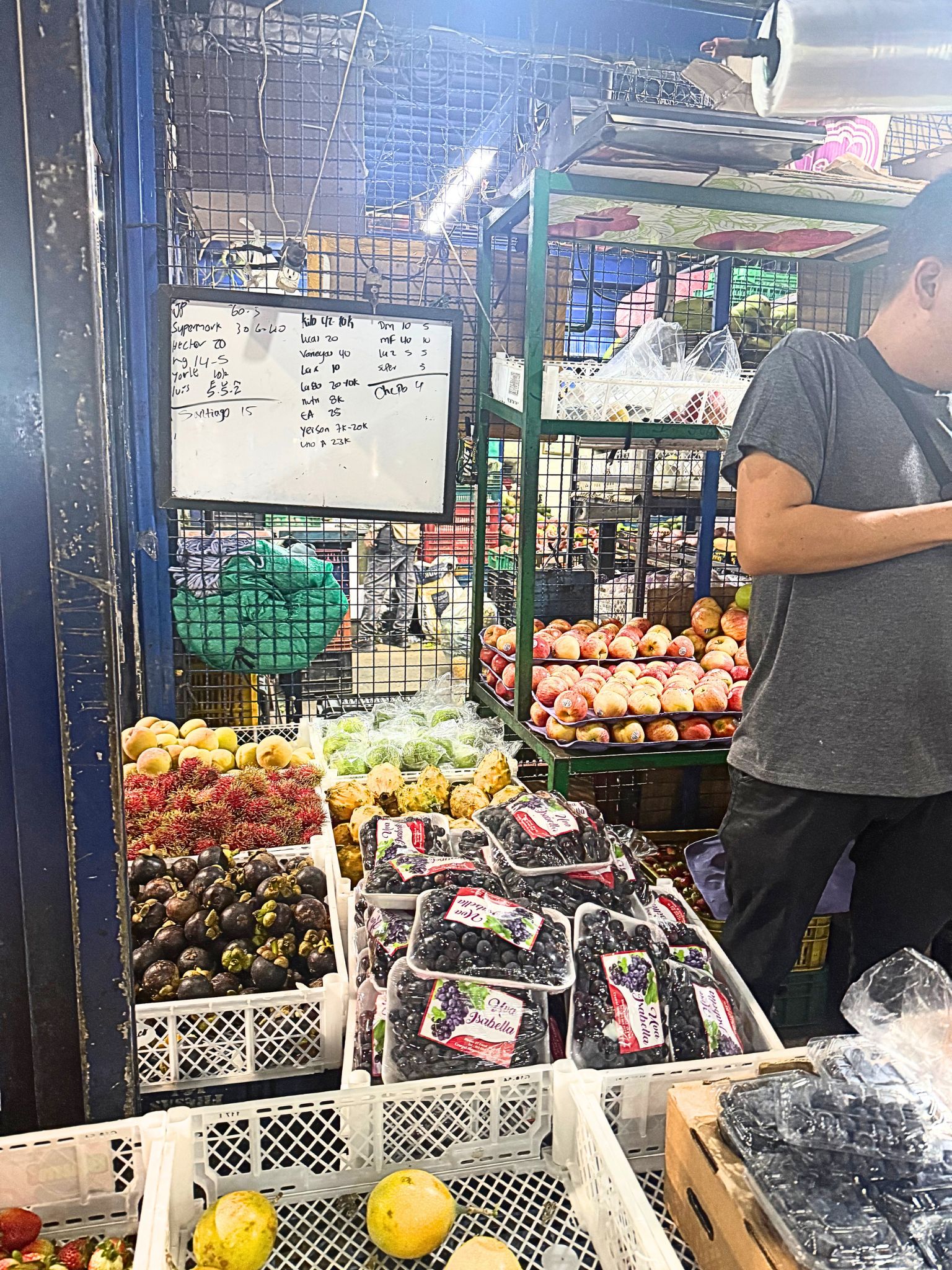
Colombia’s unique geography allows fruits from all over the world to thrive. The country stretches from the Caribbean Sea to the Pacific Ocean and includes tropical lowlands, temperate valleys, cloud forests, and the towering Andes Mountains. Because of these varied climates, farmers can grow thousands of fruit varieties year-round.
Some fruits are native to Colombia or neighboring South American countries, while others arrived centuries ago through trade routes from Asia, Africa, and Europe. Today, they all flourish thanks to Colombia’s fertile volcanic soils and ideal growing conditions.
Throughout the tour, Julian mixed discussions about fruit with fascinating stories about Colombian and Latin American history, agriculture, trade, and even politics. It was so much more than a food tour.
Tasting Fruits I’d Never Seen Before
The best part, of course, was the tasting. We sampled so many different fruits. Every stop introduced something new, and Julian showed us not only what each fruit tasted like, but also how Colombians typically eat it.
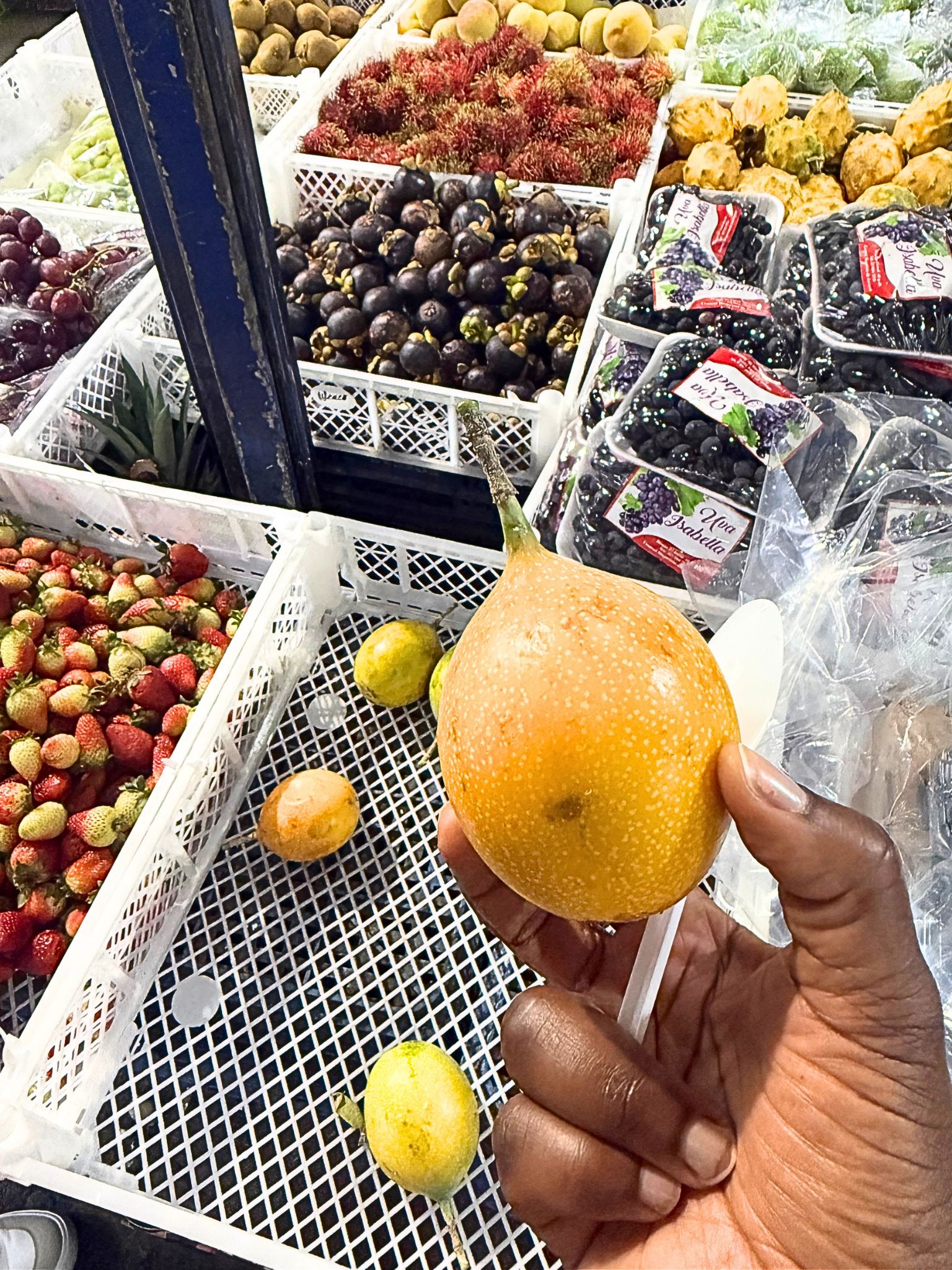
Granadilla
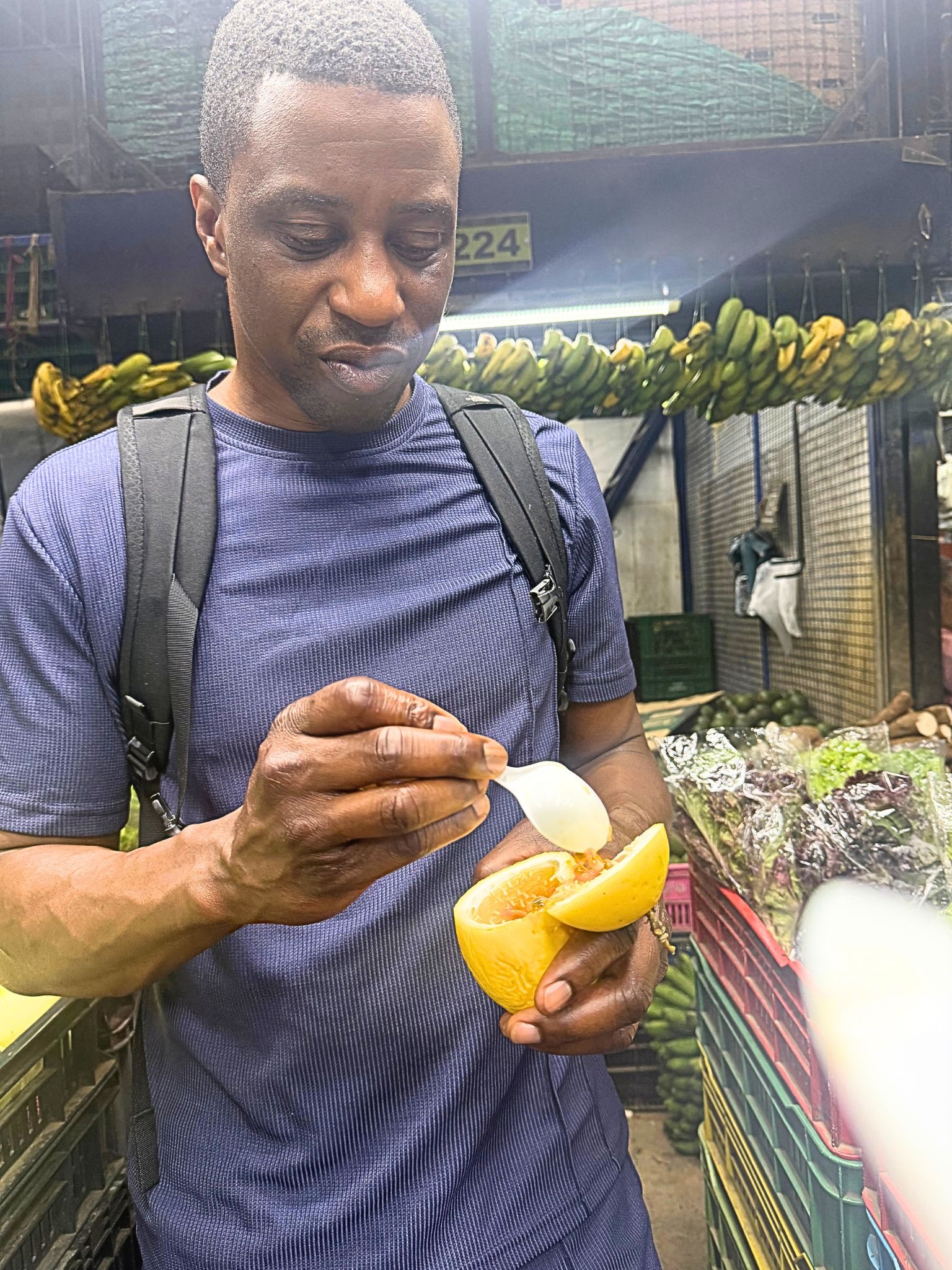
One of my favorites was granadilla, often called the sweet passion fruit. Native to the Andes of Colombia, Ecuador, and Peru, it has a hard orange shell filled with translucent seeds surrounded by sweet jelly-like pulp.
Julian showed us the traditional way to crack it open—with your elbow instead of a knife—which immediately became everyone’s favorite party trick. Colombians usually scoop out the inside with a spoon or simply eat it straight from the shell.
Maracuyá
Although passion fruit is common in the United States, Colombian maracuyá tasted much more vibrant and aromatic.
The biggest surprise? Julian sprinkled a little salt over it before we tasted it. I never would have thought to do that, but the salt balanced the fruit’s tartness and made the flavor even brighter. It’s also commonly blended into fresh juices, desserts, and sauces throughout Colombia.
Gulupa
Another member of the passion fruit family, gulupa has deep purple skin and a pleasantly sweet-tart flavor.
Much of Colombia’s gulupa harvest is exported to Europe, but locals also enjoy it fresh or blended into refreshing drinks. It was one of those fruits I’d happily buy again if I ever spotted it back home.
Lulo
Perhaps the most uniquely Colombian fruit we tried was lulo, which is native to the Andes.
Its bright green flesh has a citrusy flavor somewhere between lime, rhubarb, and pineapple. Because it’s naturally quite tart, Colombians usually blend it with milk, sugar, or water to make one of the country’s most popular fresh juices, known as jugo de lulo.
Tree Tomato
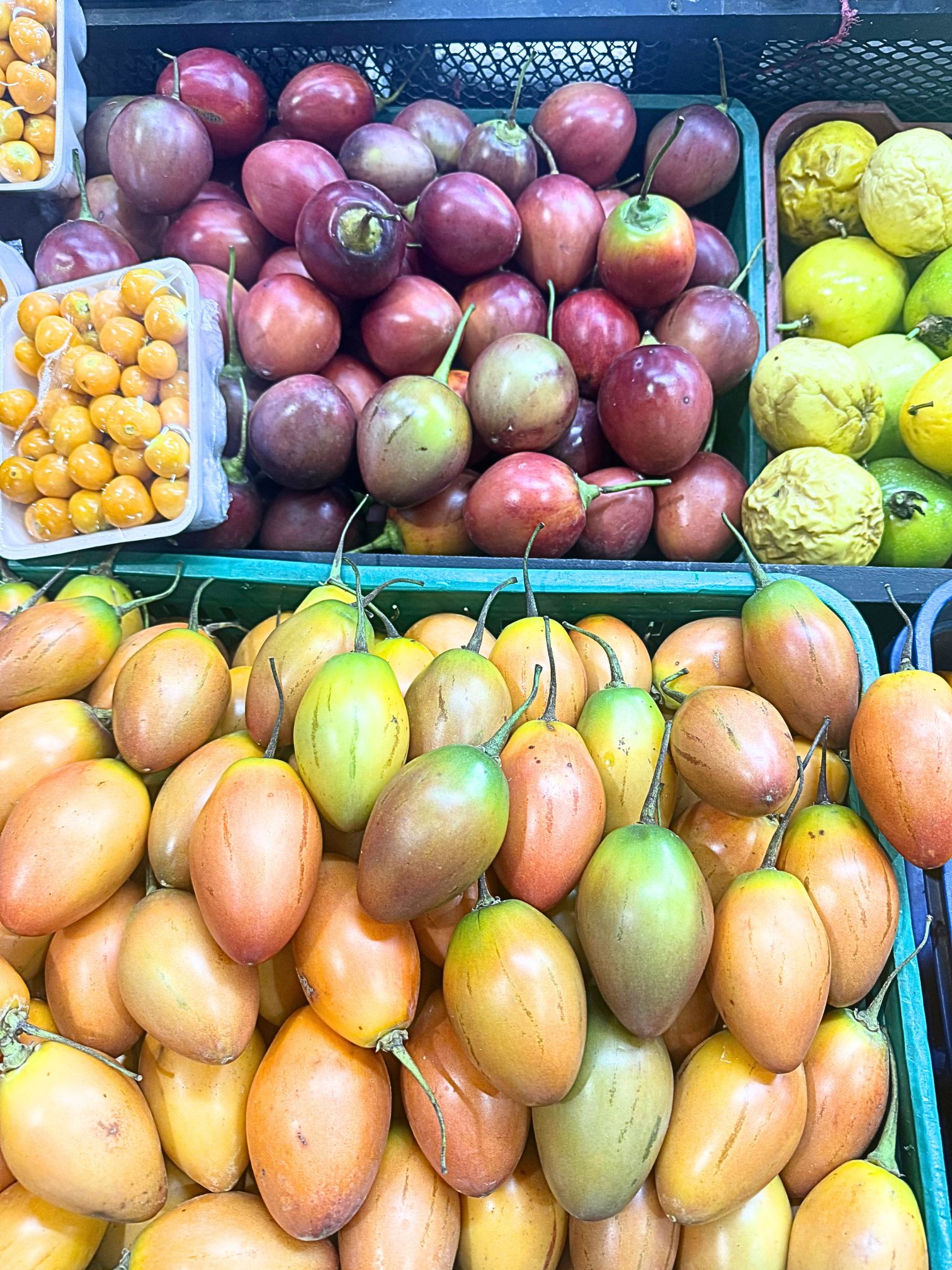
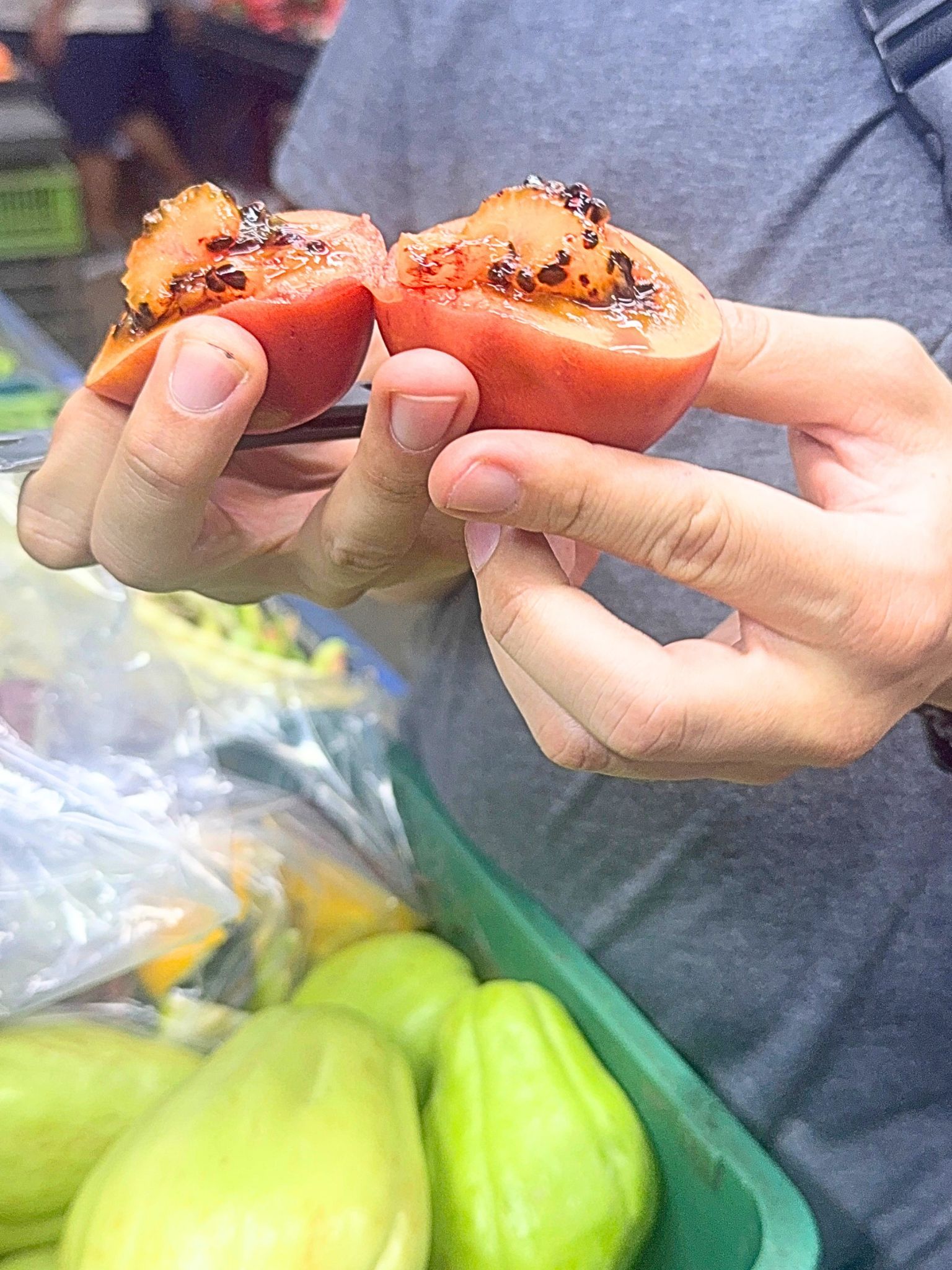
I had never heard of tree tomato, also called tomate de árbol.
Native to the Andes, it’s commonly blended with blackberries to make refreshing juices or used in homemade jams and sauces. It has a tangy flavor that’s surprisingly different from the tomatoes most of us are familiar with.
Mangosteen
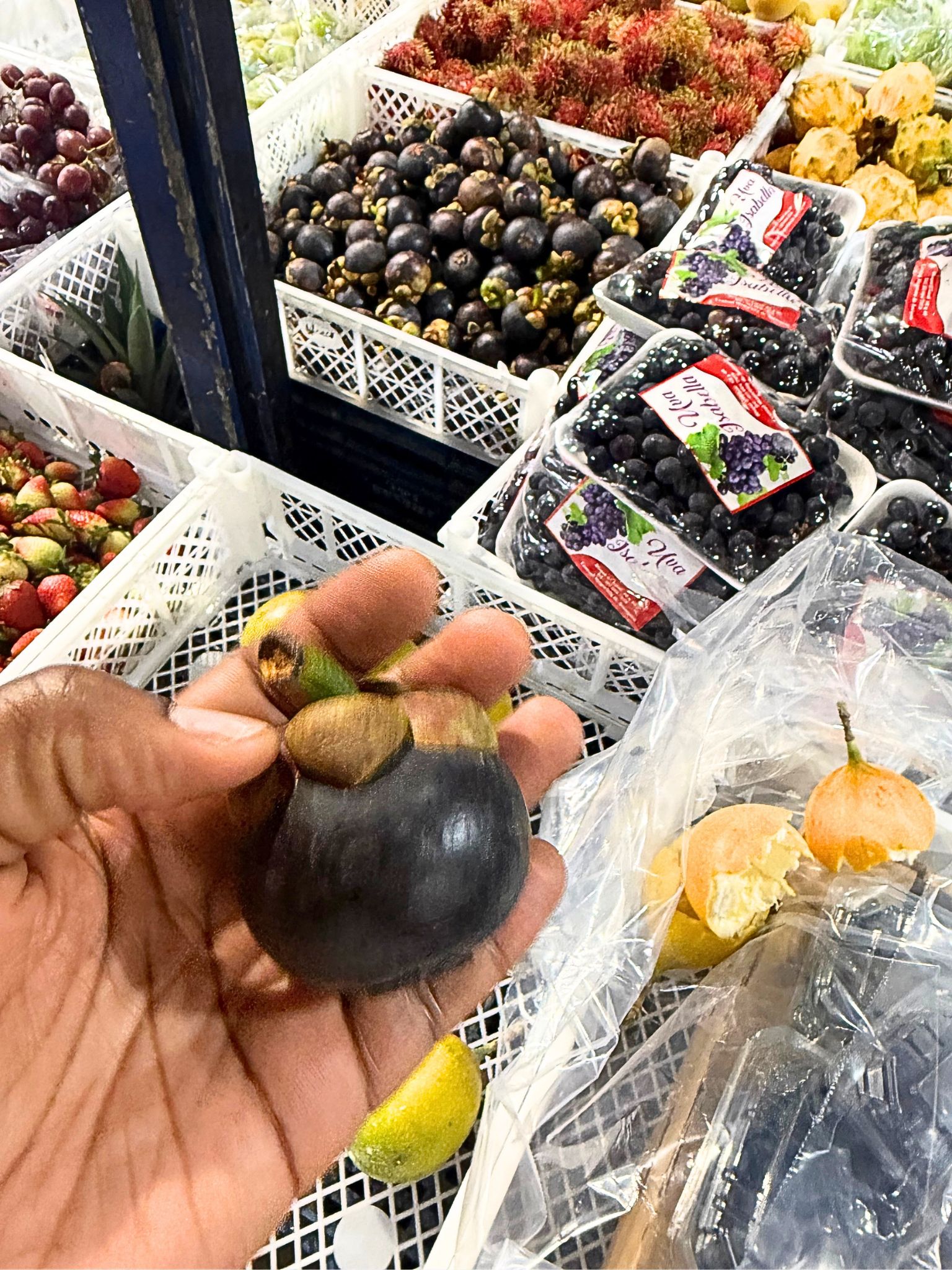
Often called the “queen of fruits,” mangosteen originally comes from Southeast Asia.
Its soft white flesh reminded me of lychee but with an even sweeter, creamier flavor. Julian also shared that many people value it for its antioxidant properties and potential health benefits.
Rambutan
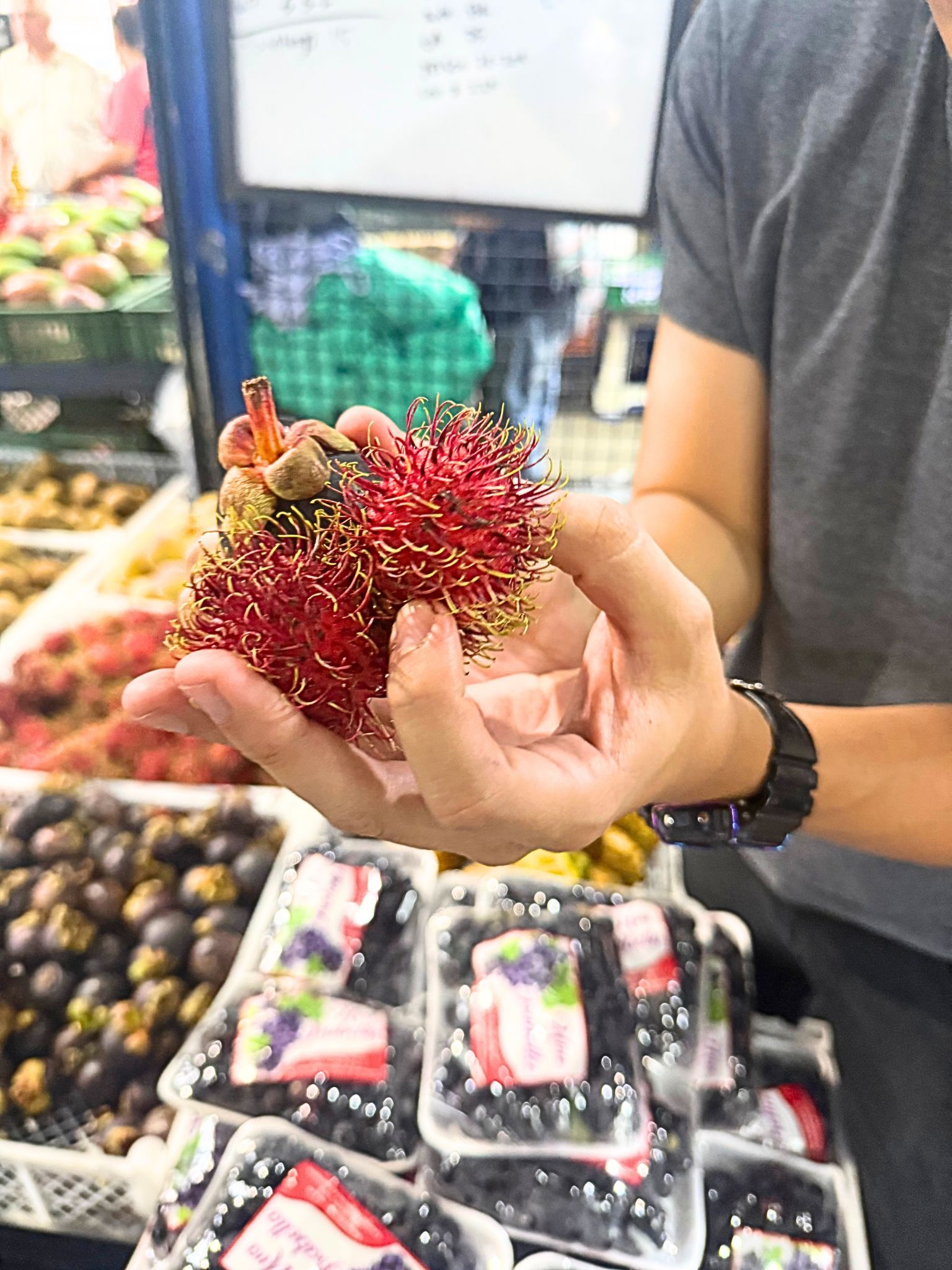
The bright red, hairy-looking rambutan definitely wins the award for the strangest appearance.
Originally native to Southeast Asia, it has become increasingly popular throughout tropical regions, including Colombia. Once peeled, the fruit resembles a large grape with sweet, juicy flesh similar to lychee. Julian explained that it’s rich in vitamin C and often associated with healthy skin.
Dragon Fruit
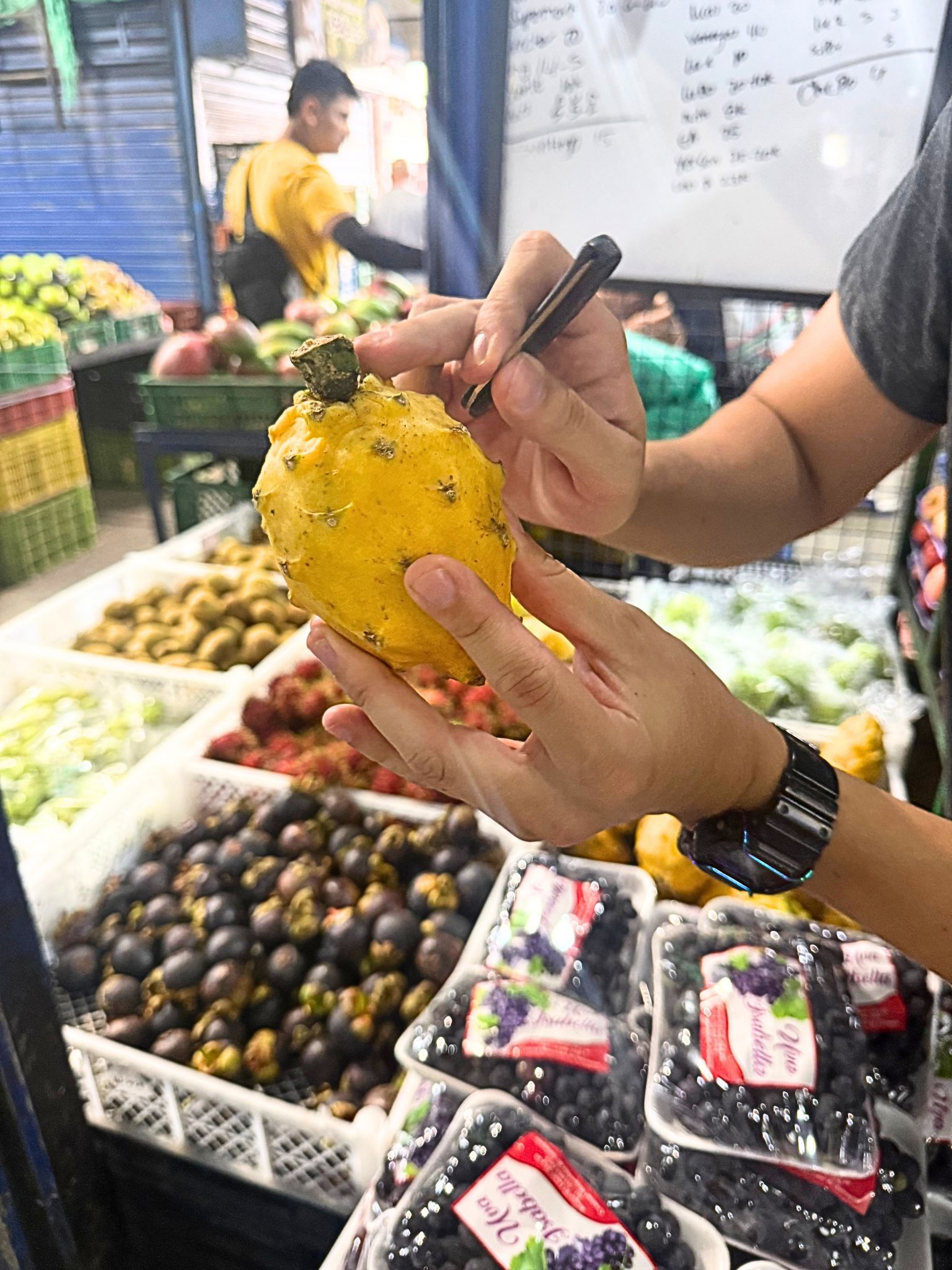
Although dragon fruit is widely grown throughout Asia today, it actually originated in southern Mexico and Central America.
Its mild sweetness makes it a popular breakfast fruit, smoothie ingredient, or refreshing afternoon snack in Colombia. We sampled both white-fleshed and brightly colored varieties.
Guava and Guava Apple
Guava grows throughout tropical America and has long been part of Colombian cuisine.
We sampled both traditional guava and guava manzana (apple guava), which has a crisp texture and sweeter flavor. Colombians eat them fresh, turn them into juices, or use them to make the famous guava paste known as bocadillo, often paired with cheese.
Prickly Pear (Tuna)
Another first for me was tuna, the fruit of the prickly pear cactus.
Originally native to Mexico, it’s now grown across Latin America. Once the prickly outer skin is removed, the inside is sweet, juicy, and surprisingly refreshing.
Creole Bananas and Avocados
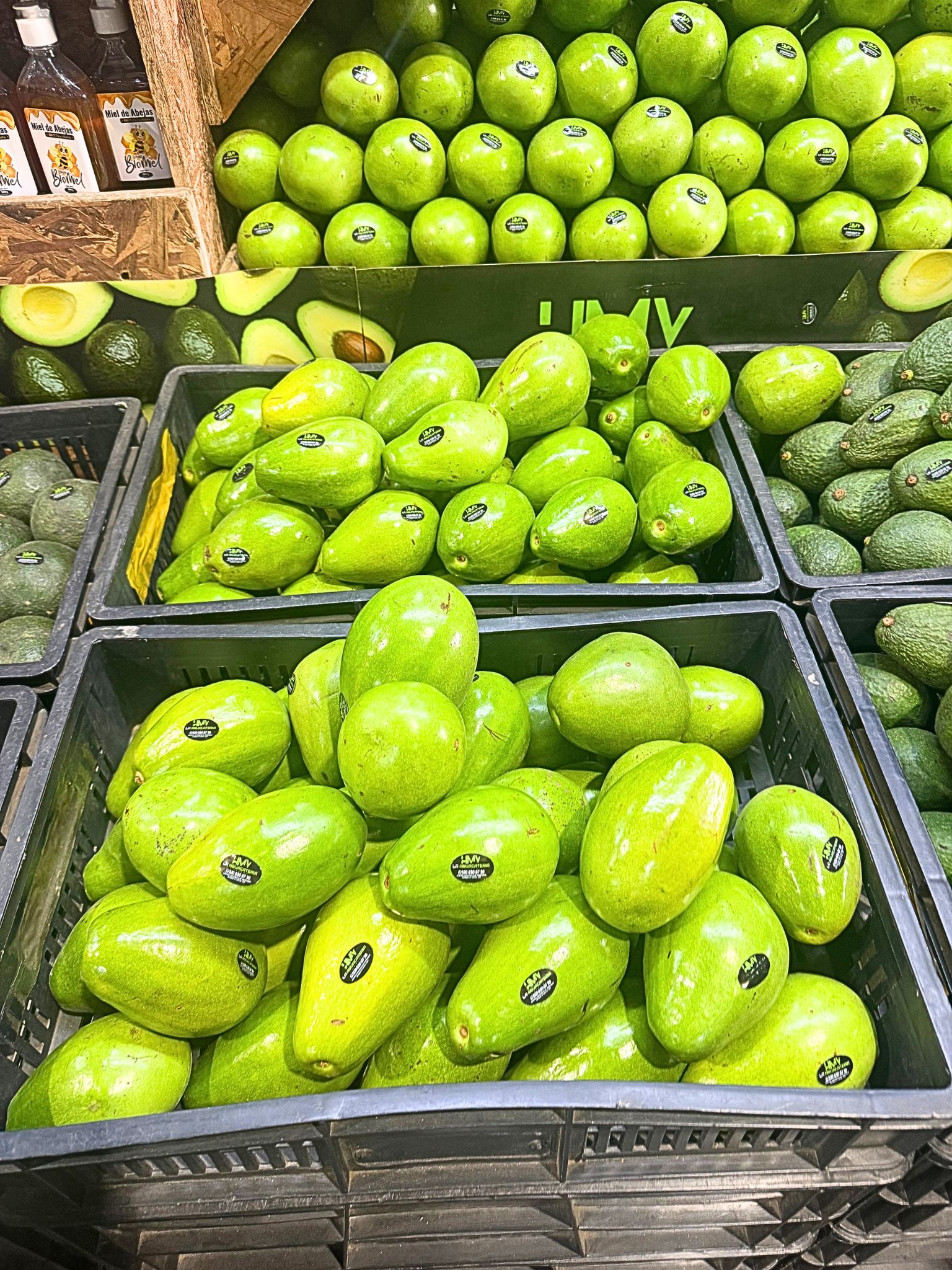
Even familiar foods tasted different here.
Julian explained that banano criollo, or Creole bananas, ripen within just a few days and are prized for their sweetness. We also sampled perfectly ripe Colombian avocados, which were incredibly creamy and flavorful—simple, fresh, and absolutely delicious.
More Than a Fruit Tour
What impressed me most wasn’t just the variety of fruit. Julian effortlessly connected every tasting to stories about Colombia’s geography, Indigenous cultures, Spanish colonization, agriculture, neighboring countries, and modern Latin America. It felt like taking a history class, cooking lesson, and cultural tour all at once.
His passion for Colombia was contagious, and his ability to explain complex history in an engaging way kept everyone in our group interested from beginning to end.
Why I’d Recommend This Tour
I’ve done food tours all over the world, and this one easily ranks among my favorites.
The market itself is fascinating, but having someone guide you through it transforms the experience. Julian knew exactly which vendors to visit, taught us how to pick ripe fruit, explained how locals prepare each one, and answered every question our group asked.
The tour is free to reserve, and all of the fruit tastings are included. At the end, guests simply leave a tip based on their experience. Considering how much fruit we sampled and everything we learned, it felt like one of the best values in Medellín.
Know Before You Go
If you’re thinking about taking the Medellín Fruit Market Tour, here are a few tips:
- Meet at Ayurá Metro Station before the tour begins. It’s easy to reach using Medellín’s Metro system.
- Come hungry. You’ll sample enough fruit that you probably won’t need lunch afterward.
- Wear comfortable shoes. While there isn’t a huge amount of walking, you’ll spend about two hours exploring the market.
- Bring cash to tip your guide at the end of the tour.
- Don’t be afraid to try everything. Even the fruits that looked unusual ended up being some of my favorites.
- Ask questions. Julian loves talking about Colombian history, agriculture, and culture, making the experience feel much richer than simply tasting fruit.
One of My Favorite Experiences in Medellín
Before visiting Colombia, I thought I knew tropical fruit. Two hours at Central Mayorista proved otherwise.
Between tasting fruits I’d never heard of, learning where they came from, and hearing the stories that connect agriculture with Colombia’s history, this tour gave me a completely different perspective on the country. It’s one of those experiences you can’t recreate from a guidebook.
If you’re spending a few days in Medellín, make room for the fruit market. You’ll leave with a full stomach, a deeper appreciation for Colombian culture, and probably a list of fruits you’ll spend years trying to find again back home.