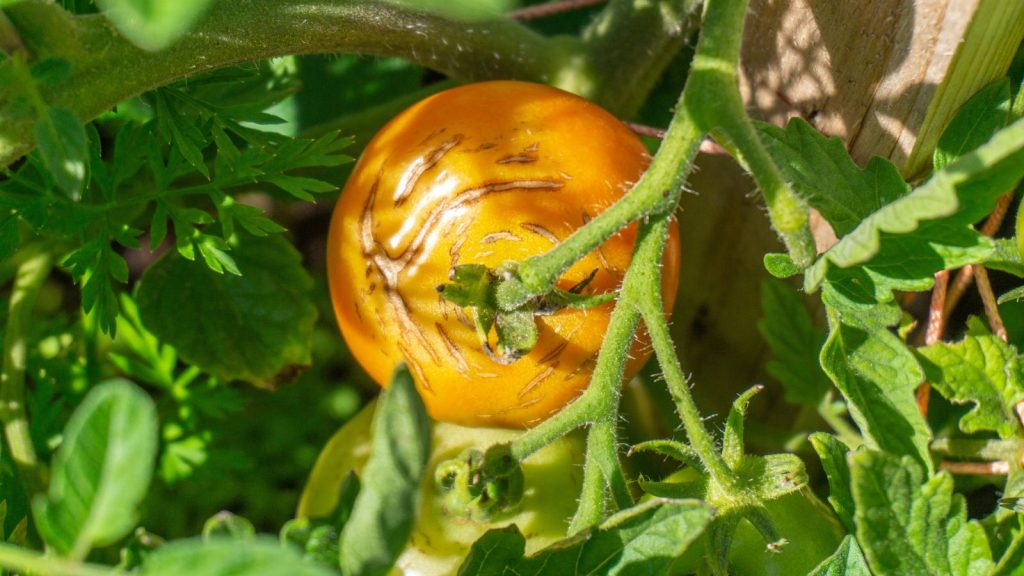
There’s nothing more frustrating than walking out to the garden and spotting a tomato that split open right before you planned to pick it. One day it looks perfect, and the next it has deep cracks running across the top or sides.
However, tomato splitting usually isn’t random. In most cases, it happens because the plant is taking up water faster than the fruit skin can stretch. Sudden rain, uneven watering, heat stress, and rapid growth are some of the biggest causes.
Once tomatoes crack, they become more vulnerable to rot, insects, and disease, so prevention matters. Here’s how to keep your tomatoes smooth, healthy, and crack-free before harvest.
Water Consistently Instead of Sporadically
Tomatoes hate dramatic swings between dry and soaking-wet soil. When plants go too long without water and then suddenly get drenched, the fruit absorbs moisture rapidly, and the skin splits under the pressure.
The goal is steady, even moisture throughout the week. Deep watering a few times consistently works far better than letting plants dry out completely and then overcompensating.
Don’t Flood Plants After a Dry Spell
It’s tempting to heavily water thirsty tomato plants after hot weather, but too much water at once often causes splitting. The fruit swells faster than the skin can handle.
Instead, rehydrate the soil gradually over a couple of days so the plant adjusts more evenly.
Related: 12 Items You Should Always Wash in Hot Water To Get Them Clean
Mulch Around Tomato Plants
Mulch helps regulate soil moisture, which is one of the biggest keys to preventing cracked tomatoes. Straw, shredded leaves, untreated grass clippings, or compost all help slow evaporation during hot weather.
A few inches of mulch can make a surprisingly big difference during heat waves and dry stretches.
Pick Tomatoes Slightly Early
You don’t always need to wait until tomatoes are fully deep red before harvesting. Once they begin changing color and enter the “breaker stage,” they can finish ripening indoors.
Picking them slightly early reduces the risk of splitting during rainstorms or sudden changes in watering.
Grow Crack-Resistant Varieties
Some tomatoes naturally crack more easily than others. Large heirloom varieties are especially known for splitting, while many hybrids are bred specifically for stronger skins.
Cherry tomatoes and grape tomatoes also tend to resist cracking better because of their smaller size and firmer skins.
Improve Drainage in Garden Beds
Tomatoes grow best in loose, well-draining soil. If water sits around the roots too long after rain or watering, plants become stressed, and fruit problems become more common.
Mixing compost into heavy soil and using raised beds can significantly improve drainage.
Use Drip Irrigation or Soaker Hoses
Overhead watering can create uneven moisture swings and increase disease problems on leaves. Drip irrigation and soaker hoses deliver water directly to the roots slowly and evenly.
That consistency helps reduce sudden fruit swelling that often leads to cracks.
Don’t Overdo Nitrogen Fertilizer
Too much nitrogen pushes tomato plants into rapid leafy growth, which can also encourage fruit to grow too quickly. Fast-growing fruit is much more likely to split before harvest.
Balanced fertilizers or slow-release organic options usually produce steadier, healthier growth overall.
Related: 15 Kitchen Scraps You Should Never Use as Fertilizer
Harvest Before Heavy Rain When Possible
A large amount of rain right before harvest is one of the biggest causes of split tomatoes. If storms are coming and your tomatoes are close to ripe, it’s often smarter to pick them early.
They’ll continue ripening indoors while avoiding the sudden moisture surge that causes cracking.
Protect Plants During Extreme Heat
Very high temperatures stress tomato plants and can lead to uneven growth patterns. Heat waves followed by cooler temperatures sometimes trigger splitting as fruit rapidly expands and contracts.
Temporary shade cloth during extreme heat can help keep plants more stable.
Adjust Watering Based on the Weather
Tomato plants don’t need exactly the same amount of water every week. If several days of rain are expected, you may need to cut back watering temporarily.
Paying attention to weather patterns helps avoid overwatering while preventing plants from drying out completely.
Prune Lightly for Better Airflow
Dense tomato plants trap moisture around fruit and foliage. Light pruning around the lower part of the plant improves airflow and helps everything dry more evenly after watering or rain.
Just avoid over-pruning, since tomatoes still need enough leaf cover to protect fruit from sunscald.
Support Heavy Tomato Clusters
Large clusters of tomatoes can become heavy enough to strain stems and fruit. Unsupported vines sometimes crack near the stem area as fruit grows rapidly.
Using cages, stakes, or soft ties helps reduce stress on the plant and keeps the fruit more stable.
Give Plants Enough Space
Crowded tomato plants compete for water, sunlight, and airflow. That competition often leads to inconsistent moisture levels and stressed plants.
Proper spacing helps plants dry faster, absorb water more evenly, and stay healthier overall.
Avoid Salty Fertilizers
High-salt fertilizers can interfere with how plants regulate moisture uptake. This can make tomatoes more vulnerable to splitting during periods of uneven watering.
Organic fertilizers and compost tend to provide gentler, steadier nutrition.
Harvest Carefully
Rough handling can damage tomato skins and create weak spots that split more easily later. Instead of yanking fruit off the vine, twist gently or use clean garden snips.
A little extra care during harvest helps tomatoes last longer after picking, too.