A garbage disposal can make cleanup after dinner much easier. Toss in a few small food scraps, turn on the water, and the mess seems to disappear. But that convenience can come with a catch: not everything that fits down the drain belongs in the disposal.
Some foods can wrap around the blades, others can turn into a thick paste, and hard objects can damage the motor or grinding components. The EPA has also pointed out that putting food waste down the drain is one of the less preferred ways to dispose of it. In 2019, an estimated four million tons of food waste went down the drain in the United States.
Knowing what to keep out of your disposal can save you from clogs, unpleasant odors, and an expensive repair bill.
Grease, Oil, and Fats
Pouring grease or cooking oil down the sink might seem harmless while it’s hot and liquid, but that changes as it cools.
Fat can coat the inside of the disposal and the connected pipes, gradually forming a sticky layer that catches bits of food. Over time, that buildup can restrict water flow and contribute to stubborn clogs.
Let grease cool and solidify, then scrape it into the trash. For larger amounts of cooking oil, check whether your local waste program accepts used oil for recycling.
Related: 10 Common Kitchen Mistakes That Make Food Go Bad Faster
Eggshells
Eggshells are often treated as a harmless disposal item, but they can create more trouble than expected. The shells break into tiny pieces that can settle inside the disposal or pipes rather than washing away cleanly.
There is also a thin membrane attached to the inside of an eggshell. That membrane can become tangled around the grinding components, much like the fibers found in celery and other stringy vegetables.
A compost bin or trash can is a better destination for eggshells.
Bones
Your garbage disposal isn’t a replacement for a meat grinder. Large or dense bones can put a lot of stress on the grinding mechanism and motor.
Chicken and other small bones may seem manageable, but they can still become lodged in the chamber or plumbing. Larger bones are even more likely to cause problems.
Scrape bones into the trash or save them for stock if that’s part of your cooking routine.
Related: 17 Food Debates That Americans Still Can’t Agree On
Fibrous Vegetables
Celery, asparagus, corn husks, and similar vegetables contain long, stringy fibers. Those fibers can wind around the disposal’s grinding parts instead of breaking apart.
Once they become tangled, the motor has to work harder and the disposal may jam. Fibers can also move farther into the drain and collect with other food particles.
Cutting fibrous vegetables into small pieces doesn’t always solve the problem. Tossing the tougher parts into the compost or trash is a safer choice.
Potato Peels
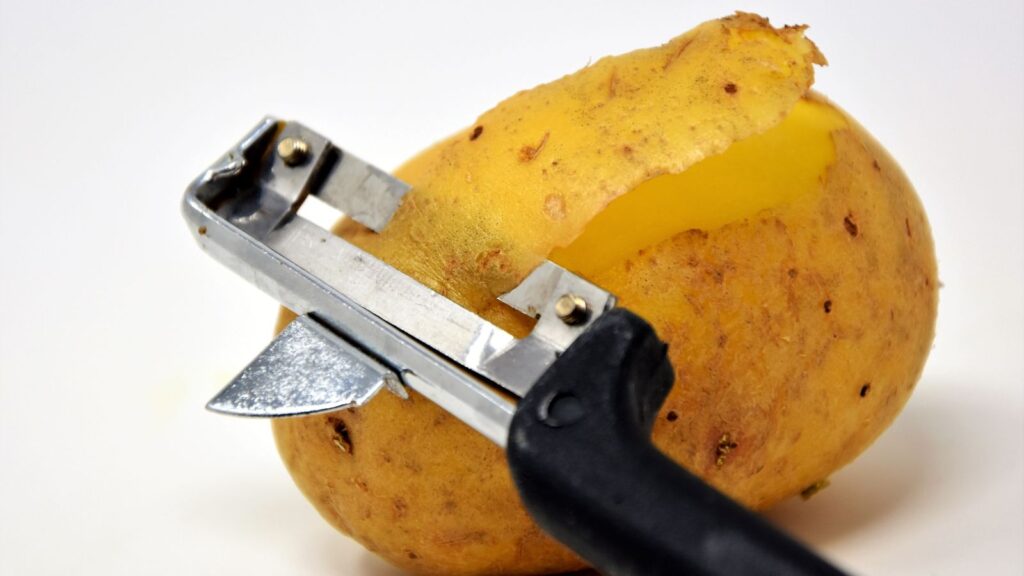
A few potato peels might seem like no big deal, but a large pile can create a thick, starchy mess inside the disposal.
As the peels break down and mix with water, they can form a paste that sticks to the grinding chamber and pipes. A large amount at once can make the problem much worse, leaving you with a slow drain or jammed disposal.
Instead of sending a pile of potato skins down the sink, put them in the compost or trash.
Related: 12 Classic Kitchen Tools That Deserve a Second Look Before You Toss Them
Pasta and Rice
Cooked pasta and rice continue absorbing water after they’ve been cooked. Once they’re chopped up inside a disposal, they can become soft, swollen, and sticky.
That material can collect in the disposal or move into the drain and combine with other scraps. The result can be a stubborn blockage that’s much harder to clear than the original food would have been.
A little leftover rice or pasta probably won’t ruin your disposal, but large quantities are best kept out of the sink.
Coffee Grounds
Coffee grounds have a reputation for being useful for cleaning drains, but they can actually contribute to clogs.
The grounds can settle in the disposal and pipes, where they mix with grease and other food debris to create a dense sludge. Over time, that buildup can slow drainage and leave behind an unpleasant smell.
Let your coffee grounds go into the trash or compost instead. They can also be used in the garden when handled properly.
Related: 18 Brilliant Ways to Recycle Used Coffee Grounds
Fruit Pits and Large Seeds
Avocado pits, peach pits, cherry pits, and other large seeds are far too hard for most household garbage disposals.
Trying to grind them can put unnecessary stress on the motor and grinding components. A pit that doesn’t break apart can remain stuck inside the disposal or make its way into the plumbing and cause a blockage.
Keep these hard pieces out of the sink altogether.
Onion Skins
The papery outer layers of onions have thin, slippery membranes that can slip around the grinding components rather than getting chopped into tiny pieces.
Once those layers become tangled, the disposal can struggle to work properly. Pieces that make it into the pipes can also collect with other food waste.
The softer parts of an onion are usually much easier for a disposal to handle, but the dry outer skins belong in the compost or trash.
Rubber Bands, Plastic, Metal, and Other Non-Food Items
A rubber band, twist tie, bottle cap, piece of plastic, or bit of metal can cause serious trouble if it slips into the disposal.
These objects aren’t meant to be ground up. They can jam the mechanism, damage internal parts, or put enough strain on the motor to cause it to shut down.
Never reach into a disposal to retrieve an object while the appliance is connected to power. Turn it off and follow the manufacturer’s instructions for safely removing anything that has fallen inside.
Seafood Shells
Shrimp shells, crab shells, and lobster shells are hard and often have sharp edges. They can be difficult for household disposals to break apart and may contribute to dulling or damage.
Shell fragments can also settle in the plumbing and mix with other debris. Sand or grit left on seafood shells can add another source of abrasion.
A trash can or composting option, where appropriate, is a better place for seafood waste.
Nuts and Seeds
Nuts and seeds can turn into a thick, oily paste when they’re ground. That residue can stick to the inside of the disposal and pipes instead of washing away.
The oils can also combine with other food particles, creating a buildup that gets harder to remove over time. A handful of nuts probably isn’t enough to destroy a disposal, but large amounts are a poor match for the appliance.
Keep leftover nuts and large quantities of seeds out of the sink.
Animal Fat
Bacon grease, chicken fat, beef fat, and other animal fats can cause many of the same problems as cooking oil.
They may be liquid while they’re warm, but they solidify as they cool. Once the fat coats the disposal and pipes, food particles can stick to it and create a thicker blockage.
Let animal fat cool, then dispose of it in the trash or follow your local guidelines for collecting cooking grease.
Pumpkin, Squash, and Other Stringy Foods
Pumpkin and squash can contain fibrous parts that don’t break down easily in a garbage disposal. Artichoke leaves can cause similar problems.
These stringy pieces can wrap around grinding components and contribute to jams. If they move into the plumbing, they can also collect with other food scraps.
There is no reason to force every part of a vegetable into the disposal. Remove the tough, fibrous sections and put them in the compost or trash.
Large Food Scraps
Garbage disposals work best with small amounts of food rather than a sink full of leftovers.
Large chunks can overwhelm the grinding chamber, jam the mechanism, and put extra strain on the motor. They may also fail to break down enough before entering the drain, where they can contribute to a blockage.
Cut appropriate food scraps into smaller pieces and feed them into the disposal gradually with plenty of cold running water. For large quantities of leftovers, scraping them into the trash or compost is usually the better choice.
A garbage disposal is handy, but it isn’t built to handle everything that comes off your plate. Keeping grease, hard objects, fibrous scraps, and large amounts of starchy food out of it can help prevent the kinds of clogs and jams that turn a quick kitchen cleanup into a plumbing problem.
When in doubt, check your disposal manufacturer’s instructions. Different models have different recommendations, and following those guidelines is one of the easiest ways to keep the appliance working properly.