Your kitchen tools probably get plenty of use, but how often do you think about what might be hiding on them? A cutting board with deep grooves, a damp sponge, or a blender gasket with leftover smoothie residue can all collect food particles and moisture if they aren’t cleaned properly.
That doesn’t mean you need to throw out every tool in your kitchen. In many cases, a good cleaning, proper storage, or replacing an old item can make a big difference. It’s also worth paying attention to tools with cracks, scratches, rust, or parts that are difficult to clean.
Here are 15 kitchen tools that deserve a closer look during your next cleaning session.
Salad Spinners
Salad spinners are handy for drying lettuce and other greens, but their multiple parts can make them surprisingly easy to overlook during cleanup.
Water and bits of food can collect around the basket, bowl, lid, and small grooves. If those areas stay damp, they can become a good place for bacteria to grow.
After using your salad spinner, take it apart and wash each piece with warm, soapy water. Let everything dry fully before putting it away.
Related: 12 Items That Can Explode in Your Kitchen
Nonstick Cookware
Nonstick pans are popular because food releases easily and cleanup is usually quick. Older pans with damaged or badly scratched coatings are a different story.
Many traditional nonstick coatings use polytetrafluoroethylene (PTFE). When cookware with PTFE is overheated, the coating can break down and release fumes. Keeping the heat at a reasonable level and replacing pans with badly damaged coatings can reduce potential problems.
If you prefer to skip traditional nonstick coatings, stainless steel and some ceramic-coated cookware are other options.
Vegetable Peelers
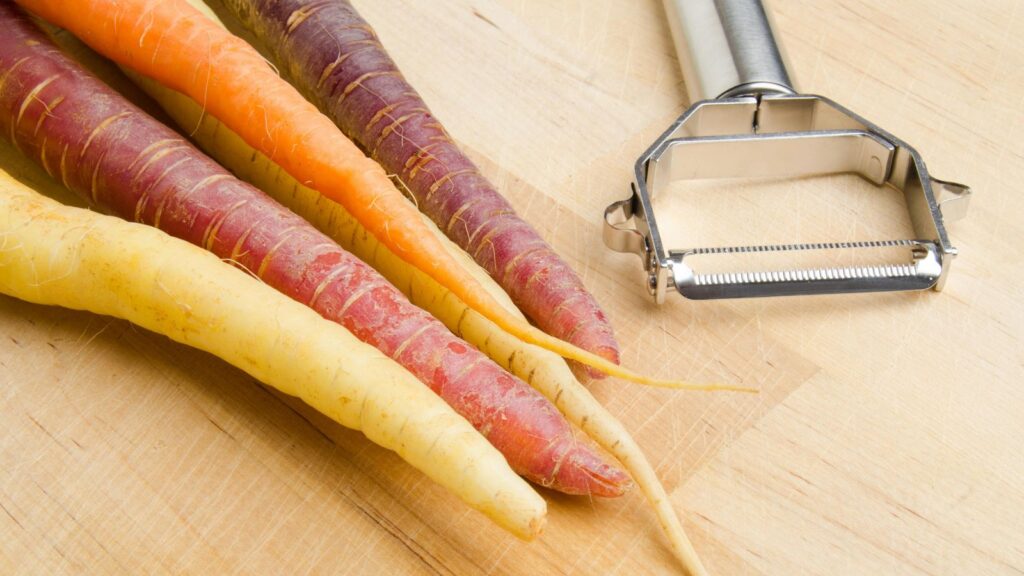
A vegetable peeler may be small, but it gets plenty of contact with food. Over time, the blade can become dull, rusty, or damaged, while food particles can collect around the handle and hinge.
A worn blade can also make peeling more difficult and increase the chance of slipping while you work.
Wash your peeler after each use and check the blade from time to time. If you see rust, cracks, or other damage that makes it difficult to clean, replacing it is a better choice.
Related: 12 Kitchen Gadgets That Are Hard to Replace
Silicone Baking Mats
Silicone baking mats make cleanup easier, but they still need a good wash after every use. Grease from baked foods can cling to the surface, especially after repeated use.
If the mat starts feeling greasy or develops an odor, give it a thorough wash with hot, soapy water. Avoid abrasive scrubbers that could damage the surface.
Let the mat dry completely before rolling it up or storing it.
Plastic Cutting Boards
Plastic cutting boards can develop deep knife marks after years of use. Those grooves can trap food particles and moisture, making the board harder to clean.
A heavily scratched cutting board may be past its prime. If the surface has deep cuts that you can’t properly clean, replacing it is a good idea.
Wood and bamboo boards are other popular choices. Wooden boards can also be sanded when the surface becomes badly worn, depending on the type and construction of the board.
Related: 15 Common Kitchen Habits You Should Stop Right Away
Graters
Cheese graters, box graters, and similar tools have plenty of tiny openings where food can get stuck. Cheese, vegetables, and other ingredients can leave behind small pieces that are easy to miss during washing.
A brush can help remove food from the holes without forcing your fingers against the sharp edges. Wash the grater soon after using it rather than letting food dry onto the surface.
If the metal has started rusting or the grater is badly damaged, it may be time for a replacement.
Rice Cookers
Rice cookers make meal prep much easier, but the cooking pot isn’t the only part that needs attention. Lids, steam vents, seals, and removable pieces can collect moisture and food residue.
Leaving these parts damp after cooking can contribute to unpleasant smells and mold growth.
Check your rice cooker’s instructions for cleaning recommendations, then wash and dry removable parts after each use. Give the lid and steam vent extra attention since these areas can be easy to forget.
Plastic Food Storage Containers
Plastic food containers are convenient for leftovers, but older containers can become scratched, stained, or difficult to clean. Some plastics can also release chemicals under certain conditions, particularly when heated.
If you’re concerned about using plastic for hot foods or reheating meals, glass containers are another option. They’re easy to wash, don’t hold onto food odors as readily, and can be used for many types of food storage.
For plastic containers, check the manufacturer’s instructions before putting them in the microwave or dishwasher.
Related: 10 Common Foods That Are Making Your Kitchen Stink
Wooden Utensils
Wooden spoons and spatulas can last for years, but they need to be cared for properly. Wood can absorb moisture, and cracked or damaged utensils can be harder to clean.
Wash wooden utensils by hand and dry them thoroughly before putting them away. Don’t leave them soaking in the sink for long periods.
If a spoon or spatula has deep cracks, splinters, or rough areas that won’t come clean, replace it.
Dish Sponges
That little sponge sitting beside your kitchen sink may be getting more bacteria exposure than you realize. Sponges stay damp, come into contact with food residue, and are used repeatedly throughout the day.
A German study found that kitchen sponges can contain hundreds of different types of bacteria, including Campylobacter.
Rather than keeping the same sponge around indefinitely, replace it regularly. Reusable dishcloths can also be a good option since they can be washed and dried between uses.
Blender Gaskets
The rubber gasket around the base of a blender blade assembly is easy to forget. Unfortunately, food and moisture can collect around this small ring after making smoothies, sauces, soups, and other foods.
That leftover residue can create an unpleasant smell and provide a place for mold to grow.
After using your blender, take apart the removable pieces according to the manufacturer’s instructions. Wash the gasket, blade assembly, lid, and container thoroughly, then let them dry before putting everything back together.
Reusable Grocery Bags
Reusable grocery bags can carry much more than groceries. Raw meat, produce, spilled liquids, and other foods can leave behind bacteria and residue.
Yet many people rarely wash their bags. Food Smart Colorado reports that only 15 percent of Americans wash their reusable grocery bags regularly.
Check the care instructions for your bags and wash them regularly. It can also help to keep separate bags for raw meat and other groceries.
Knife Blocks
Knife blocks can look clean from the outside while crumbs and dust collect inside the narrow slots. Since knives are repeatedly placed into these openings, the block deserves occasional attention.
Remove the knives and shake or brush out any loose debris. Follow the manufacturer’s cleaning instructions for the block, since some materials should not be soaked.
If you find that your knife block is difficult to clean, a magnetic knife strip can be an easier option to wipe down.
Cast Iron Pans
Cast iron has a reputation for lasting for generations, but it still needs regular care. Moisture left on the surface can lead to rust, while poorly maintained seasoning can leave the pan sticky.
After cooking, clean the pan according to your preferred cast-iron care method and dry it thoroughly. A light coating of cooking oil can help maintain the seasoned surface.
If rust appears, it can usually be scrubbed away before the pan is dried and re-seasoned.
Reusable Straws
Reusable straws are a handy way to cut down on disposable plastic, but their narrow interiors can be difficult to clean. Smoothies, juice, milk, and other drinks can leave residue inside the straw.
A quick rinse isn’t always enough. Use a small straw brush to scrub the inside, then rinse and allow the straw to dry completely.
Dishwasher-safe straws can make cleaning easier, but check the manufacturer’s instructions before putting them in the dishwasher. A ScienceDirect study found that reusable items can become highly contaminated with microbes if they aren’t cleaned properly.
Your kitchen tools don’t have to be spotless every second of the day. What matters is giving frequently used items regular attention and replacing anything that has become badly scratched, cracked, rusty, or impossible to clean.
A few extra minutes spent washing the parts you usually overlook can go a long way toward keeping your food preparation area cleaner.