If you’re a ’90s kid, you know that the way you played at home was a blend of big, clunky gadgets, some crazy tech, and wasted hours trying to figure out how to use a knob or a wire. A “home theater” could be as simple as a hodgepodge of mismatched speakers or as enormous as one dedicated to taking up an entire wall. But Gen Z lives in a world of streaming, Bluetooth, and ultra-thin screens. You try explaining a VHS player to someone who’s only heard of Netflix, and you’ll see what we’re talking about.
Some of the clunky tech used as cutting-edge in the ’90s would probably make today’s kids laugh their heads off. Here are a few of them.
LaserDisc Player

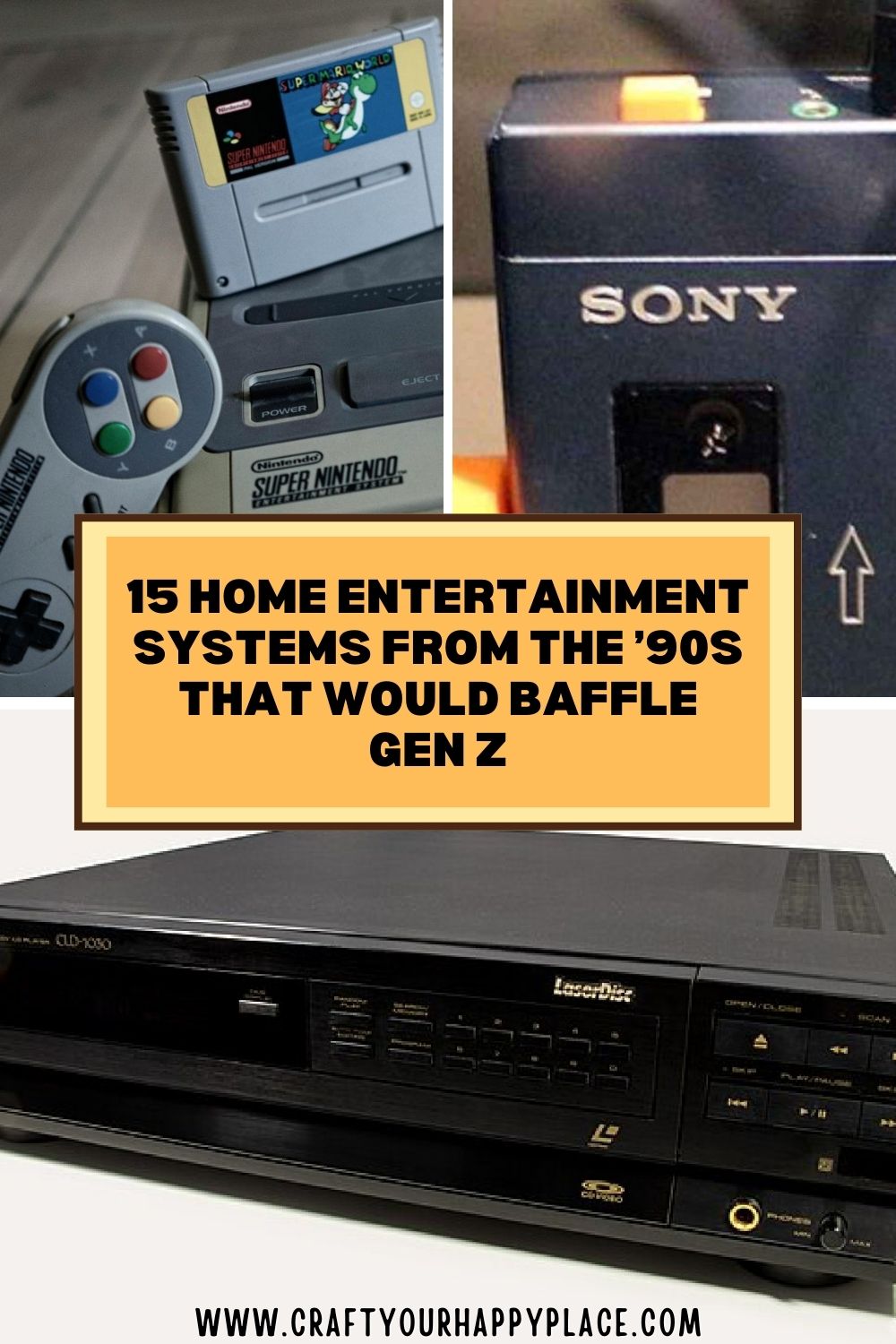
Picture a movie, but on a record. That was the LaserDisc. One of the first versions of home video entertainment in terms of quality was the laserDisc players. These dinner plate-sized discs could hold entire movies, but you’d have to flip them halfway through the movie. The streaming generation would be baffled by the fact that, while watching your favorite action, you’d have to get up, mid chase scene, to flip the disc.
VHS Rewinder

“Be Kind, Rewind” wasn’t just a catchy slogan in the ’90s; it was a rental store rule. Rewinders for your VCR were dedicated to sparing your VCR the wear and tear of rewinding tapes. Now it sounds absurd, but at that time, it was a time saver: a little machine solely for rewinding tapes. If Gen Z can learn movies by their thumbnail image on a streaming platform, they might wonder why we need a device just for “going backward.”
Boom Box

The boom box wasn’t just a music player — it was a portable party. These were heavy, chunky boxes with a handle to carry, dual cassette decks, and a few radio stations to blast your favorite tunes. To many, the boom box was that symbol of coolness, rode atop shoulders and spied at parties and yards. Music today is in portable speakers that fit in a pocket, and youths don’t know what it’s like to lug around a massive box for music.
CD Changer

Back then, the height of convenience was a five-disc CD changer. You could put a week’s worth of tunes on it and let it play on a loop. You don’t even have to get up to switch out the album, just let it shuffle for hours. With every song ever recorded in a single app, Gen Z might wonder if they need a machine to hold multiple discs at once.
Cassette Tape Deck

Cassette tape decks were necessary before playlists could be made on a whim, and they were the source of your own ‘mix tapes.’ You’d listen to hours of songs off the radio, or dub one tape to another to make a soundtrack that expressed your individual taste. And if the tape got tangled? Get out a pencil and wind it back in. This process would probably be way too tedious for Gen Z with their instant downloads.
Projection TV

Before flat screens came around, we had big projection TVs that were actually furniture. These behemoths were large, took up a lot of space, needed a special room, and occasionally required the lights to be dimmed to improve picture quality. With Gen Z’s ultra-thin OLEDs and smart TVs, these projection monsters feel like the stuff of the Stone Age.
Walkman

In its time, the Sony Walkman was the iPod, a portable cassette player able to carry music with you. A rite of passage, clipping it onto your belt and popping it into your favorite tape. It had very few songs, so if you wanted variety, you’d have to bring a few extra tapes. It would be a clunky setup for a limited playlist, and Gen Z, used to entire libraries in their pockets, would probably balk at such a thing.
Trinitron TV
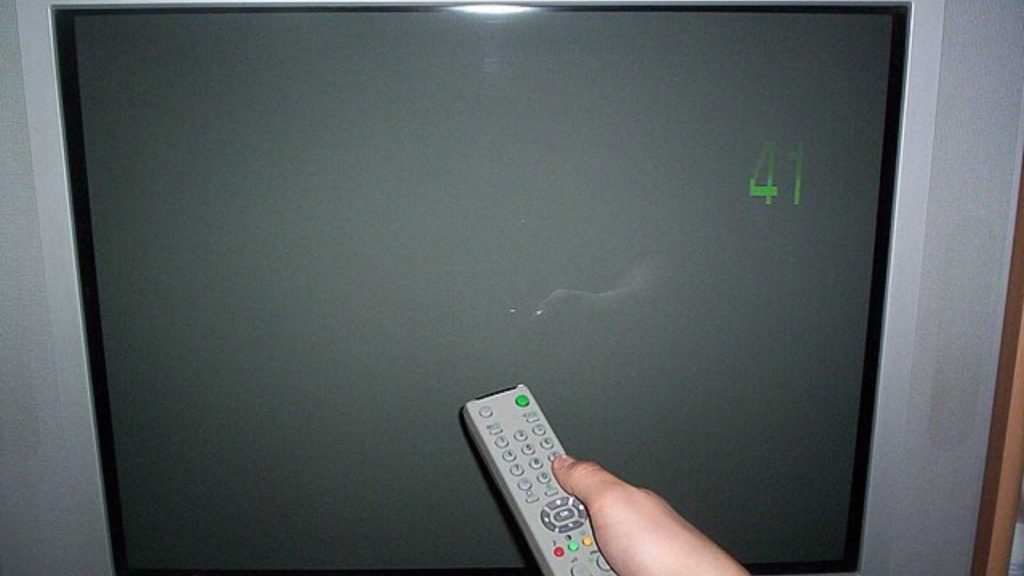
Sony’s Trinitron TV series was famed for its picture and was still a giant, heavy box that took up half the living room. They had cathode-ray tubes (CRT), and weren’t slim or wall-mounted like today’s TVs. Gen Z would probably be surprised if they were to find out that TVs can weigh that much, and you would probably want them to come in as big as a slice of bread.
Super Nintendo Entertainment System
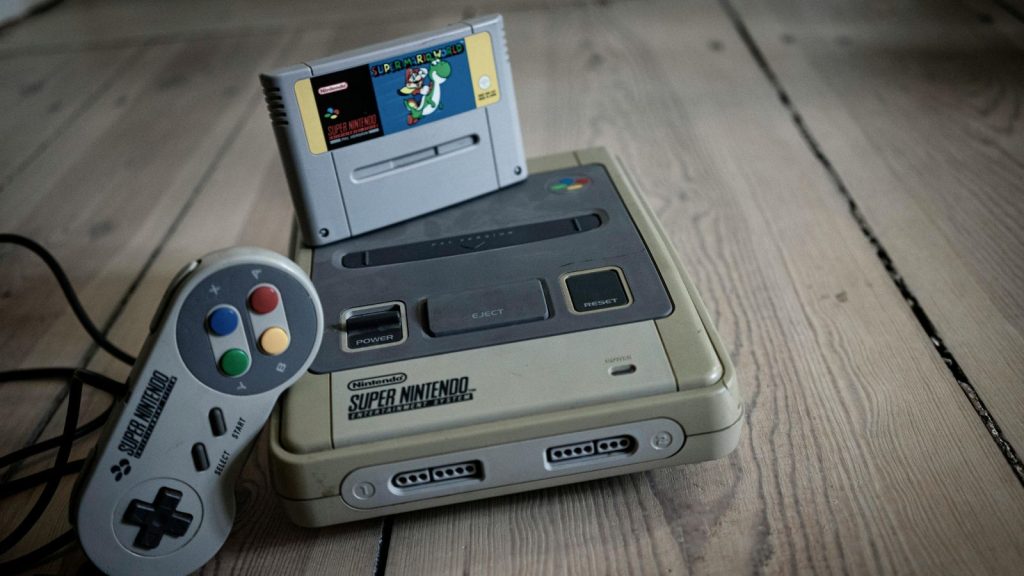
The SNES brought the arcade experience home with its 16-bit graphics, which were futuristic in their day. You would blow into the cartridge to fix it (a totally untested method), and then pop it into the console to play. Our commitment to the pixelated gameplay would be lost on Gen Z, who have 4K graphics and wireless controllers.
Home Theater Surround Sound Systems

We used to have surround sound systems with wires before Bluetooth speakers. That immersive experience required draping cables across the room to set up a maze of speakers for a home theatre experience. The payoff was worth it, though definitely less than sleek. This web of cables would simply seem more of a hassle than help for Gen Z, who can connect a soundbar wirelessly.
VHS Camcorder

In the ’90s, home movies were shot on VHS camcorders, which looked like small handbags. It was a workout in itself to carry around at family gatherings. Gen Z can’t fathom why anyone would need such a bulky piece of equipment for a few minutes of footage, and they can record right on their phones.
Nintendo 64

For many ’90s kids, the Nintendo 64 was the go-to, with Mario Kart and GoldenEye among the games brought to life. This wasn’t plug and play; you had to figure out a series of cables, deal with cartridge malfunctions, and sometimes convince your parents that you could hog the TV. The N64 might be difficult for Gen Z gamers to appreciate, who expect their quick-loading games and instantaneous access.
Analog Stereo Receiver

A ’90s sound system was based on an analog stereo receiver. This chunky device connected a CD player, cassette deck, and radio into one hub. It has endless buttons, knobs, and dials, which could make setting it up feel like flying a spaceship. These would seem like relics from the days of yore to Gen Z, used to simple, all-in-one audio systems.
TiVo

Recording live TV with TiVo was a game-changer, but it was very finicky, and you needed to be very careful about what you recorded to make sure you didn’t miss your favorite shows. One of the first DVRs allowed you to “pause” live TV, a mind-blowing concept at the time. When Gen Z has on-demand streaming, the idea of setting up recordings carefully might seem outdated and unnecessary.
CRT Computer Monitor

A cathode ray tube (CRT) computer monitor was huge and took up half of your desk. It was too heavy, too prone to screen burn, and had very low resolution. CRT monitors are like ancient artifacts in a modern laptop or tablet. These chunky screens have been all but erased from Gen Z’s memories thanks to their high-res, lightweight displays.