
Crafting can be a wonderfully relaxing hobby, but it can also become an expensive one. A quick trip to the craft store for a few basics can turn into a basket full of specialty tools, decorative supplies, and clever little gadgets that promise to make your projects easier.
Then a few months later, you find half of those supplies sitting untouched in a drawer.
The good news is that you can make plenty of crafts without buying every new product on the shelf. Many specialty supplies have inexpensive substitutes, and some can be replaced with things you already have at home. Here are 15 craft supplies that may not be worth the extra money, along with cheaper options to try.
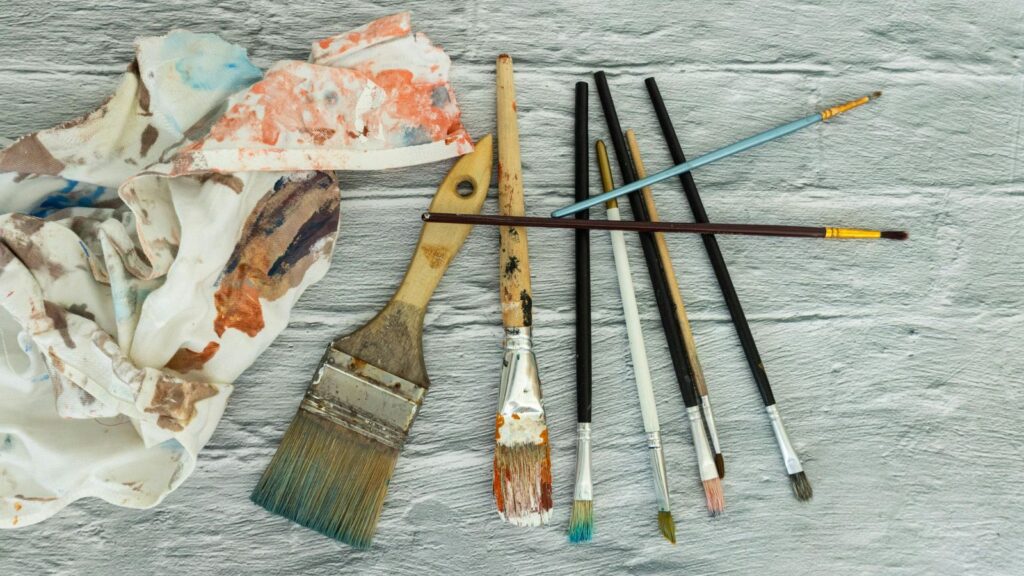
Expensive Paintbrushes
A beautiful set of high-end paintbrushes can be tempting, but most everyday craft projects don’t require them. Unless you’re doing detailed artwork or working with a medium that calls for a particular brush, basic brushes can handle plenty of projects.
Hardware stores and discount stores often carry inexpensive brushes that work well for painting signs, furniture, decorations, and other larger projects. They’re also less painful to replace if the paint dries on the bristles or one gets damaged.
Craft-Specific Storage Boxes
Craft stores have no shortage of colorful storage containers, but buying a separate organizer for every type of supply can get expensive.
Before spending money on another plastic box, look around your home. Glass jars can hold beads and buttons, old tins work for small tools, and shoeboxes can store paper and fabric scraps. Even empty food containers can be useful for supplies that don’t need to be displayed.
You don’t need a matching collection of containers for your craft room to stay organized.
Patterned Paper Pads
Patterned paper is fun to buy, especially when a new collection has colors and prints you love. The problem is that it’s easy to end up with sheets you never actually use.
Plain cardstock or construction paper can be much cheaper and gives you plenty of room to create your own designs. Try stamping, painting, stenciling, or drawing patterns onto plain paper.
You also get more freedom over the final look instead of being limited to whatever prints came in the package.
Fancy Colored or Glitter Hot Glue Sticks
Colored and glittery hot glue sticks look fun in the package, but regular clear glue sticks can handle most of the same jobs.
If you want glitter on a project, apply regular glue and sprinkle glitter over it while the glue is still wet. You can also paint the finished piece afterward.
Unless the color of the glue itself is part of the project, there’s usually little reason to spend extra on specialty sticks.
Pre-Cut Stencils
Pre-cut stencils are convenient, but buying a new stencil every time you have a different idea can add up.
Cardstock, thin plastic sheets, or even sturdy packaging can be used to make your own. Draw your design, cut it out carefully with a craft knife, and you have a reusable stencil.
Making your own also means you’re free to create unusual shapes and sizes that aren’t available in stores.
Specialty Hole Punches
Heart, flower, star, and other shaped hole punches are fun, but they’re also the kind of craft supply that can spend most of its life sitting in a drawer.
If you only need a particular shape for one project, cut it by hand with scissors or a craft knife. You can also make a template from cardboard and reuse it whenever you need the same shape.
If you regularly make crafts that require a certain punch, buying one might make sense. Otherwise, there’s little reason to collect dozens of them.
Fabric Glue
Fabric glue has its place, especially for quick projects and situations where sewing isn’t practical. But you don’t need a bottle for every fabric project.
For many jobs, a needle and thread will create a stronger and longer-lasting connection. If you’re working with lightweight fabric for a simple craft, basic white glue may also work, depending on the project.
Before buying another adhesive, check whether the materials you’re using actually require a specialty product.
Embellishment Kits
Premade embellishment kits often look like a great deal because they contain lots of different pieces. The catch is that you may only use a handful of them.
If you already know which buttons, beads, ribbons, or charms you use most often, buying those items in larger quantities can cost less over time.
You can also rescue useful pieces from old clothing, broken jewelry, greeting cards, and other craft leftovers. A mismatched collection can sometimes give a project more personality than a perfectly coordinated kit.
Specialty Craft Scissors
Decorative scissors with zigzag, scalloped, and other edges can be fun, but most projects still rely on a good basic pair of scissors.
Rather than buying a separate pair for every decorative edge, invest in one sharp pair that feels comfortable in your hand. For paper crafts, you can create interesting edges by tearing, folding, layering, or cutting patterns by hand.
If you rarely use decorative scissors, they may not deserve a permanent spot in your craft supplies.
Fabric Markers
Fabric markers are handy, but they can be surprisingly expensive, especially if you want a full range of colors.
For certain projects, regular permanent markers can work on fabric and cost much less. Test the marker on a scrap of the same material first, since results can vary depending on the fabric.
If you’re making something that will be washed frequently, stick with a product made for fabric and follow its care instructions.
Adhesive Vinyl
Adhesive vinyl is useful for decals, labels, signs, and other projects, but large quantities can get expensive.
For some projects, contact paper can be a much cheaper substitute. It comes in different colors and patterns and can be cut into shapes just like other adhesive materials.
It may not be the right choice for every project, but for simple decorative work, it can save you some money.
Glitter Paint
Glitter paint sounds convenient because the sparkle is already mixed into the paint. In practice, the glitter can sometimes be hard to see once the paint dries.
A cheaper option is to use regular paint and add your own glitter. You can mix glitter into the paint or sprinkle it over a wet painted surface.
This gives you more control over how much sparkle you want and lets you use the same basic paint for projects that don’t need glitter.
Ready-Made Gift Tags
There’s no need to spend much on gift tags, especially if you have paper scraps around the house.
Old greeting cards, leftover cardstock, brown paper bags, and even clean cereal boxes can become homemade tags. Cut them into your preferred shape, punch a hole, add some string, and decorate them however you like.
It’s an easy way to use up scraps instead of buying another package of tags.
Embossing Powders
Embossing powder can create a beautiful raised effect, but getting started can mean buying several supplies, including stamps, ink, and a heat gun.
For a single project or occasional craft, you may be better off creating texture another way. Textured paper, raised stickers, layered cardstock, and dimensional embellishments can all give a project some depth without requiring a full embossing setup.
If you love stamping and embossing and use the supplies regularly, the investment may make sense. For everyone else, there are plenty of simpler options.
Specialty Paint for Every Surface
Craft stores have a separate bottle of paint for almost every material imaginable: glass, fabric, wood, ceramic, metal, and more. It can make your supply shelf grow quickly.
Acrylic paint can work on many surfaces, and you can mix it with the appropriate medium for certain projects. For example, a fabric medium can help prepare acrylic paint for use on fabric, while other surfaces may need a primer or surface-specific treatment.
Before buying another bottle, check whether the paint you already own can work with the right preparation or medium. You may find that your existing supplies are more versatile than you thought. Acrylic paint can be used on a variety of surfaces, making it a useful basic paint to keep on hand.