Living in a small space can be cozy, but there comes a point when cozy starts to feel crowded. A compact apartment, studio, or even one small room can quickly feel packed when furniture, storage, and everyday belongings start competing for the same space.
The good news is that you don’t need to knock down walls or spend a fortune to make a room feel larger. A few smart changes to furniture, lighting, color, and storage can make a surprisingly big difference.
Embrace Mirrors
Mirrors are one of the oldest tricks for making a small room feel more open. They bounce light around the room and create the impression of added depth.
Try placing a large mirror across from a window so it can reflect daylight back into the room. If one large mirror feels too imposing, a few smaller mirrors can work too. The goal is to give the eye another surface to look toward instead of making the room feel boxed in.
Related: 15 Easy Household Repairs You Can Tackle Yourself
Make Use of Vertical Space
When floor space is limited, look up. Your walls can provide plenty of storage and decoration without taking away valuable walking space.
Tall bookcases, wall-mounted shelves, hanging plants, and floor-to-ceiling curtains can draw attention upward. Curtains that reach close to the ceiling can also make the room appear taller. Even a narrow wall can become useful storage with the right shelves or hooks.
Choose Lower Furniture
Furniture that sits closer to the floor can make a small room feel more open. Lower sofas, chairs, and tables leave more visible wall space above them, which can make the ceiling seem higher.
Look for pieces with simple shapes rather than oversized furniture that takes up a lot of visual space. You still want enough seating to be comfortable, but there’s no need for every piece to be bulky.
Related: 15 Easy-Care Plants That Naturally Repel Garden Pests
Pick Furniture That Does More Than One Job
Every piece of furniture has to earn its place in a small home. Look for items that can serve two purposes or provide hidden storage.
A coffee table with drawers can hold blankets, books, or remote controls. An ottoman can work as seating, a footrest, and storage. A sofa bed can turn a living room into a guest room when needed.
These small choices can free up space and keep everyday clutter from taking over.
Try Sliding Doors
A traditional door needs room to swing open and closed. In a small room, that can take up more usable space than you might expect.
Sliding doors can solve that problem. Pocket doors disappear into the wall, while barn-style doors slide along the outside of the wall. They can free up floor space that would otherwise need to remain clear around the door.
Related: 13 Easy Ways to Remove Scratches From Wood Furniture
Declutter Often
Sometimes the room itself isn’t the problem. It’s everything sitting inside it.
Stacks of papers, unused decorations, overflowing shelves, and random items on countertops can make even a decent-sized room feel cramped. Give your belongings a regular review and get rid of things you no longer use.
Clear surfaces and open walkways can make a room feel noticeably larger without changing a single piece of furniture.
Choose Furniture With Exposed Legs
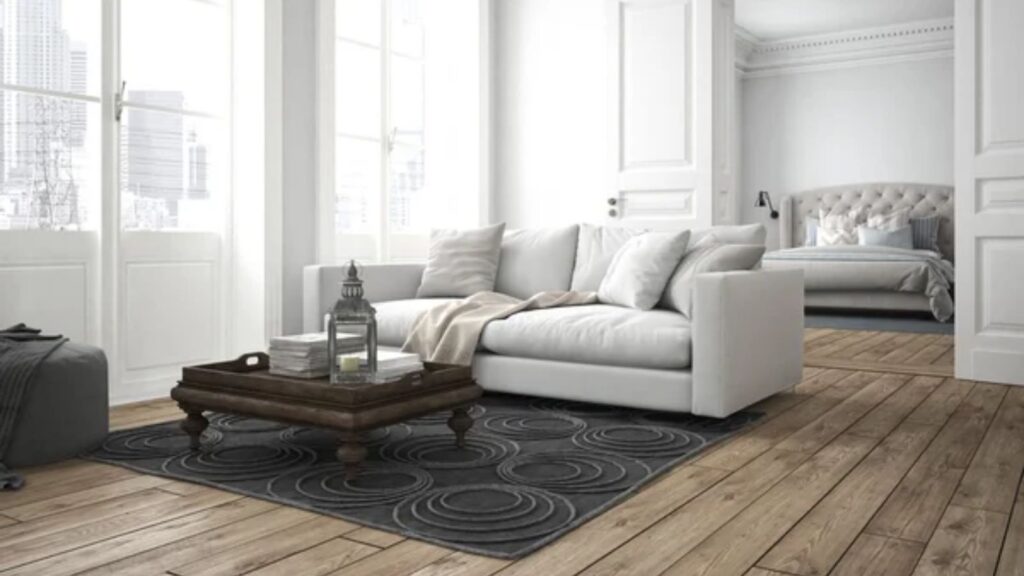
Furniture with visible legs can make the floor underneath it easier to see, which gives the room a more open appearance.
A sofa or chair that sits directly on the floor can look heavy in a compact room. Pieces with raised legs allow more of the floor to remain visible, creating a little more breathing room around the furniture.
This works especially well with sofas, accent chairs, coffee tables, and dining tables.
Let in More Natural Light
Natural light can completely change the feel of a small room. Heavy curtains and dark window coverings can make a space feel closed off, especially during the daytime.
If privacy allows, use sheer curtains or lightweight window coverings that let daylight through. Keep furniture away from windows when possible so sunlight can spread farther into the room.
A brighter room often feels more open, even if the square footage hasn’t changed.
Stick With Light Colors
Light colors can help make a room feel brighter and more spacious. Allmine.com notes that neutral shades can give rooms a more open appearance by reflecting natural light.
White, cream, pale gray, and soft blue are a few options that work well in smaller rooms. You don’t have to make everything the same color, either. Adding a few darker accents through pillows, artwork, or small furniture pieces can keep the room from feeling flat.
Sometimes a fresh coat of light-colored paint is all a room needs to feel different.
Try Glass or Lucite Furniture
Clear furniture can be a smart choice for a small room because it doesn’t visually block as much space.
A glass coffee table or clear acrylic dining chair allows you to see the floor and walls through the piece. That can make the room appear less crowded while still giving you the furniture you need.
These pieces work particularly well in rooms where adding another solid piece would make the space feel packed.
Create Separate Zones
A small room may have to serve several purposes. Your living area might also be your dining area, home office, or reading spot.
Instead of letting everything blend together, give each part of the room a clear purpose. A rug can mark the seating area, a small lamp can define a reading corner, and a shelf can separate a workspace from the rest of the room.
Creating these zones can make a small room feel more organized because each area has a clear function.
Keep the Décor Simple
A small room doesn’t need a lot of furniture or decorations to feel finished. Too many pieces can make it difficult to move around and leave the room feeling crowded.
Choose a few items you really like and give them room around them. Keep walkways clear, avoid filling every shelf, and leave some open wall and floor space.
A little restraint can make a compact room feel much more comfortable without making it look bare.