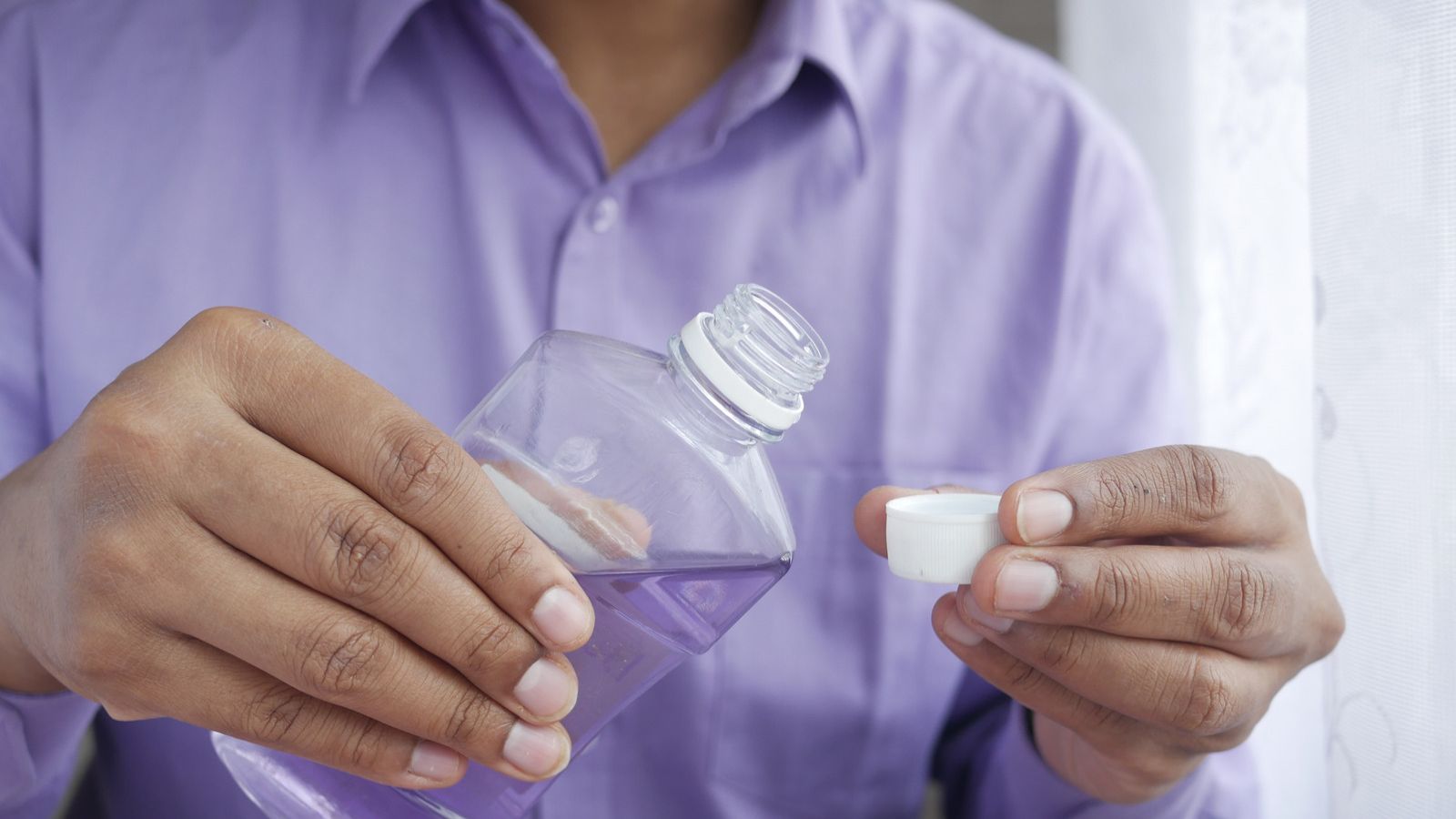
In most households, a bottle of mouthwash has one job: keeping your breath fresh. But some people have found other ways to use it around the house, thanks to ingredients like alcohol and antibacterial agents in certain formulas.
Mouthwash isn’t a replacement for household cleaners, disinfectants, or proper cleaning products. Some popular household uses also lack good evidence, and using mouthwash on plants, appliances, laundry, or skin can cause damage or irritation.
Still, it can come in handy for a few small household tasks, as long as you use the right formula and take a few precautions. Here are 10 unusual mouthwash uses worth knowing about, along with a few things to watch out for.
1. Clean Certain Household Surfaces
Clear, alcohol-based mouthwash may help wipe away light residue from some hard surfaces. Test a small, hidden area first, and avoid using it on wood, painted finishes, natural stone, or surfaces that could be damaged by alcohol.
2. Deal With Fungus Gnats on Houseplants
You might see advice recommending diluted mouthwash as a spray for fungus gnats, but strong evidence that it works is limited. Alcohol and other mouthwash ingredients can also damage plant leaves and roots, so it’s better to use sticky traps and let the top layer of soil dry between waterings.
3. Help With Foot Odor
Alcohol-based mouthwash is sometimes recommended as a foot soak, but it hasn’t been proven to treat athlete’s foot or other fungal infections. It can also dry out or irritate your skin, so an antifungal foot treatment made for this purpose is a better choice.
4. Keep Cut Flowers Looking Fresh
Some home remedies suggest adding mouthwash to flower vase water to slow bacterial growth. Reliable evidence doesn’t show that regular mouthwash works as a flower preservative, so you’re better off using commercial flower food and changing the water regularly.
5. Freshen a Humidifier
A musty-smelling humidifier usually needs proper cleaning, not mouthwash. Never pour mouthwash into the water tank because its ingredients aren’t meant to be dispersed into the air, and they could damage the appliance.
6. Deal With Garbage Disposal Odors
If your garbage disposal smells unpleasant, pouring mouthwash down the drain might seem like a quick fix. It won’t remove the food residue causing the odor, so cleaning the disposal according to the manufacturer’s instructions is a better solution.
7. Freshen a Garbage Can
A little mouthwash on a paper towel might temporarily cover up unpleasant trash odors, but it won’t remove the source. Wash the bin with soap and water, let it dry completely, and use a properly labeled odor absorber if needed.
8. Remove Laundry Odors
Some household tips recommend adding mouthwash to the washing machine to deal with musty clothing and unpleasant smells. It’s not formulated for laundry and may leave residue or affect certain fabrics, so use a laundry detergent made for odor removal instead.
9. Clean Tile Floors
Clear mouthwash may seem like a convenient substitute for floor cleaner, but it isn’t formulated to remove dirt and grime from flooring. Alcohol can also damage certain finishes and grout sealers, so stick with a floor cleaner that’s safe for your particular tile.
10. Clean Minor Cuts and Scrapes
You may have heard that alcohol-based mouthwash can disinfect small cuts when first-aid supplies aren’t available. It’s a bad idea, though, because mouthwash can irritate exposed tissue and isn’t made for wound care. Rinse minor cuts with clean running water, wash the surrounding skin with soap, and cover the area with a clean bandage.
Mouthwash can help keep your breath fresh, but that doesn’t mean every household trick involving it is worth trying. Before using it for something other than oral care, check the ingredients and consider whether a product made for that particular job would be safer and more effective.