Coyotes (Canis latrans) are medium-sized canine family members, distinguished by their adaptability and resourcefulness. Found across North America, coyotes are becoming increasingly common in urban and suburban areas.
Their coats can vary widely in color, often a mix of gray, brown, and reddish hues, aiding in effective camouflage in diverse environments. Their omnivorous diet consists of small mammals, birds, fruits, and even insects.
It’s estimated that there are between 2.89 million and 4.7 million coyotes across the United States, and their populations are on the rise, thanks in part to their dietary adaptability. Coyotes have a keen sense of smell that is about 100 times better than humans’, and these smells attract them to your yard.
Garbage

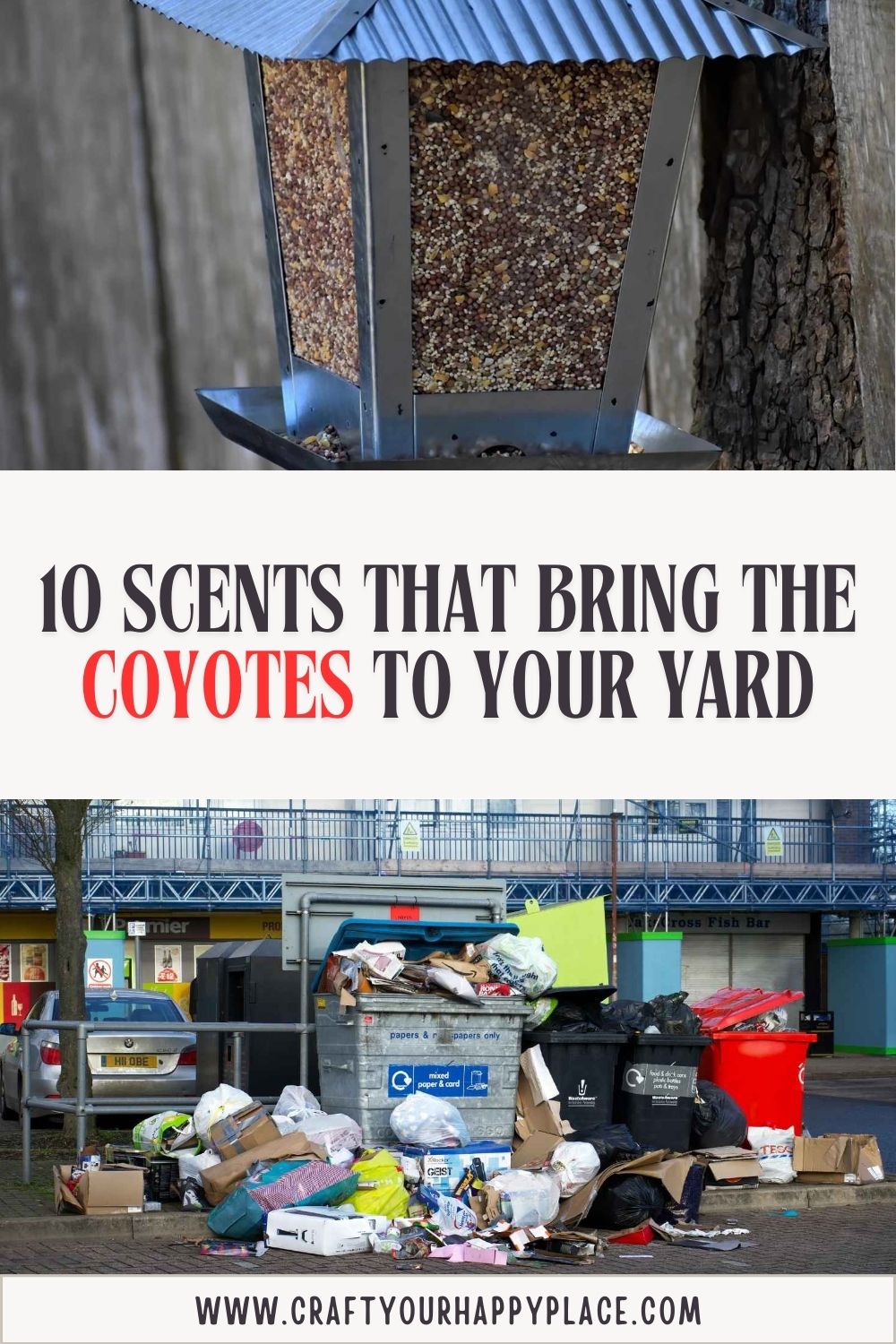
National Park Service and Cal State Northridge research shows that up to 75% of an urban coyote’s diet can come from human food resources, including as much as 38% from human leftovers. Open trash bins or improperly sealed bags are particularly inviting.
“Coyotes have learned not only to adapt to urban settings but to thrive,” Dr. Stan Gehrt from The Humane Society explains. Invest in sturdy, animal-proof garbage containers with tight-fitting lids. Additionally, try lining the bottom of your trash cans with baking soda to neutralize odors.
Pet Food

According to wildlife experts at the National Park Service, coyotes have an incredible olfactory ability rivaling that of domestic dogs. This ability allows them to detect pet food from substantial distances—up to a mile away!
Make a habit of feeding your pets indoors. If outdoor feeding is unavoidable, immediately clear away any uneaten food. Additionally, pet food should be stored in sealed, airtight containers in a garage or shed to prevent the scent from traveling.
Fallen Fruit

Research from the Urban Coyote Research Project highlights that the sugary scents of fallen fruits particularly appeal to coyotes, as these animals often supplement their meat-heavy diets with available fruits like mango, watermelon, and papaya.
Statistics show that a coyote’s olfactory sense is 100 times more sensitive than a human’s. That means they can smell it a lot more if you can smell it.
The University of Urban Wildlife Management advises homeowners to check for fallen fruit at least every other day, particularly during the peak fruiting seasons. To minimize those tempting aromas, always ensure fruit waste is securely covered with soil or within an enclosed bin.
Bird Seed and Feeders

Over 80 million households in the U.S. and U.K. provide up to 450 million kg of seed for wild birds in residential feeders each year. An Urban Coyote Research Project study found that spilled bird seed can attract birds and small mammals like squirrels and rodents.
These creatures, in turn, are prime prey for opportunistic coyotes, who may then make repeated visits to your yard in hopes of an easy meal. Choose seed blends that are less appealing to mammals, and consider adding spice powders, like cayenne, to your feed—harmless to birds but discouraging to rodents.
Barbecue Grills

The smoky scent of freshly charred meat wafting through the air is like an irresistible dinner bell for these wild animals. Experts from the Urban Coyote Research Project note that even grease or food residue traces can be detected from far away, luring coyotes right to your patio.
Always clean your grill after each use. A simple wipe-down with soapy water can eliminate lingering scents. Store your grill tools and drip trays indoors or in a sealed container to prevent residual odors from escaping.
Meat Scraps and Bones

Fish and meat scraps are highly aromatic, and coyotes’ impressive olfactory capabilities allow them to detect these scents from up to a mile away.
Begin by ensuring all leftovers are securely stored in durable, animal-proof containers until disposal day. Double-bagging your trash or freezing scraps until garbage collection can add more deterrence.
Expert Julie Stark of Urban Wildlife Management advises, “Avoid composting animal products since their powerful odors can become a homing beacon for coyotes.” Instead, consider setting up a separate sealed compost area to handle non-food organic waste safely.
Perfumes and Scented Lotions

Strange as it may seem, strong fragrances from fancy body sprays or sweet-smelling fertilizers can pique a coyote’s curiosity. Coyotes are naturally inquisitive creatures; scented items that deviate from natural smells pique their curiosity.
Fragrances embedded in fertilizers, mulches, or even pesticides can easily mask natural scents, prompting coyotes to wander closer, driven by their powerful sniffers.
To manage this aromatic problem, opt for unscented or naturally derived products whenever possible. Better yet, consider applying these items during off-peak hours, like early morning or late evening, when coyotes are less active.
Pet Waste

Pet feces can attract coyotes looking to mark their territory. Wildlife expert Dr. Jane Wilson states, “The scent of pet waste is a signal for coyotes, indicating a source of food or potential prey.” This pungent odor signals to a coyote that the area might hold other tantalizing treats or critters.
Start by regularly cleaning up after your pets. Scoop the poop as soon as possible. For an odor-busting solution, sprinkle baking soda or a commercial deodorizer on frequently used areas. Products like “Poo-Fume” neutralize odors and keep your lawn fresh as a daisy.
Dead Animals

Coyote Yipps notes that coyotes eat not only prey but also carrion. Coyotes are nature’s cleanup crew, naturally drawn to easy meals provided by deceased animals.
Properly handle any carrion found on your property. Wear protective gloves when moving them, and consider double-bagging the remains before disposing of them in animal-proof bins.
Compost Piles

The scent of decomposing fruits, vegetables, and meat or dairy remnants can signal a free buffet to these opportunistic feeders. Avoid composting meat, dairy, and bones—these are the primary sources of alluring odors.
Stick with vegetable scraps, coffee grounds, and grass clippings. Invest in a well-sealed compost tumbler or bin with a secured lid to minimize odor leakage. Turn your compost regularly to speed up the decomposition process and reduce aroma buildup.
Lastly, sprinkle dry leaves or straw on top of your pile to act as a natural scent barrier.