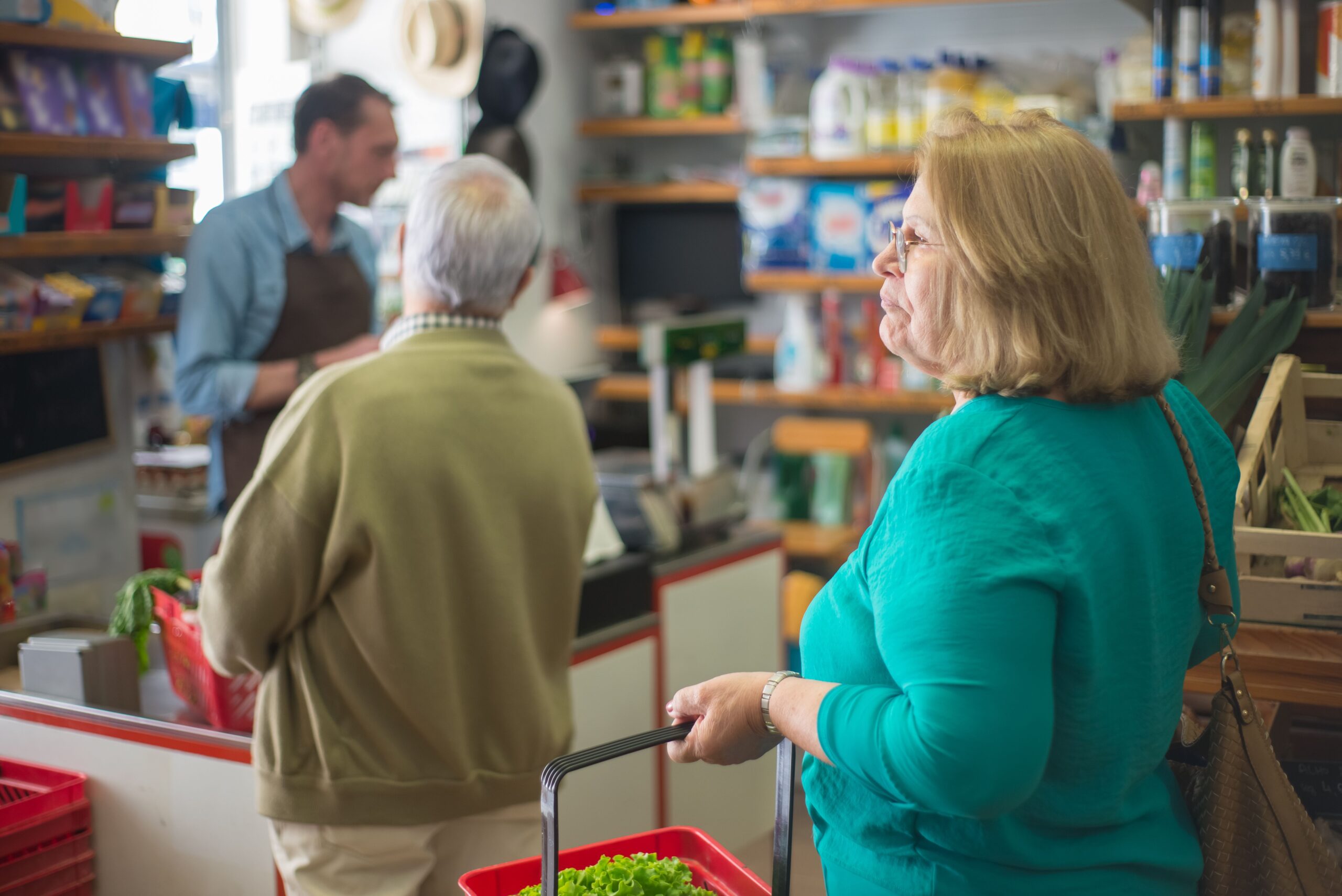
Grocery bills vary widely from one state to another. A basket of everyday staples that costs a reasonable amount in one place may take a much bigger bite out of a household’s budget somewhere else.
With food prices putting pressure on family finances, those differences matter. Milk, eggs, bread, meat, and fresh produce can add up quickly, and where you live affects how much it costs to fill a shopping cart.
Grocery Costs Vary Widely Depending on Where You Live
A recent analysis from Visual Capitalist compared grocery costs across all 50 states and Washington, D.C., using first-quarter 2026 data from the Missouri Economic Research and Information Center. The index uses 100 as the national benchmark, so a score of 110 means grocery costs are about 10% above that benchmark.
Hawaii tops the list with an index of 136.3, putting its grocery costs 36.3% above the national figure. Alaska follows at 126.6, while California ranks third at 110.5, a much smaller gap than the one separating the top two from the rest.
Related: 15 Beloved Grocery Chains Struggling to Stay in Business in 2026
The 15 Places With the Highest Grocery Costs
Here are the 15 states and the District of Columbia with the highest grocery cost indexes in the first quarter of 2026.
- Hawaii — 136.3
- Alaska — 126.6
- California — 110.5
- Maryland — 109.3
- District of Columbia — 109.2
- New Jersey — 109.1
- Massachusetts — 106.8
- Washington — 106.1
- Connecticut — 106.0
- Florida — 105.7
- Oregon — 104.5
- Nevada — 103.8
- Rhode Island — 103.8
- Delaware — 103.6
- Idaho — 103.4
Related: BJ’s Is Cutting Prices by 42% for Its 42nd Birthday—Here’s What’s on Sale
Hawaii and Alaska Stand Far Above the Rest
Hawaii and Alaska have the highest grocery costs by a wide margin. Hawaii’s index sits 36.3% above the national benchmark, while Alaska’s is 26.6% higher.
Costs drop sharply in third-place California, where groceries are 10.5% above the national figure. The rest of the list ranges from Maryland at 9.3% above the benchmark to Idaho at 3.4% above it.
Geography helps explain some of the gap, since shipping food to remote locations such as Hawaii and Alaska can be expensive. Higher wages, rent, transportation costs, and other business expenses can also contribute to grocery prices in states with costly markets.
Related: Aldi Is Slashing Prices on Nearly 1 in 3 Products—Here’s What’s Changing
High Living Costs Don’t Always Mean Much Higher Grocery Prices
A state’s overall cost of living doesn’t tell the whole story about its grocery bills. Some places known for expensive housing and other daily expenses have grocery costs close to the national benchmark.
New York is one example, with a grocery index of 100.3, nearly in line with the national figure. That means living in an expensive state doesn’t automatically mean paying much more for food.
Mississippi had the lowest grocery index at 93.2, followed by Arkansas at 93.4 and Oklahoma at 93.5. The gap between Mississippi and Hawaii is wide: Mississippi sits 6.8% below the national benchmark, while Hawaii is 36.3% above it.
For families trying to stretch their grocery budgets, these figures show how much location can affect food costs. Shopping sales, comparing store prices, and planning meals may help households manage expenses, but shoppers in higher-cost areas can still pay more for the same basic groceries.
Related: Asked What They’d Spend More On, College Students Had a Clear Favorite
Other Topics You Might Like
- Want Cheaper Groceries? A New Study Says Skip Walmart and Shop Here
- These Grocery Chains Are Cheapest Across the Country
- 13 Foods Frugal People Leave Off Their Grocery Lists
- 12 Best Places to Grocery Shop on a Budget
- 14 Things Shoppers Dread The Most About Grocery Shopping
- 30 Cheap Dinner Ideas To Help Stretch Your Grocery Budget