The global beverage industry, valued at $1.8 trillion, has seen countless drinks come and go, leaving behind a trail of discontinued favorites that consumers still crave. Many popular beverages that defined specific eras were pulled from shelves due to declining sales, changing consumer preferences, or failed marketing strategies.
Drinks like Surge, Crystal Pepsi, and Pepsi Blue each had moments in the spotlight, gaining dedicated followings before they were discontinued. For some, these 12 beverages represented youth, fun, and unique flavors that could not be found elsewhere.
Crystal Pepsi

Crystal Pepsi, a clear cola introduced in 1992, quickly became a symbol of nostalgic longing after its discontinuation in 1994. The beverage was unique, offering the taste of Pepsi without the traditional dark color, which attracted consumers seeking a “healthier” cola.
Its novelty and sales dropped due to poor marketing and consumer confusion. Crystal Pepsi’s return for brief promotional runs in the 2010s sparked excitement among fans, highlighting its cult status.
Surge
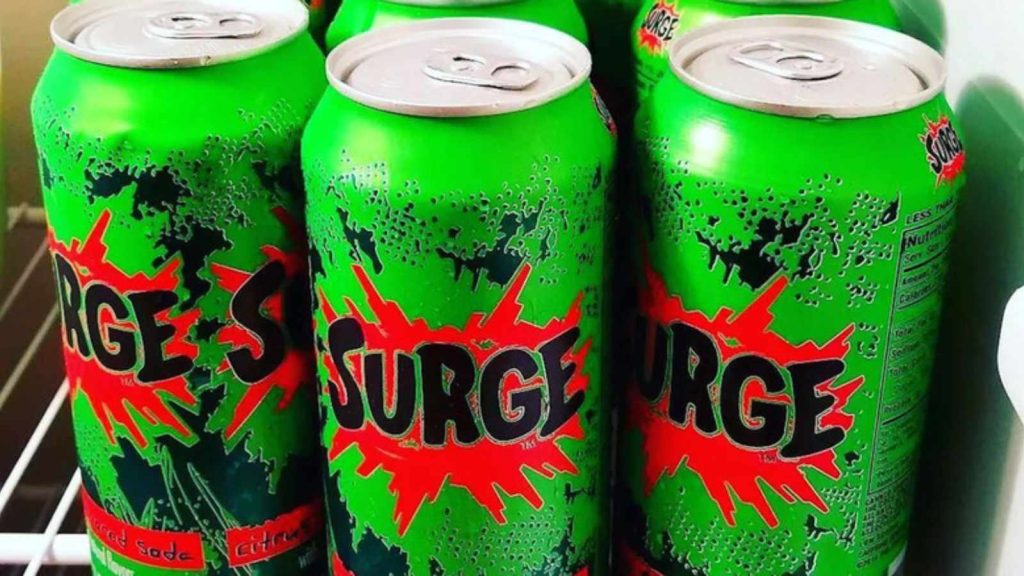
Surge, Coca-Cola’s high-caffeine, citrus-flavored soda, made waves in the late 1990s. Marketed as a competitor to Mountain Dew, Surge quickly became a favorite among teenagers and young adults seeking an energy boost.
By 2003, declining sales led to its discontinuation, much to the dismay of its loyal fan base.
Ecto Cooler

Initially launched in 1987 to promote the Ghostbusters animated series, Hi-C’s Ecto Cooler became an iconic drink for 90s kids. Its fluorescent green color and tangy citrus flavor made it a popular lunchbox choice.
Even after the Ghostbusters franchise lost momentum, Ecto Cooler continued to be produced until 2001, solidifying its place in pop culture.
Coca-Cola Blak

Coca-Cola Blak was a bold experiment by Coca-Cola, combining cola with coffee for a unique flavor fusion. Introduced in 2006, the beverage targeted consumers looking for a caffeine kick, blending the sweetness of cola with the bitterness of coffee.
However, the drink failed to gain widespread appeal, and Coca-Cola discontinued it in 2008.
Josta

As Pepsi’s first attempt at an energy drink, Josta was ahead when it launched in 1995. The drink, infused with guarana and caffeine, had a distinctive fruity flavor that set it apart from other sodas.
Though Josta gained a devoted fan base, it was discontinued in 1999, leaving many disappointed.
Fruitopia

Introduced in 1994, Fruitopia was Coca-Cola’s answer to the growing demand for fruit-flavored drinks. With flavors like Strawberry Passion Awareness and Grape Beyond, the beverage appealed to health-conscious consumers seeking a refreshing, fruity alternative to traditional sodas.
Fruitopia was phased out in 2003 and replaced by the Minute Maid line of fruit drinks.
Pepsi Blue

Pepsi Blue was introduced in 2002, targeting younger consumers with its bold blue color and berry-like flavor. The drink’s unique taste and striking appearance quickly earned it a cult following, but its polarizing flavor failed to capture a broad market, leading to its discontinuation in 2004.
7UP Gold

7UP Gold, launched in 1988, was a spiced variation of the classic lemon-lime soda. Its unusual combination of flavors, including cinnamon and ginger, made it stand out from other soft drinks. 7UP Gold struggled to find a dedicated audience and was discontinued after just one year.
Vault

Vault was Coca-Cola’s answer to the growing demand for energy drinks, blending soda and energy-boosting ingredients in one can. Launched in 2005, Vault aimed to capture the market dominated by Mountain Dew and Red Bull.
Despite its loyal following, Vault was discontinued in 2011 in favor of Coca-Cola’s more focused energy drink line.
Orbitz

Before it was introduced in 1997, Orbitz was unlike any beverage. Known for its floating fruit-like balls suspended in the liquid, the drink had a unique texture that fascinated consumers. Its strange consistency and mixed taste reviews led to its discontinuation in 1998.
Hubba Bubba Soda

Hubba Bubba Soda was a bubblegum-flavored soft drink introduced in the 1980s. Inspired by the popular chewing gum brand, the soda’s sweet, bubblegum taste delighted consumers. However, the drink was short-lived due to its overwhelmingly sweet flavor, which didn’t appeal to a broad audience.
OK Soda

OK Soda was Coca-Cola’s attempt to appeal to Generation X in 1993 and was discontinued in 1995. With its minimalist marketing and unconventional flavor, it was neither cola nor fruit-flavored, with a taste that was hard to categorize, which made it stand out.
OK Soda failed to resonate with a wide audience and was discontinued after two years.