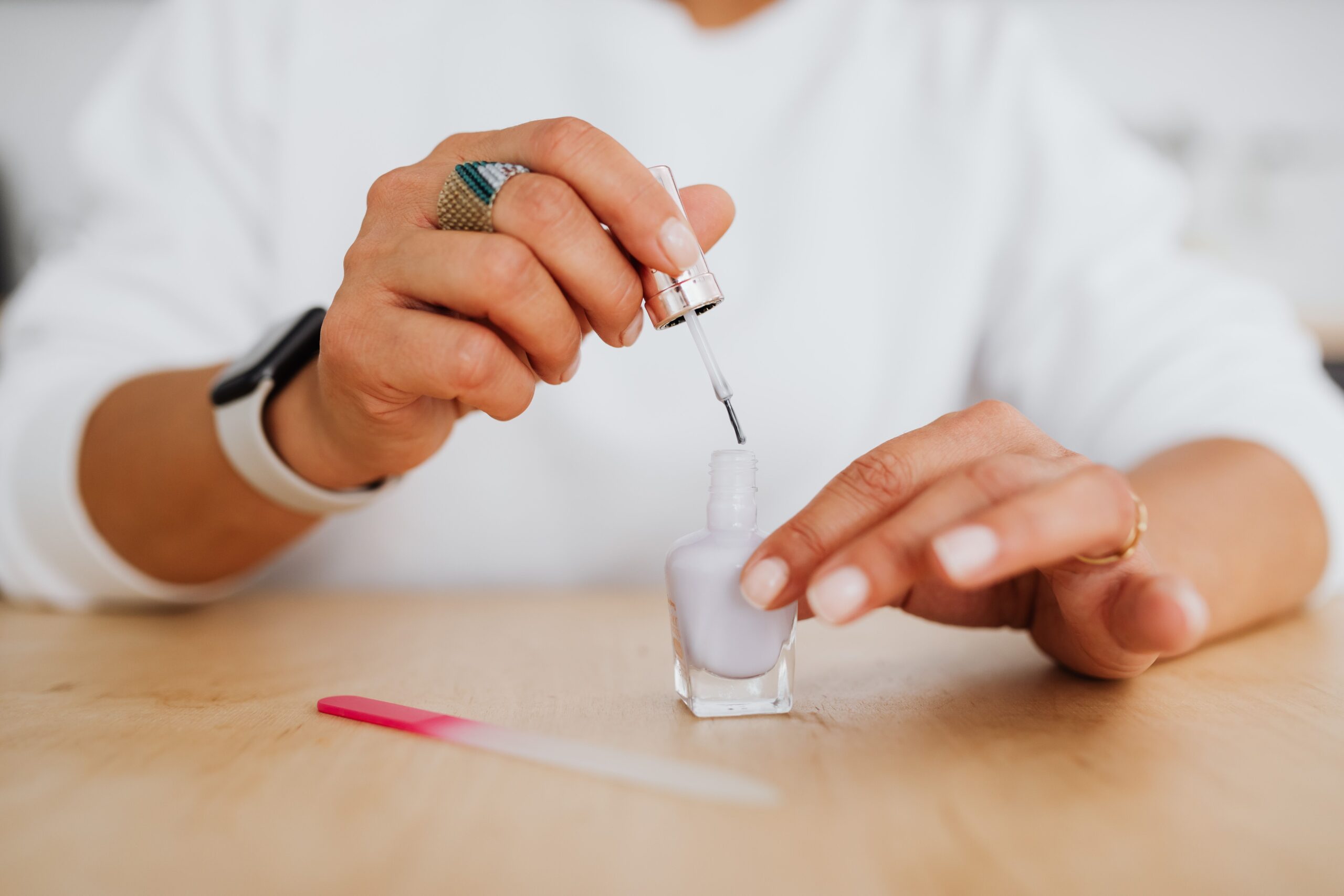
There may be an old bottle of nail polish sitting in the bathroom drawer that you haven’t touched in years. Before throwing it away, consider keeping it with your household supplies because it can come in handy for a few small fixes.
Clear and colored nail polish dries into a hard coating, making it useful for simple touch-ups and minor repairs. It won’t replace proper repair products, but for certain little household annoyances, it can save you a trip to the store.
Here are twelve ways to put that forgotten bottle to work.
Color-Code Keys That All Look the Same
If several keys on your ring look nearly identical, paint the tops in different nail polish colors. You can quickly tell your house, garage, mailbox, and storage keys apart without testing each one.
Mark Matching Hardware Before Taking Something Apart
Furniture and DIY projects often have screws and small parts that look almost identical. Before taking anything apart, add matching dots of colored nail polish to the pieces, so you know which ones belong together during reassembly.
Keep Loose Screws From Working Their Way Out
A cabinet knob or drawer pull that keeps coming loose can be frustrating. For a minor fix, apply a little clear nail polish to the screw threads and let it dry before reinstalling, but use proper threadlocker for hardware that needs a stronger hold.
Cover Small Chips in Tile
A small chip can stand out on an otherwise clean tile, especially if the material underneath is a different color. If the tile isn’t in a wet area or under heavy wear, a closely matched nail polish may help disguise the mark with a few thin coats.
Keep Metal Cans From Leaving Rust Rings
Metal-bottomed bathroom products, such as shaving cream and hairspray, can leave rust marks on counters after repeated contact with water. A thin coat of clear nail polish around the outside of the bottom rim may help keep moisture away from the metal, but let it dry completely before setting the container down.
Stop a Small Window Screen Tear From Getting Bigger
A tiny tear in a window screen can grow if the loose mesh keeps catching on things. Clear nail polish may hold a very small tear temporarily, but a screen patch or proper repair kit is a better choice for a lasting fix.
Protect Mailing Labels From Moisture
Rain and damp conditions can make handwritten package labels difficult to read. Once the ink is completely dry, a thin layer of clear nail polish over the writing may offer some protection, though a clear adhesive label cover or waterproof marker is a better option for packages exposed to the weather.
Keep Important Labels From Smudging
Labels on storage containers and household supplies can fade or smudge after frequent handling. A thin layer of clear nail polish may protect some paper labels, but test it on a small corner first because the polish can discolor paper or cause certain inks to run.
Stop a Fabric Snag From Unraveling
A loose thread on a curtain or decorative fabric can become worse if it gets caught or pulled. Rather than applying nail polish directly to the fabric, use a small amount of clear fabric glue or a proper fray-prevention product to secure the fibers without leaving a stiff patch.
Stop a Run in Pantyhose
A small run in pantyhose can spread quickly, especially if the fabric catches on something. Dab a tiny amount of clear nail polish at the ends of the run, let it dry, and then wear them again, keeping the polish away from your skin.
Related: Banana Peels Might Be the Most Underrated Natural Boost for Your Garden
Protect Toilet Seat Screws From Rust
Toilet seat hardware is exposed to moisture during everyday use, which can lead to rust on some metal parts. After cleaning and drying the hardware, a thin coat of clear nail polish may offer some surface protection, but replace badly rusted screws rather than covering up the damage.
Touch Up Tiny Scratches on Painted Items
A bottle of colored nail polish can work like miniature touch-up paint if you find a close color match. Try it on small chips in decorative objects or painted items, testing an inconspicuous spot first since the finish may look different from the original paint.